1900s (20th Century) Maps of Crockett County, Texas
Explore 90 historic maps of Crockett County from the 1900s (20th Century). These maps offer a rare glimpse into what life looked like during the 1900s — showing old roads, neighborhoods, homes, and landmarks that have changed or disappeared over time.
Whether you're researching your family's past, planning a metal detecting trip, or studying how Crockett County's landscape evolved across the 1900s, these high-resolution maps are a powerful tool for exploring the history of this region.
- Focus on a specific era: All maps on this page are from the 1900s, giving you a focused view of this time period.
- See what’s changed: Compare century-old streets, trails, and buildings to today's modern landscape using overlays and satellite layers.
- Research with precision: Use these maps for genealogy, historical research, land use analysis, or educational projects.
- View, download, or print: Maps are fully viewable online in high resolution, and can be downloaded or printed for your own records.
Start exploring Crockett County's history through authentic maps from the 1900s. This is your window into the past.
Crockett County, TX maps
(90)- 1920 Map of Big Lake, 1965 Print
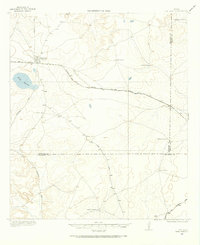 1920 Big Lake1965 Print · USGSReagan County ranching and rail life are preserved in this early twentieth-century survey of the West Texas plains. Researchers can trace historic family-named landholdings like Carroll Ranch and the route of the Kansas City Mexico and Orient railroad.
 - 1920 Map of Barnhart, 1965 Print
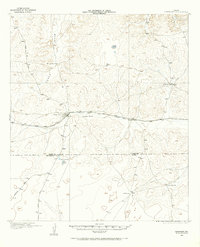 1920 Barnhart1965 Print · USGSThe ranching country of West Texas comes into focus during the 1920s as the rail line reached the Irion and Crockett county line. Genealogists can trace family holdings at the Murphy Ranch and Noelke Ranch or follow the route of the old Ozona Road.
 - 1922 Map of Big Lake
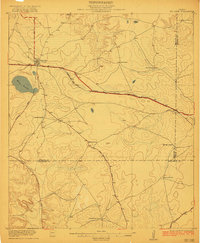 1922 Big Lake1922 Print · USGSBig Lake and the surrounding West Texas ranchlands are captured here in the early 1920s as the railroad drove local growth. Genealogists and historians can trace family-named sites like Luther Ranch and Wilson Ranch along the historic Sheffield Road.
 - 1922 Map of Barnhart
 1922 Barnhart1922 Print · USGSWest Texas ranching country comes into focus in the early 1920s as the rail line brings industry to the high plains. Genealogists and historians can trace the vast boundaries of the Slaughter Ranch and Noelke Ranch or locate the original depot at Barnhart.
 - 1928 Map of Crane
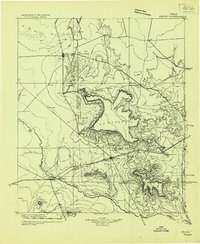 1928 Crane1928 Print · USGSWest Texas ranching and the early oil boom meet at the Pecos River during the late twenties. Trace the growth of new petroleum hubs at Crane and McCamey alongside family-named landmarks like McElroy and Cody Bell.
 - 1928 Map of Rankin
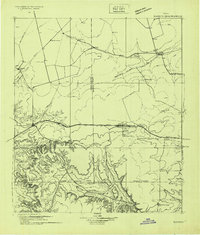 1928 Rankin1928 Print · USGSWest Texas is captured during the transformative oil boom of the late twenties, showing the rise of petroleum towns alongside older ranch outposts. Genealogists and historians can trace early Permian Basin settlements like Texon, Santa Rita, and the legendary boomtown of Best.
 - 1929 Map of Sheffield
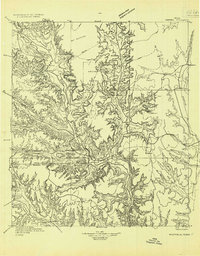 1929 Sheffield1929 Print · USGSWest Texas ranching and the early oil boom meet along the Pecos River in the late twenties. Researchers can trace the Old Spanish Trail through Sheffield or locate historical sites like Fort Lancaster and the Yates Oil Field.
 - 1929 Map of Independence Draw Quadrangle
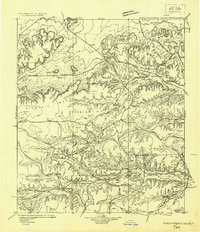 1929 Independence Draw Quadrangle1929 Print · USGSPecos and Terrell Counties come into focus during the late 1920s as ranching outposts and the Old Spanish Trail defined the West Texas landscape. Genealogists and historians can trace family-named sites like Harral Headquarters, the Salt Works, and the abandoned site at Free (Abd).
 - 1954 Map of Pecos, 1964 Print
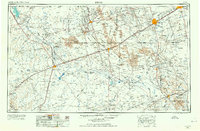 1954 Pecos1964 Print · USGSMid-century West Texas reveals a landscape of expanding oil fields and cattle ranching along the winding Pecos River. Local historians can trace family ranch lands like Goodrich Ranch, follow the Texas and Pacific rails, or locate the historic Horsehead Crossing.3 unique versions available
 - 1954 Map of Fort Stockton, 1965 Print
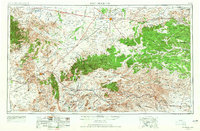 1954 Fort Stockton1965 Print · USGSWest Texas ranching and the early energy industry converge in this mid-century survey of the Trans-Pecos. Genealogists and historians can locate specific family lands like Graef Brothers Ranch and trace the paths of the Old Spanish Trail and the Southern Pacific railroad.3 unique versions available
 - 1954 Map of Sonora, 1965 Print
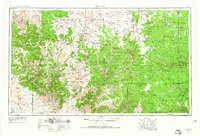 1954 Sonora1965 Print · USGSThe Edwards Plateau and West Texas ranching country come alive in this mid-century survey of the canyons and plateaus. Genealogists and historians can trace the remote settlements of Pandale and Loma Alta or follow the path of the Panhandle and Santa Fe RR.2 unique versions available
 - 1954 Map of San Angelo, 1967 Print
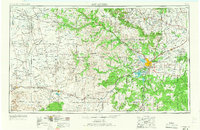 1954 San Angelo1967 Print · USGSThe Concho Valley and eastern Permian Basin transition from ranching to a burgeoning oil economy during the mid-twentieth century. Trace the expansion of San Angelo near Goodfellow AFB and locate old crossroads like Stiles, Texon, and Barnhart along the SANTA FE railroad.2 unique versions available
 - 1957 Map of Pecos
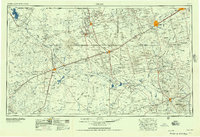 1957 Pecos1957 Print · USGSWest Texas in the mid-fifties is a landscape of desert oil fields and vital rail corridors. Researchers can trace the sprawling Pyote Air Force Base, the historic Horsehead Crossing, and the rail stops at Mentone and Saragosa.
 - 1958 Map of Sonora
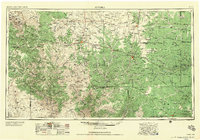 1958 Sonora1958 Print · USGSThe Edwards Plateau and Trans-Pecos region come alive in the late fifties, showing a landscape of remote ranchlands and historic frontier outposts. Trace the legacy of Fort Lancaster Ruins, the limestone depths of Devils Sinkhole Cavern, and the path of the Pecos River.
 - 1958 Map of San Angelo
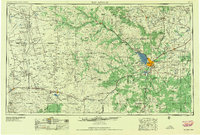 1958 San Angelo1958 Print · USGSWest Texas in the late fifties centers on the growing hub of San Angelo and its vital river confluences. Genealogists and historians can trace the paths of the Santa Fe railroad to outposts like Fort Chadbourne, Big Lake, and the specialized community of Sanatorium.
 - 1958 Map of Fort Stockton
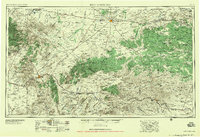 1958 Fort Stockton1958 Print · USGSThe Trans-Pecos region of West Texas in the late fifties is a landscape of vast mesas and isolated ranching hubs. Genealogists and historians can trace the paths of the Texas and New Orleans RR through Alpine or locate early settlements like Bakersfield and Sanderson.
 - 1964 Map of Oglesby Ranch, 1966 Print
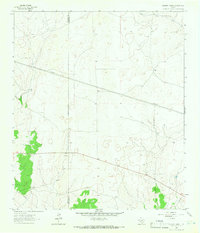 1964 Oglesby Ranch1966 Print · USGSSchleicher and Crockett counties meet in this 1960s ranching landscape, where the open range is divided by fences and petroleum infrastructure. Researchers can trace the layout of family holdings like Oglesby Ranch and Preston Ranch alongside early Pipelines.
 - 1964 Map of Bailey Draw, 1966 Print
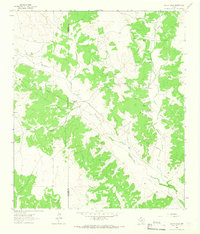 1964 Bailey Draw1966 Print · USGSThe West Texas ranchlands in the mid-sixties are captured here at the Crockett Co Schleicher Co line. Trace the history of local operations like Willoughby Ranch and Powell Ranch alongside Bailey Draw.2 unique versions available
 - 1965 Map of San Angelo
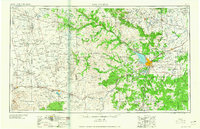 1965 San Angelo1965 Print · USGSWest Texas in the mid-sixties reveals a landscape shaped by the petroleum industry and strategic water management. Genealogists and historians can trace the rail corridor through Texon and Big Lake, or locate military landmarks like Goodfellow AFB and Broome Air Force Auxiliary Airfield.
 - 1967 Map of Owens Creek SE, 1969 Print
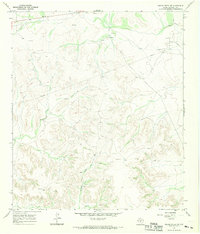 1967 Owens Creek SE1969 Print · USGSCrockett County's energy landscape is captured here in the late sixties, showing the expansion of petroleum infrastructure. Researchers can trace the layout of the Shannon Oil Field, find specific oil wells, and follow the path of Mailbox Draw.
 - 1967 Map of Owens Creek NE, 1969 Print
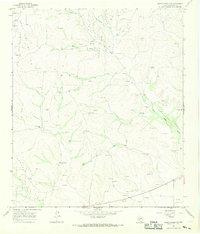 1967 Owens Creek NE1969 Print · USGSCrockett County is shown at the height of its mid-century petroleum expansion, dominated by the World West Oil Field and the Shannon Field. Researchers can locate specialized sites like the Refinery near World and numerous livestock markers such as Alto Windmill.
 - 1967 Map of Nolen Draw, 1970 Print
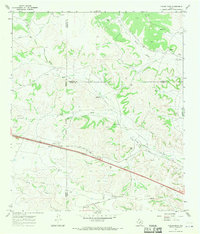 1967 Nolen Draw1970 Print · USGSRanch lands at the intersection of Sutton, Schleicher, and Crockett counties are captured here in the late sixties. Researchers can trace remote family holdings like T Half Circle Ranch, navigate Turkey Roost Draw, and locate Starks Windmill.2 unique versions available
 - 1967 Map of Twelvemile Camp, 1970 Print
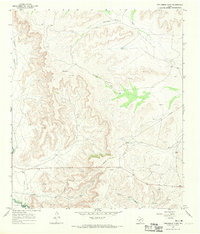 1967 Twelvemile Camp1970 Print · USGSCrockett and Pecos counties in the late sixties were defined by the expansion of the energy sector into the high-desert canyons. Researchers can trace the mid-century petroleum footprint through numerous Oil Wells and the Pipeline near Twelvemile Camp.
 - 1967 Map of Ozona, 1970 Print
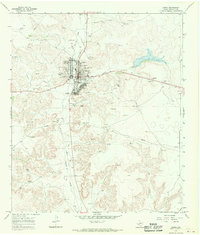 1967 Ozona1970 Print · USGSOzona is captured here in the late sixties as a bustling West Texas county seat defined by its gas fields and dry draws. Researchers can trace the development of the town's core near Cedar Hill Cem or locate industrial sites within the Ozona Gas Field.2 unique versions available
 - 1967 Map of Baggett Ranch, 1970 Print
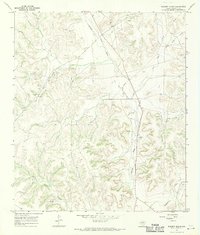 1967 Baggett Ranch1970 Print · USGSCrockett County ranching and energy extraction intersect in this late 1960s survey of the Edwards Plateau. Researchers can trace the rugged topography of Bert Mertz Canyon and Johnson Draw alongside the infrastructure of the Gas and Oil Field.
Showing maps 1-25 of 90
Top cities of Crockett County
Frequently asked questions
- What are the different types of historical maps available for Crockett County?
- What is the oldest map of Crockett County?
- Where can I purchase historical maps of Crockett County for my home or office?
- Where can I download high-res historical maps of Crockett County?
- Are there historical topographic maps available for Crockett County?
- Is there historical aerial imagery available for Crockett County?
- Where are historical maps of Crockett County sourced from?