1970s Maps of Crockett County, Texas
Explore 25 historic maps of Crockett County from the 1970s. These maps offer a rare glimpse into what life looked like during the 1970s — showing old roads, neighborhoods, homes, and landmarks that have changed or disappeared over time.
Whether you're researching your family's past, planning a metal detecting trip, or studying how Crockett County's landscape evolved across the 1970s, these high-resolution maps are a powerful tool for exploring the history of this region.
- Focus on a specific era: All maps on this page are from the 1970s, giving you a focused view of this time period.
- See what’s changed: Compare century-old streets, trails, and buildings to today's modern landscape using overlays and satellite layers.
- Research with precision: Use these maps for genealogy, historical research, land use analysis, or educational projects.
- View, download, or print: Maps are fully viewable online in high resolution, and can be downloaded or printed for your own records.
Start exploring Crockett County's history through authentic maps from the 1970s. This is your window into the past.
Crockett County, TX maps
(25)- 1970 Map of Howards Well NE, 1973 Print
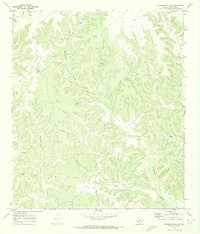 1970 Howards Well NE1973 Print · USGSCrockett County ranching life is captured here in the early 1970s, showcasing a landscape of deep draws and isolated family homesteads. Researchers can locate specific legacy properties like Pierce Ranch and Montgomery Ranch alongside early energy sites like Gas Wells.2 unique versions available
 - 1970 Map of Antone Canyon, 1973 Print
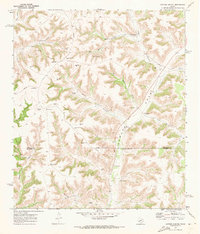 1970 Antone Canyon1973 Print · USGSRanching life on the Crockett and Val Verde county line during the late 1960s centered on deep canyons and critical water sources. Researchers can trace land boundaries and livestock infrastructure at Blakeney Ranch, Mitchell Ranch, and Lemmon Windmill.
 - 1970 Map of Aermotor Draw, 1973 Print
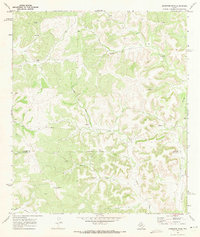 1970 Aermotor Draw1973 Print · USGSCrockett and Val Verde counties were centers of isolated West Texas ranching and water-scouting in the early seventies. Trace the distribution of family-named water sources like the Aermotor Windmill and remote outposts such as Haryik Ranch.
 - 1970 Map of Rankin SE, 1973 Print
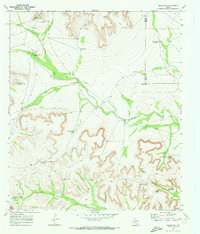 1970 Rankin SE1973 Print · USGSThe West Texas ranchlands at the start of the 1970s are captured here, centered on the Noelke Ranch and its vital water infrastructure. Researchers can trace family-named landmarks like Schlinke Windmill and remote features like Lost Tank.3 unique versions available
 - 1970 Map of Cedar Canyon, 1973 Print
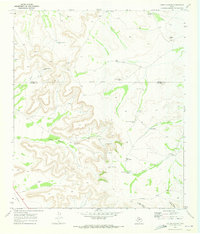 1970 Cedar Canyon1973 Print · USGSThe West Texas borderlands of Upton and Crockett counties are seen here in the early 1970s, defined by ranching infrastructure and mineral surveys. Trace the landscape of family-named water sources like Munro Windmill and landmarks such as Cedar Hill.
 - 1970 Map of Texon SE, 1973 Print
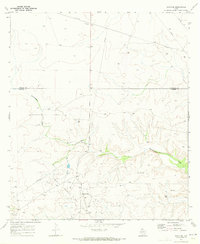 1970 Texon SE1973 Print · USGSCrockett County in the early seventies reveals the intensive development of the West Texas oil fields. Researchers can trace the industrial footprint of the World Powell Field and locate local landmarks like the North Crockett Community Center and Schneemann Draw.
 - 1970 Map of Indian Draw, 1973 Print
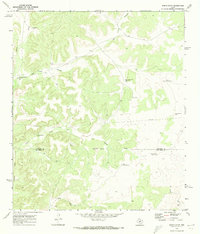 1970 Indian Draw1973 Print · USGSRanching and water rights define this West Texas landscape at the turn of the 1970s. Researchers can trace the ranching economy through names like the Marley Ranch and vital water stops like Quien Sabe Windmill and Big Indian Waterhole Windmill.
 - 1970 Map of Brushy Draw, 1973 Print
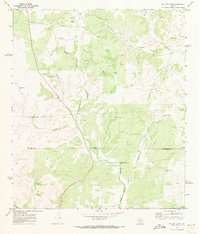 1970 Brushy Draw1973 Print · USGSRanching and oil exploration intersect in Crockett County during the 1970s, where the landscape is marked by remote water stations and early energy development. Researchers can trace family-named landmarks like the Baggett Ranch and vital water sources like the Post Office Windmill and Noelke Windmills.
 - 1970 Map of Howards Well, 1973 Print
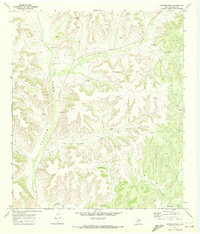 1970 Howards Well1973 Print · USGSCrockett County ranching life is documented here in the early seventies, centered around the lifeblood of the high desert. Researchers can trace family ranching roots at Pierce Ranch and map the essential water network of Star Windmill, Howards Well, and Yegua Windmill.
 - 1970 Map of Howards Well SW, 1973 Print
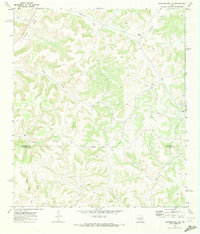 1970 Howards Well SW1973 Print · USGSRanching and early energy development meet in West Texas around 1970, where the high plateau is deeply dissected by dry washes. Researchers can locate established sites like Watson Ranch or trace natural landmarks like Howard Draw and Jesus Canyon.
 - 1970 Map of Harrell Canyon, 1973 Print
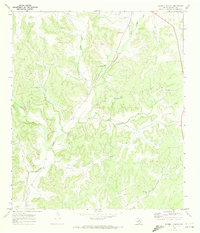 1970 Harrell Canyon1973 Print · USGSCrockett County ranching life is preserved here during the early seventies, when remote homesteads relied on traditional windmills for survival. Genealogists can trace family footprints at Hagelstein Ranch and Harrell Ranch, or locate water features like Sulphur Trap Windmill and Big Indian Canyon.2 unique versions available
 - 1970 Map of Lone Mountain, 1973 Print
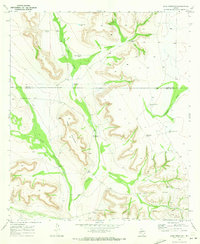 1970 Lone Mountain1973 Print · USGSThe Edwards Plateau meets the Permian Basin in the early 1970s, where ranching and energy interests collide. Local historians can trace family-named windmills like Gay Windmill and remote outposts such as Santa Maria Camp or Redman Camp.
 - 1970 Map of Prince Albert Draw, 1973 Print
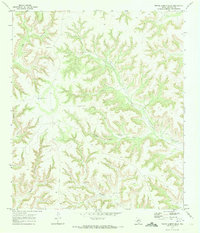 1970 Prince Albert Draw1973 Print · USGSCrockett County ranching life is centered on the vital water sources found along Prince Albert Draw in the early seventies. Genealogists and historians can trace the remote outposts of the Edwards Plateau through named landmarks like Hoover, Henderson Windmill, and Sulfur Windmill.
 - 1971 Map of Barnhart SW, 1974 Print
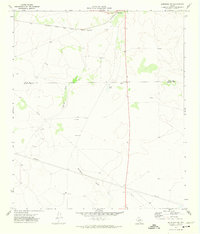 1971 Barnhart SW1974 Print · USGSWest Texas ranching and resource extraction are captured here in the early seventies along the Irion and Crockett County line. Researchers can trace the Atchison Topeka and Santa Fe rail line and locate old sites at Owens or Bissett.
 - 1971 Map of Noelke SW, 1974 Print
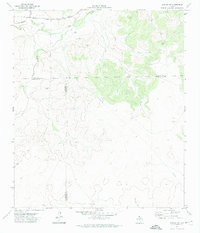 1971 Noelke SW1974 Print · USGSThe West Texas ranchlands at the intersection of Irion, Crockett, and Schleicher counties are captured here in the early 1970s. Trace the path of the Atchison Topeka and Santa Fe railroad as it passes through Dutch Woman Draw and near the Spring.2 unique versions available
 - 1971 Map of Suggs, 1974 Print
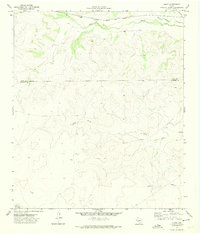 1971 Suggs1974 Print · USGSRanching and rail life converge at the Irion and Crockett county line during the early seventies. Genealogists and historians can trace family holdings like De Long Ranch and the small settlement of Suggs along the Atchison Topeka and Santa Fe railroad.
 - 1971 Map of Big Lake SW, 1974 Print
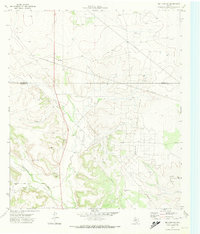 1971 Big Lake SW1974 Print · USGSCrockett and Reagan counties are shown during the height of the West Texas petroleum boom in the early seventies. Researchers can trace energy infrastructure across the Weger Oil Field, locate the Noake Well, and follow the seasonal Schneemann Draw.
 - 1971 Map of Big Lake SE, 1974 Print
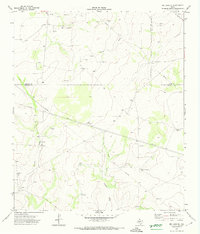 1971 Big Lake SE1974 Print · USGSThe West Texas ranching and oil country of the early seventies is revealed where the Reagan, Crockett, and Irion county lines meet. Researchers can trace the infrastructure of the Permian Basin via numerous Oil Wells and remote landmarks like West Windmill and Humble.
 - 1972 Map of McCamey South, 1974 Print
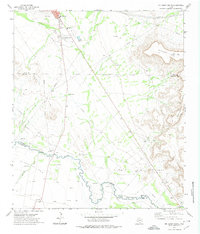 1972 McCamey South1974 Print · USGSThe West Texas oil and cattle country near the Pecos River is captured here in the early 1970s. Researchers can locate family landmarks like the Patton Ranch, trace the historic Old Spanish Ditch, or study the industrial footprint of the Tippett Oil Field.
 - 1972 Map of Table Top Mountain, 1974 Print
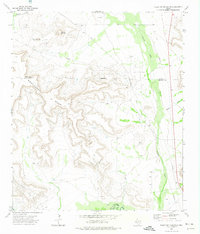 1972 Table Top Mountain1974 Print · USGSCrockett and Upton counties are mapped in the early 1970s, showcasing the high-desert energy economy and ranching life. Genealogists and historians can trace the Kelton Ranch and Tippett sites alongside the extensive workings of the Crockett Oil Field.
 - 1972 Map of Girvin, 1975 Print
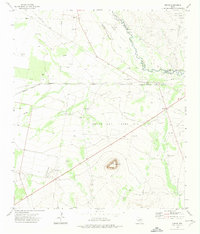 1972 Girvin1975 Print · USGSWest Texas in the early 1970s reveals a rugged landscape defined by the Pecos River and the expanding reach of the petroleum industry. Researchers can trace the rail-and-oil economy through the Atchison Topeka and Santa Fe line, the small settlement of Girvin, and the Wentz Oil and Gas Field.
 - 1972 Map of Girvin SE, 1975 Print
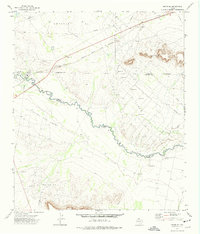 1972 Girvin SE1975 Print · USGSThe Pecos River valley in the early seventies shows a landscape deeply shaped by the oil industry and ranching. Genealogists and historians can trace family land at Johnson Ranch, find old transit points like Adobe Crossing, and follow the Atchison Topeka and Santa Fe railroad.
 - 1973 Map of Fort Stockton, 1974 Print
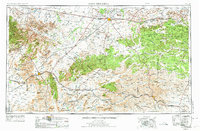 1973 Fort Stockton1974 Print · USGSThe Trans-Pecos region of West Texas comes alive in the early seventies, from the desert flats of the Stockton Plateau to the heights of the Davis Mountains. Researchers can trace the legacy of frontier outposts and rail lines through Fort Davis Nat Hist Site, Alpine, and the Southern Pacific RR.
 - 1973 Map of Post Canyon, 1976 Print
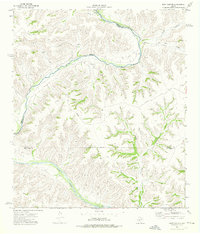 1973 Post Canyon1976 Print · USGSThe winding Pecos River marks the intersection of three counties in the early 1970s. Trace the isolated network of Jeep Trails and Private roads connecting remote Gas Wells and a river Ford through Post Canyon.
 - 1973 Map of Sixshooter Canyon, 1976 Print
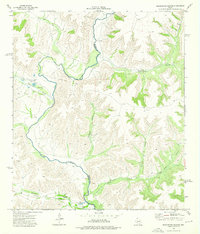 1973 Sixshooter Canyon1976 Print · USGSThe Pecos River canyonlands of Terrell and Crockett Counties are captured here in the early 1970s. Trace old ranching life at Dunlap Ranch or locate remote water sources like Wolf Spring and Independence Creek.
End of results
Showing maps 1-25 of 25
Top cities of Crockett County
Frequently asked questions
- What are the different types of historical maps available for Crockett County?
- What is the oldest map of Crockett County?
- Where can I purchase historical maps of Crockett County for my home or office?
- Where can I download high-res historical maps of Crockett County?
- Are there historical topographic maps available for Crockett County?
- Is there historical aerial imagery available for Crockett County?
- Where are historical maps of Crockett County sourced from?