Old Maps of Deaf Smith County, Texas for Academic Research
Study the evolution of Deaf Smith County with 249 high-resolution historic maps. Whether you're teaching, researching, or modeling changes in land use, these maps provide essential visual documentation of urban, environmental, and geographic change.
- Analyze long-term change: Track patterns in development, transportation, and natural features.
- Ideal for environmental or urban studies: Support academic projects with primary historical map data.
- Use in the classroom or lab: Educators and researchers rely on these maps to bring historical context to life.
These maps are a powerful tool for teaching, research, and visualizing how Deaf Smith County has changed over the decades.
Deaf Smith County, TX maps
(249)- 1954 Map of Tucumcari, 1965 Print
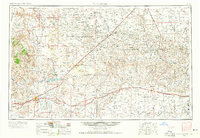 1954 Tucumcari1965 Print · USGSThe high plains along the New Mexico and Texas border come alive in this mid-century survey, just as the regional highway network was maturing. Trace the historic route of U.S. 66 through Glenrio and San Jon or locate remote rail sidings like Rehm Station and Obar.2 unique versions available
 - 1954 Map of Clovis, 1966 Print
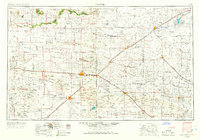 1954 Clovis1966 Print · USGSThe High Plains of the Texas-New Mexico borderland come alive in this mid-century survey as the region's agricultural and rail networks reached their peak. Trace family roots and local history through features like Cannon AFB, the massive Sand Hills, and busy rail towns such as Friona and Littlefield.4 unique versions available
 - 1957 Map of Pleasant Hill, 1958 Print
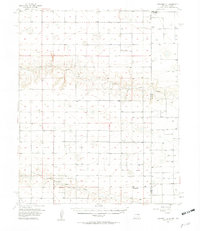 1957 Pleasant Hill1958 Print · USGSCurry County, New Mexico, is captured in the late fifties as a landscape of rural crossroads and prairie draws along the Texas line. Researchers can locate the Pleasant Hill Cem, the settlement of Claud, and the New Mexico Game Refuge No 252.
 - 1958 Map of Clovis
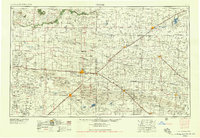 1958 Clovis1958 Print · USGSThe High Plains of the New Mexico-Texas borderlands are captured here in the late fifties, during a period of significant military and agricultural expansion. Genealogists and historians can trace the rail-side growth of Clovis, the operations at Clovis Air Force Base, and the rural layout of communities like Muleshoe and Hereford.
 - 1958 Map of Tucumcari
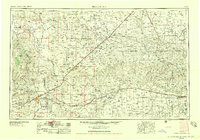 1958 Tucumcari1958 Print · USGSEastern New Mexico and the Texas Panhandle meet in this mid-century survey of the high plains ranching and rail corridor. Researchers can trace the path of Mother Road travelers through Tucumcari and Glenrio or locate remote rail stops like Nara Visa Station and Hartley Station.
 - 1961 Map of Buffalo Lake, 1964 Print
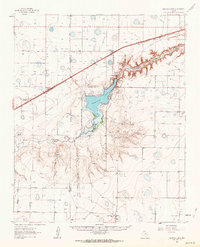 1961 Buffalo Lake1964 Print · USGSThe Texas Panhandle comes alive in the early sixties, showing the vital relationship between the Panhandle and Santa Fe railroad and local ranching life. Trace family roots and land use near Umbarger, St Mary Cem, and the Flying Mare Ranch.2 unique versions available
 - 1962 Map of Wildorado, 1964 Print
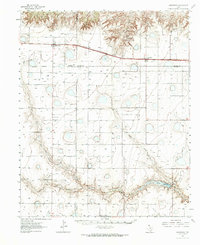 1962 Wildorado1964 Print · USGSThe Texas Panhandle comes into focus during the early sixties, showing the rail-and-ranch life along the Chicago Rock Island and Pacific line. Genealogists and historians can trace local landmarks like Palo Duro Ch, Highland Sch, and the Bynum Ranch.
 - 1965 Map of Twin Lakes, 1968 Print
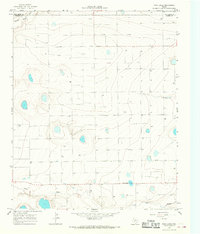 1965 Twin Lakes1968 Print · USGSThe High Plains of the Texas Panhandle come into focus in the mid-sixties, showing a landscape defined by industrial agriculture and ephemeral water. Researchers can trace the development of irrigation through numerous Wells and locate the settlement of Shelby near the Twin Lakes.
 - 1965 Map of Rhea, 1968 Print
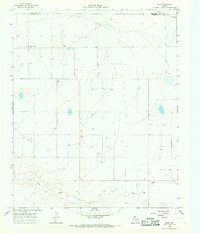 1965 Rhea1968 Print · USGSThe High Plains of the Texas Panhandle are captured here during the mid-sixties, showing the agricultural settlement of Rhea. Researchers can trace the legacy of early residents through landmarks like Rhea Emmanuel Ch, the local Cem, and the winding Frio Draw.
 - 1965 Map of Everett, 1969 Print
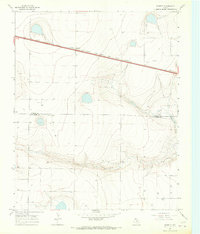 1965 Everett1969 Print · USGSThe High Plains of the Texas Panhandle are captured here in the mid-sixties at the intersection of rail and road history. Genealogists and historians can trace the early shipping infrastructure at Everett, from the Grain Elevator along the CHICAGO ROCK ISLAND AND PACIFIC rail line to the path of the original U.S. 66.
 - 1965 Map of Allison Ranch, 1970 Print
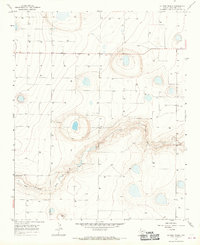 1965 Allison Ranch1970 Print · USGSThe Texas Panhandle ranching landscape of the 1960s comes into focus here, showing the homesteads and water networks of Deaf Smith County. Researchers can trace land holdings like Conkwright Ranch and Allison Ranch along the breaks of Palo Duro Creek.
 - 1966 Map of Moser Ranch, 1968 Print
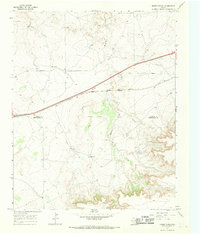 1966 Moser Ranch1968 Print · USGSThe Texas Panhandle near the Oldham and Deaf Smith county line comes into focus in the mid-1960s. Researchers can locate family landmarks like Moser Ranch and trace the path of the Chicago Rock Island and Pacific railroad.
 - 1966 Map of Boise, 1968 Print
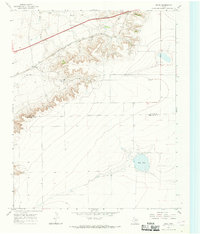 1966 Boise1968 Print · USGSThe Texas Panhandle in the mid-sixties reveals a landscape shaped by the rail and ranching economy. Researchers can trace the path of the Chicago Rock Island and Pacific railroad past Boise and the sprawling Bridwell Ranch.
 - 1966 Map of Jumbo, 1968 Print
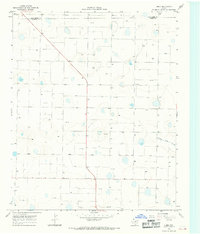 1966 Jumbo1968 Print · USGSThe Texas Panhandle's High Plains are captured here in the mid-1960s at the height of its deep-well irrigation era. Genealogists and local historians can trace the rural infrastructure around Jumbo or locate family-named landmarks like Lambert and the winding Middle Tule Draw.2 unique versions available
 - 1966 Map of Nazareth NW, 1968 Print
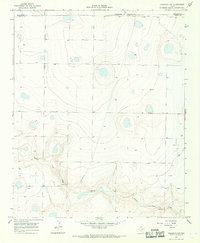 1966 Nazareth NW1968 Print · USGSThe High Plains of the Texas Panhandle appear in the mid-1960s as a landscape of rural ranching and infrastructure. Researchers can trace the intersection of three counties and locate local landmarks like the Hendrix settlement and several Gravel Pit sites.2 unique versions available
 - 1966 Map of Friona, 1968 Print
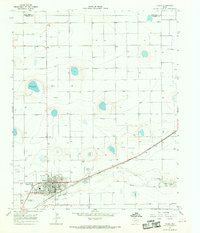 1966 Friona1968 Print · USGSFriona and the surrounding Texas Panhandle plains are documented here in the mid-1960s as a thriving rail and agricultural center. Researchers can trace local infrastructure from Benger Airpark and the Friona Cem to the Drive-in Theater.2 unique versions available
 - 1966 Map of Overstreet Lake, 1968 Print
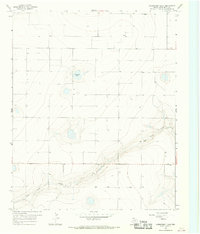 1966 Overstreet Lake1968 Print · USGSDeaf Smith County in the mid-sixties reveals a working landscape of the Texas Panhandle. Trace the winding drainage of Palo Duro Creek and the vital water sources at Overstreet Lake and scattered Well sites.
 - 1966 Map of Easter, 1968 Print
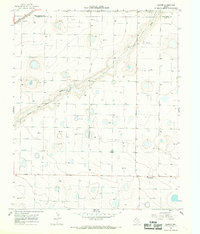 1966 Easter1968 Print · USGSThe High Plains of the Texas Panhandle are captured here in the mid-1960s, showing a landscape of ranching and early infrastructure. Researchers can locate the post office at Easter, the rail siding at Frio, and the Atchison Topeka and Santa Fe line.
 - 1966 Map of Simms NW, 1968 Print
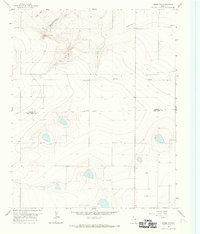 1966 Simms NW1968 Print · USGSThe Texas Panhandle comes into focus during the mid-sixties, revealing the remote utility corridors and ranching boundaries of the High Plains. Trace the path of Slaughterhouse Draw and locate historic landmarks like Slaughterhouse Well and the Pumping Sta.
 - 1966 Map of Summerfield, 1968 Print
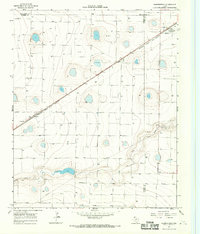 1966 Summerfield1968 Print · USGSAgricultural life in the Panhandle during the mid-sixties centered on the rail lines and grain storage. Genealogists and historians can locate Summerfield and Black along the Atchison Topeka and Santa Fe railroad, alongside local Grain Elevators and the Frio Draw.
 - 1966 Map of Simms, 1968 Print
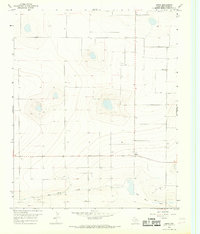 1966 Simms1968 Print · USGSDeaf Smith County was a landscape of remote ranches and water-driven agriculture in the mid-sixties. Researchers can trace the layout of the Simms settlement and locate numerous water sources like Palo Duro Creek and various rural Wells.
 - 1966 Map of Simms NE, 1969 Print
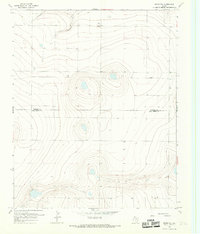 1966 Simms NE1969 Print · USGSThe High Plains of the Texas Panhandle are captured here in the mid-1960s, where the rangelands of Oldham Co meet Deaf Smith Co. Trace the natural drainage of Cottonwood Creek and locate early energy infrastructure like the central Pipeline and isolated Well sites.
 - 1966 Map of Sand Point, 1969 Print
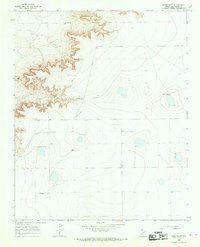 1966 Sand Point1969 Print · USGSDeaf Smith County ranching life is preserved in detail on this late-sixties Texas Panhandle map. Genealogists and historians can trace essential cattle country landmarks like Moser Ranch, the Landing Strip, and The Cook Shack.
 - 1966 Map of Vega South, 1969 Print
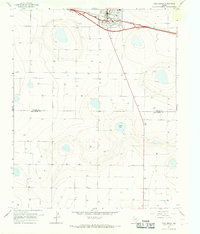 1966 Vega South1969 Print · USGSThe High Plains of the Texas Panhandle come into focus in the mid-1960s, showing the intersection of ranching life and rail transport. Genealogists and researchers can trace local landmarks like Memorial Park (Cem), the High Sch in Vega, and the waters of Dodson Lake.
 - 1966 Map of Ford, 1969 Print
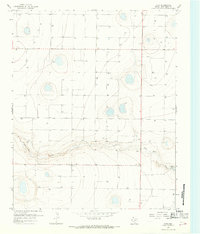 1966 Ford1969 Print · USGSDeaf Smith County was a landscape of ranching and resource extraction in the mid-sixties, dominated by the winding path of Palo Duro Creek. You can trace local family land at Conkwright Ranch or locate the small settlement of Ford and its surrounding network of Well sites.
Showing maps 1-25 of 249
Top cities of Deaf Smith County
Frequently asked questions
- What are the different types of historical maps available for Deaf Smith County?
- What is the oldest map of Deaf Smith County?
- Where can I purchase historical maps of Deaf Smith County for my home or office?
- Where can I download high-res historical maps of Deaf Smith County?
- Are there historical topographic maps available for Deaf Smith County?
- Is there historical aerial imagery available for Deaf Smith County?
- Where are historical maps of Deaf Smith County sourced from?