1950s Maps of Galveston, Texas
Explore 10 historic maps of Galveston from the 1950s. These maps offer a rare glimpse into what life looked like during the 1950s — showing old roads, neighborhoods, homes, and landmarks that have changed or disappeared over time.
Whether you're researching your family's past, planning a metal detecting trip, or studying how Galveston's landscape evolved across the 1950s, these high-resolution maps are a powerful tool for exploring the history of this region.
- Focus on a specific era: All maps on this page are from the 1950s, giving you a focused view of this time period.
- See what’s changed: Compare century-old streets, trails, and buildings to today's modern landscape using overlays and satellite layers.
- Research with precision: Use these maps for genealogy, historical research, land use analysis, or educational projects.
- View, download, or print: Maps are fully viewable online in high resolution, and can be downloaded or printed for your own records.
Start exploring Galveston's history through authentic maps from the 1950s. This is your window into the past.
Galveston, TX maps
(10)- 1950 Map of Houston, 1953 Print
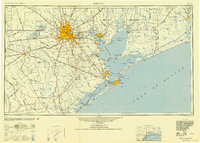 1950 Houston1953 Print · USGSCoastal Texas in the early fifties reveals a landscape of massive civil engineering and industrial transit. Genealogists and researchers can trace the growth of the Houston suburbs and the maritime infrastructure of Galveston Bay, including the Gulf Freeway and the Texas City Dike.
 - 1951 Map of Bay City
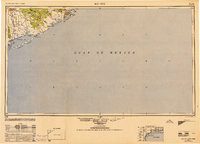 1951 Bay City1951 Print · USGSThe mid-century Texas Gulf Coast comes to life in this survey of the delta region where the Brazos and Colorado Rivers meet the sea. Researchers can trace the industrial footprint of Freeport or locate family-named spots like Mangun and Hawkinsville.
 - 1954 Map of Virginia Point, 1956 Print
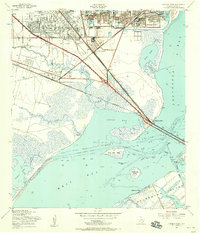 1954 Virginia Point1956 Print · USGSThe Galveston Bay shoreline in the mid-fifties reveals a critical junction of rail and maritime industry. Trace the infrastructure of the Texas City Terminal, old neighborhood schools like Highlands Sch, and the original Galveston Causeway.3 unique versions available
 - 1954 Map of Galveston, 1958 Print
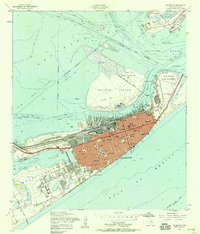 1954 Galveston1958 Print · USGSMid-century Galveston is shown at its peak as a maritime and rail center, guarded by coastal defenses. Genealogists and historians can locate dozens of institutions like the University of Texas Medical College and Ball High Sch, or trace the old railroad grades across the island.4 unique versions available
 - 1954 Map of Flake, 1958 Print
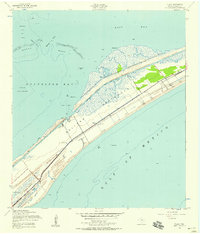 1954 Flake1958 Print · USGSThe Bolivar Peninsula in the mid-1950s shows a landscape of coastal communities and maritime infrastructure. Genealogists and historians can trace the Port Bolivar Cem, the Old Railroad Grade, and small settlements like Flake.4 unique versions available
 - 1954 Map of The Jetties, 1958 Print
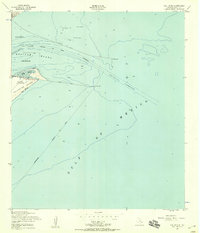 1954 The Jetties1958 Print · USGSMaritime commerce and coastal defense converge at the entrance to Galveston Bay during the mid-1950s. Trace the dredging depths and defensive positions at Old Fort San Jacinto and the long reach of the North Jetty into the Gulf.3 unique versions available
 - 1954 Map of Lake Como, 1958 Print
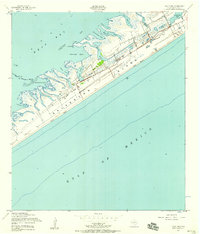 1954 Lake Como1958 Print · USGSGalveston Island in the mid-fifties remains a world of open salt marshes and intricate bayous before the onset of modern expansion. Genealogists and historians can trace the early road network of Stewart Road and find coastal landmarks like Lake Como and Carancahua Reef.4 unique versions available
 - 1956 Map of Houston, 1963 Print
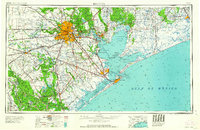 1956 Houston1963 Print · USGSSoutheast Texas in the mid-fifties is captured here as a powerhouse of oil and maritime trade. Genealogists and historians can trace the foundations of Houston and its ports, alongside landmarks like the Rice Institute and the Spindletop Oil Field.2 unique versions available
 - 1956 Map of Bay City, 1964 Print
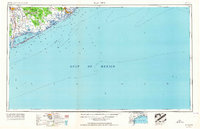 1956 Bay City1964 Print · USGSThe Texas Gulf Coast comes into focus in the mid-1950s, showing the intricate bayous and coastal settlements from Bay City to Freeport. Researchers can trace the legacy of shoreline communities like Sargent, Matagorda Beach, and Hawkinsville before modern coastal changes.2 unique versions available
 - 1958 Map of Bay City
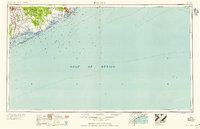 1958 Bay City1958 Print · USGSThe Texas Gulf Coast in the late fifties shows a landscape of growing petrochemical plants and intricate wetlands. Genealogists and historians can trace the paths of the Missouri Pacific railroad through Bay City or locate old settlements like Hinkle Ferry and Hawkinsville.
End of results
Showing maps 1-10 of 10
Top cities near Galveston
- Texas City historical maps
- La Marque historical maps
- Santa Fe historical maps
- Hitchcock historical maps
- Port Bolivar historical maps
- Bayou Vista historical maps
See more
Top neighborhoods of Galveston
- Campeche Cove historical maps
- Anderson Ways historical maps
- Bay Harbor historical maps
- Spanish Grant historical maps
- Isla del Sol historical maps
- Sunset Cove historical maps
See more
Frequently asked questions
- What are the different types of historical maps available for Galveston?
- What is the oldest map of Galveston?
- Where can I purchase historical maps of Galveston for my home or office?
- Where can I download high-res historical maps of Galveston?
- Are there historical topographic maps available for Galveston?
- Is there historical aerial imagery available for Galveston?
- Where are historical maps of Galveston sourced from?