1950s Maps of Liberty County, Texas
Explore 15 historic maps of Liberty County from the 1950s. These maps offer a rare glimpse into what life looked like during the 1950s — showing old roads, neighborhoods, homes, and landmarks that have changed or disappeared over time.
Whether you're researching your family's past, planning a metal detecting trip, or studying how Liberty County's landscape evolved across the 1950s, these high-resolution maps are a powerful tool for exploring the history of this region.
- Focus on a specific era: All maps on this page are from the 1950s, giving you a focused view of this time period.
- See what’s changed: Compare century-old streets, trails, and buildings to today's modern landscape using overlays and satellite layers.
- Research with precision: Use these maps for genealogy, historical research, land use analysis, or educational projects.
- View, download, or print: Maps are fully viewable online in high resolution, and can be downloaded or printed for your own records.
Start exploring Liberty County's history through authentic maps from the 1950s. This is your window into the past.
Liberty County, TX maps
(15)- 1950 Map of Houston, 1953 Print
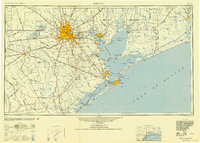 1950 Houston1953 Print · USGSCoastal Texas in the early fifties reveals a landscape of massive civil engineering and industrial transit. Genealogists and researchers can trace the growth of the Houston suburbs and the maritime infrastructure of Galveston Bay, including the Gulf Freeway and the Texas City Dike.
 - 1954 Map of Crosby, 1956 Print
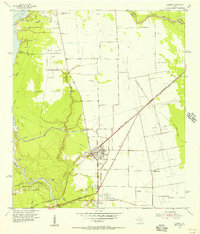 1954 Crosby1956 Print · USGSCoastal Harris County in the mid-fifties is characterized here by its booming oil fields and crossroads settlements. Genealogists and local historians can trace family roots through Crosby and Barrett, or locate early landmarks like Bohemian Hall and Sacred Heart Cem.
 - 1954 Map of Beaumont, 1964 Print
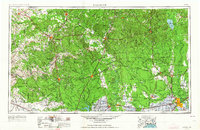 1954 Beaumont1964 Print · USGSSoutheast Texas in the mid-fifties reveals a landscape of massive national forests, emerging reservoirs, and a booming oil economy. Genealogists and researchers can trace rural settlements like Dallardsville and Village Mills or locate early drilling sites at Sour Lake Oil Field.3 unique versions available
 - 1955 Map of Daisetta, 1956 Print
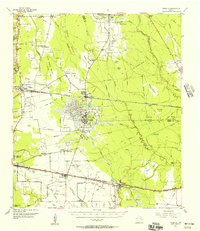 1955 Daisetta1956 Print · USGSLiberty County was undergoing an industrial transition in the 1950s as oil fields and drainage canals reshaped the coastal prairie. Researchers can trace the development of salt dome operations near Daisetta or locate rural landmarks like Ames Cem and Sacred Heart Ch.3 unique versions available
 - 1955 Map of Saratoga, 1956 Print
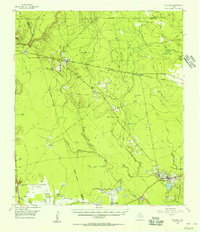 1955 Saratoga1956 Print · USGSHardin County oil and timber industries are on full display in the mid-fifties, showing the region's dense baygalls and rail towns. Genealogists and historians can trace family sites at Mt Calvary Ch or the Saratoga Oil Field.4 unique versions available
 - 1955 Map of Sour Lake, 1956 Print
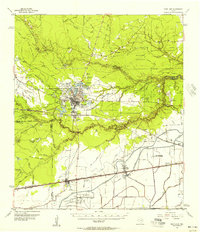 1955 Sour Lake1956 Print · USGSCoastal Texas prairies and oil fields are captured here in the mid-1950s as petroleum production shaped the local economy. Genealogists can locate family landmarks like Pine Ridge Ch, Henderson Sch, and the Grayburg Cem along the old rail lines.2 unique versions available
 - 1955 Map of Rayburn, 1957 Print
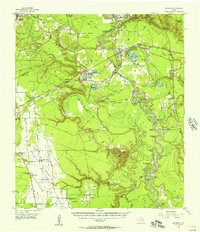 1955 Rayburn1957 Print · USGSDeep in East Texas during the mid-fifties, this survey reveals the intricate oxbows of the Trinity River and the rural communities of Tarkington Prairie. Genealogists can locate family landmarks like Concord Cem and the Tarkington Prairie Sch.2 unique versions available
 - 1955 Map of Liberty, 1957 Print
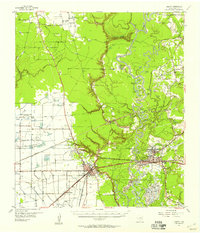 1955 Liberty1957 Print · USGSLiberty and Dayton thrived at the crossroads of the Trinity River and major rail lines during the mid-fifties. Genealogists and historians can trace family landmarks like Magnolia Cem, Daniel Ranch, and schools like Colbert High Sch.2 unique versions available
 - 1956 Map of Houston, 1963 Print
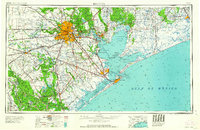 1956 Houston1963 Print · USGSSoutheast Texas in the mid-fifties is captured here as a powerhouse of oil and maritime trade. Genealogists and historians can trace the foundations of Houston and its ports, alongside landmarks like the Rice Institute and the Spindletop Oil Field.2 unique versions available
 - 1957 Map of Beaumont
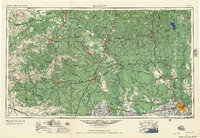 1957 Beaumont1957 Print · USGSSoutheast Texas in the mid-fifties is defined by the timber-rich lands between the Trinity River and Beaumont. Trace the history of the Alabama and Coushatti Indian Reservation or locate early campus sites like Prairie View College.
 - 1958 Map of Fostoria, 1959 Print
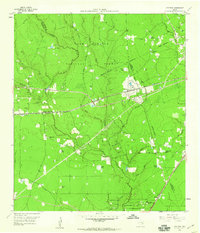 1958 Fostoria1959 Print · USGSThe timber country of southeast Texas is captured here in the late fifties, centered on the mill town of Fostoria. Researchers can trace old family landmarks and rural life at Pin Oak Cem, Pilgrim Rest Ch, and the logging stops along the Gulf Colorado and Santa Fe railroad.3 unique versions available
 - 1958 Map of Cleveland, 1959 Print
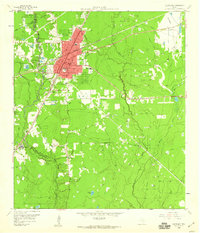 1958 Cleveland1959 Print · USGSCleveland emerged as a bustling rail and timber crossroads in the late fifties, where major lines met at the edge of the national forest. Genealogists and historians can trace old community anchors like Pin Oak Cem, New Salem Ch, and the outlying settlement of Fostoria.2 unique versions available
 - 1958 Map of Westcott, 1959 Print
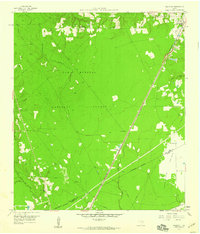 1958 Westcott1959 Print · USGSThe Piney Woods of San Jacinto County meet the open grasslands in the late fifties, as rail lines drove the local timber economy. Researchers can locate family landmarks like Lovett Cem, the Big Creek Missionary Ch, and the rural school at Dixon High Sch.3 unique versions available
 - 1959 Map of Plum Grove, 1960 Print
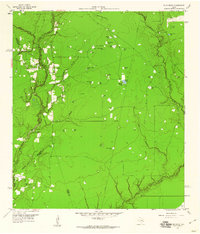 1959 Plum Grove1960 Print · USGSThe Texas coastal plains near the Liberty and Montgomery county lines come into focus in the late fifties. Researchers can trace family-named landmarks and water sources like Thompson Grass Pond, Sallas Lake, and the high point at Casey Ridge.3 unique versions available
 - 1959 Map of Splendora, 1960 Print
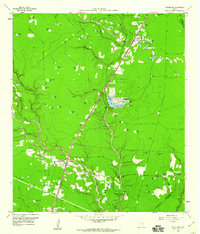 1959 Splendora1960 Print · USGSEast Texas oil production and railroad transit define the Splendora area in the late fifties. Genealogists and researchers can trace family landmarks and community hubs like Robinson Cem, Carver Sch, and the vanished tracks of the Old Grade Railroad.4 unique versions available
End of results
Showing maps 1-15 of 15
Top cities of Liberty County
- Liberty historical maps
- Cleveland historical maps
- Dayton historical maps
- Daisetta historical maps
- Ames historical maps
- Plum Grove historical maps
See more
Frequently asked questions
- What are the different types of historical maps available for Liberty County?
- What is the oldest map of Liberty County?
- Where can I purchase historical maps of Liberty County for my home or office?
- Where can I download high-res historical maps of Liberty County?
- Are there historical topographic maps available for Liberty County?
- Is there historical aerial imagery available for Liberty County?
- Where are historical maps of Liberty County sourced from?