1950s Maps of Moore County, Texas
Explore 16 historic maps of Moore County from the 1950s. These maps offer a rare glimpse into what life looked like during the 1950s — showing old roads, neighborhoods, homes, and landmarks that have changed or disappeared over time.
Whether you're researching your family's past, planning a metal detecting trip, or studying how Moore County's landscape evolved across the 1950s, these high-resolution maps are a powerful tool for exploring the history of this region.
- Focus on a specific era: All maps on this page are from the 1950s, giving you a focused view of this time period.
- See what’s changed: Compare century-old streets, trails, and buildings to today's modern landscape using overlays and satellite layers.
- Research with precision: Use these maps for genealogy, historical research, land use analysis, or educational projects.
- View, download, or print: Maps are fully viewable online in high resolution, and can be downloaded or printed for your own records.
Start exploring Moore County's history through authentic maps from the 1950s. This is your window into the past.
Moore County, TX maps
(16)- 1953 Map of Sanford
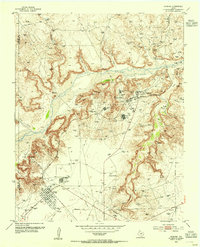 1953 Sanford1953 Print · USGSIn the early 1950s, the Texas Panhandle was a landscape of rapid energy growth centered on the Canadian River. Researchers can trace the industrial footprint of the Merchant Oil Field and find historic sites like Sanford Cemetery and the Oil City School (Aband).
 - 1953 Map of Marsh, 1954 Print
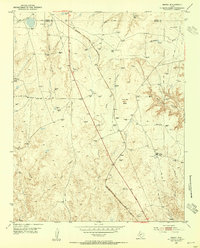 1953 Marsh1954 Print · USGSThe Texas Panhandle comes alive in the 1950s as a hub of energy and rail transport at the Potter and Moore county line. Trace the industrial footprint of the Panhandle and Santa Fe (At&Sf) Railway and the Fain Compressor Sta amid landmarks like John Ray Butte.2 unique versions available
 - 1953 Map of Alibates Ranch, 1954 Print
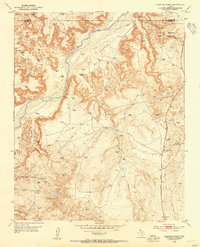 1953 Alibates Ranch1954 Print · USGSPotter County ranching and the early energy industry come into focus in the early 1950s along the Canadian River. Researchers can trace the layout of the McBride Ranch, Bivins Camp, and the Turkey Creek Plant.
 - 1953 Map of Evans Canyon, 1954 Print
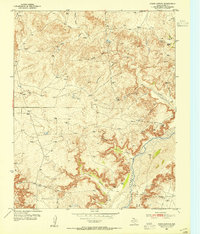 1953 Evans Canyon1954 Print · USGSMoore County ranching and early energy development are captured here during the early fifties. Genealogists and historians can locate family holdings like Record Ranch and Ozier Ranch or trace the rugged breaks of Evans Canyon.
 - 1953 Map of Deal, 1954 Print
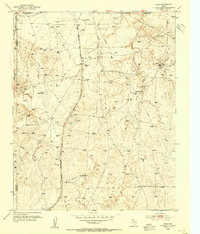 1953 Deal1954 Print · USGSThe Texas Panhandle in the early fifties was a landscape of expansive cattle spreads and critical rail infrastructure. Trace the Rock Island Line past Poling Ranch and Bennett Ranch, or locate industrial landmarks like the Huber Water Sta.
 - 1953 Map of Masterson, 1954 Print
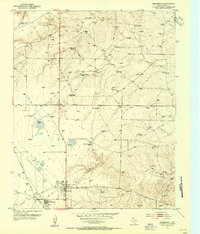 1953 Masterson1954 Print · USGSThe Texas Panhandle's mid-century energy boom comes alive in this survey of the high plains north of the Canadian River. Researchers can trace industrial genealogy at Masterson and Exell or locate family rangelands like Terry Thompson Ranch and Brent Ranch.2 unique versions available
 - 1953 Map of McDowell Creek, 1954 Print
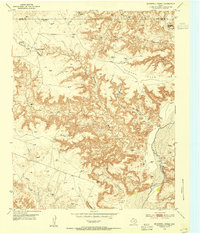 1953 McDowell Creek1954 Print · USGSThe Texas Panhandle ranching country of the early fifties is defined here by the deep carved canyons of the Canadian River. Genealogists and researchers can locate remote outposts like Scott Headquarters Ranch and a solitary Grave along McDowell Creek.
 - 1953 Map of Spencer Draw, 1954 Print
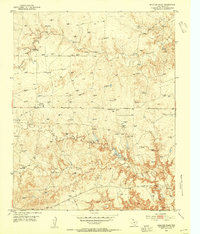 1953 Spencer Draw1954 Print · USGSMoore County in the early fifties is captured during a period of intense energy development and cattle ranching. Researchers can trace the network of Gas Well sites and Pipe Line corridors alongside family landmarks like Browns Ranch and Weymouth Ranch.2 unique versions available
 - 1954 Map of Tucumcari, 1965 Print
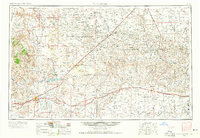 1954 Tucumcari1965 Print · USGSThe high plains along the New Mexico and Texas border come alive in this mid-century survey, just as the regional highway network was maturing. Trace the historic route of U.S. 66 through Glenrio and San Jon or locate remote rail sidings like Rehm Station and Obar.2 unique versions available
 - 1954 Map of Perryton, 1966 Print
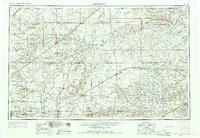 1954 Perryton1966 Print · USGSThe High Plains of the Texas and Oklahoma panhandles are shown during a period of steady growth in the mid-1950s. Genealogists and researchers can trace rail history and local landmarks like Panhandle A & M College, Spurlock Chapel, and the isolated Lord Station.3 unique versions available
 - 1954 Map of Amarillo, 1966 Print
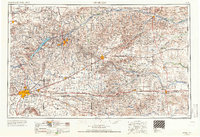 1954 Amarillo1966 Print · USGSThe Texas Panhandle in the mid-1960s shows a landscape of rising industrial power and deep-rooted ranching tradition. Local historians can trace the paths of the Panhandle and Santa Fe railroad or locate sites like the Pantex Ordnance Plant and Mobeetie.2 unique versions available
 - 1954 Map of Dalhart, 1967 Print
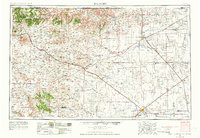 1954 Dalhart1967 Print · USGSThe High Plains at the junction of four states come alive in the mid-fifties, showing a landscape of rail-hub towns and cattle country. Trace the Old Santa Fe Trail or locate mid-century industrial sites like the Dry ice plant and Carbon Dioxide Works.2 unique versions available
 - 1958 Map of Perryton
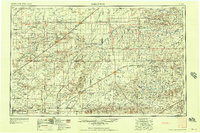 1958 Perryton1958 Print · USGSThe Oklahoma Panhandle and Texas borderlands come alive in this mid-century survey, showing the vital rail-and-ranch economy of the High Plains. Researchers can trace historic stops along the Chicago Rock Island and Pacific and locate rural landmarks like Bethel Church and Spurlock Chapel.
 - 1958 Map of Amarillo
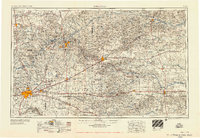 1958 Amarillo1958 Print · USGSThe Texas Panhandle in the mid-1950s reveals a landscape of expanding military installations and oil-rich rail towns. Local historians can trace the development of Amarillo Air Force Base or locate smaller settlements like Magic City and New Mobeetie.
 - 1958 Map of Tucumcari
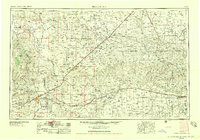 1958 Tucumcari1958 Print · USGSEastern New Mexico and the Texas Panhandle meet in this mid-century survey of the high plains ranching and rail corridor. Researchers can trace the path of Mother Road travelers through Tucumcari and Glenrio or locate remote rail stops like Nara Visa Station and Hartley Station.
 - 1958 Map of Dalhart
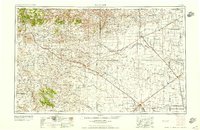 1958 Dalhart1958 Print · USGSThe High Plains of the tri-state border region come alive in this mid-century survey of the ranching and rail territory around the Texas Panhandle. Genealogists and historians can trace the paths of the Atchison Topeka & Santa Fe Ry, military outposts like Dalhart Air Force No 1, and early settlements such as Pasamonte and Texline.2 unique versions available
End of results
Showing maps 1-16 of 16
Top cities of Moore County
Frequently asked questions
- What are the different types of historical maps available for Moore County?
- What is the oldest map of Moore County?
- Where can I purchase historical maps of Moore County for my home or office?
- Where can I download high-res historical maps of Moore County?
- Are there historical topographic maps available for Moore County?
- Is there historical aerial imagery available for Moore County?
- Where are historical maps of Moore County sourced from?