Old Maps of Garfield County, Utah
Explore 878 old maps of Garfield County, spanning from 1885 to today. These high-resolution historic maps reveal how streets, neighborhoods, landmarks, and natural features evolved over time — perfect for genealogy, metal detecting, research, and local history exploration.
What you can do with these maps:
- See how Garfield County changed over time: Compare historical maps to modern-day views to trace roads, homesites, rail lines & more.
- View detailed metadata: Each map includes creators, publishers, year, scale, and archive source.
- Overlay maps with satellite & LiDAR: Visualize the past alongside modern tools to explore terrain & human change.
- Trusted historical sources: Maps sourced from the USGS, Library of Congress, and other archives.
- Access maps your way: View online, download high-res files, or order prints for personal or research use.
Start exploring old maps of Garfield County to uncover forgotten places, hidden landmarks, and the deep history beneath your feet.
Garfield County, UT maps
(878)- 1885 Map of San Rafael
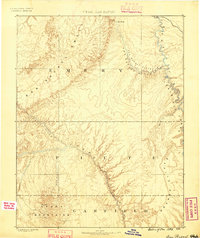 1885 San Rafael1885 Print · USGSCentral Utah at the height of the Powell Survey reveals a land defined by water and stone. Genealogists and historians can locate early settlements like Tidwell and Blake or trace the intricate river systems of Labyrinth Canyon and San Rafael Valley.5 unique versions available
 - 1885 Map of La Sal
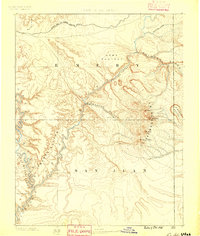 1885 La Sal1885 Print · USGSSoutheast Utah in the mid-1880s remains a frontier of dramatic river canyons and high mountain peaks. Genealogists and historians can trace the early footprints of Moab and Plainfield or locate the high summits of Mt Peale and the path of the Green River.6 unique versions available
 - 1885 Map of Beaver
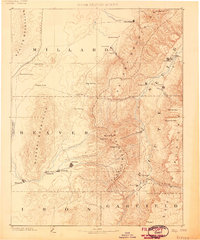 1885 Beaver1885 Print · USGSSouth-central Utah in the 1880s was a landscape of high plateaus and valley settlements tied to the lifelines of the Sevier River and Beaver Creek. Family researchers can trace early town layouts in Beaver and Fillmore or locate rural outposts like Minersville and Kanosh.5 unique versions available
 - 1885 Map of Fish Lake
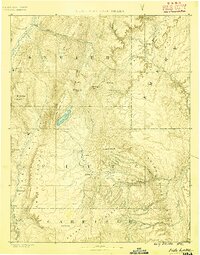 1885 Fish Lake1885 Print · USGSThe high plateaus and early canyon settlements of central Utah are documented here in the mid-1880s, shortly after the Powell Survey. Genealogists and historians can trace early families in Salina, Antimony, and Cousharem, or locate remote sites like Bean Spring.
 - 1886 Map of Kanab
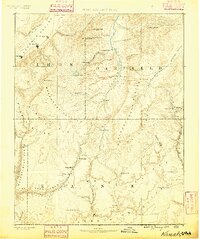 1886 Kanab1886 Print · USGSSouthern Utah in the late nineteenth century remains a frontier of deep canyons and high plateaus. Researchers can trace early pioneer outposts and river settlements like Orderville, Mt. Carmel, and Kanab tucked beneath the Vermilion Cliffs.5 unique versions available
 - 1886 Map of Escalante
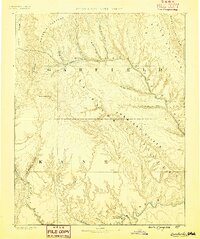 1886 Escalante1886 Print · USGSSouthern Utah in the late 1880s was a landscape of formidable geological barriers and isolated river crossings. Modern researchers can trace the early layout of Escalante and identify historic points like The Crossing of the Fathers and Potato Valley.5 unique versions available
 - 1886 Map of Henry Mountains
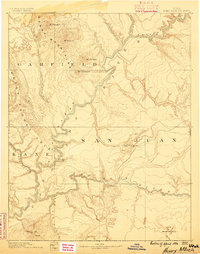 1886 Henry Mountains1886 Print · USGSSouthern Utah remains a wilderness of deep canyons and volcanic peaks in this 1880s survey. Researchers can trace the original courses of the Colorado River through Cataract Canyon and find landmarks like Navajo Mt and Monument Valley.
 - 1892 Map of Henry Mountains
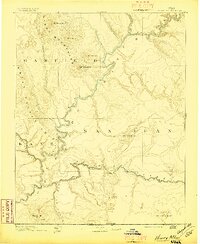 1892 Henry Mountains1892 Print · USGSSouthern Utah in the late 1800s remains a wilderness of deep canyons and isolated peaks under the direction of J.W. Powell. Geologists and historians can trace the geological spine of the Water Pocket Fold and the early boundaries of the Navajo Indian Res. near Monument Valley.6 unique versions available
 - 1896 Map of Fish Lake, 1899 Print
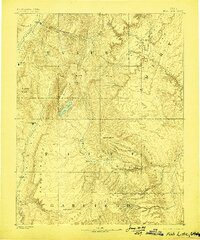 1896 Fish Lake1899 Print · USGSSouthern Utah in the late nineteenth century is a land of high plateaus and isolated river settlements. Trace early pioneer outposts like Thurber, Teardale, and Antimony alongside geological marvels such as Fish Lake and the Water Pocket Flexure.4 unique versions available
 - 1952 Map of Notom 3 SW, 1954 Print
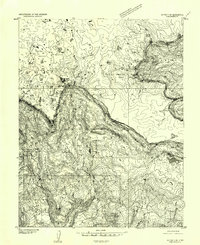 1952 Notom 3 SW1954 Print · USGSBoulder Mountain and the surrounding high plateaus are captured here in the early fifties during a period of active resource management. Researchers can trace historic land use through several named grazing sites like Kings Pasture and locate industrial landmarks such as the local Sawmill near Oak Draw.
 - 1952 Map of Mt Pennell 1 SW, 1954 Print
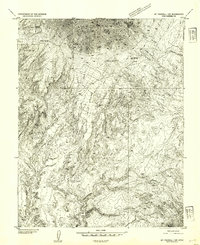 1952 Mt Pennell 1 SW1954 Print · USGSGarfield County's high desert landscape comes into sharp focus during the early 1950s, revealing a terrain shaped by mining and cattle trails. Modern researchers can trace the isolated Del Mont Mine and the historic Hoskininni Road across the Copper Benches.
 - 1952 Map of Mouth of Dark Canyon, 1954 Print
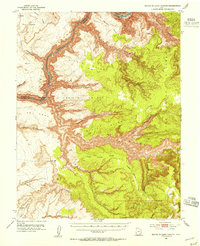 1952 Mouth of Dark Canyon1954 Print · USGSCataract Canyon and the Colorado River dominate this San Juan County landscape in the early fifties. Researchers can trace remote desert landmarks like Indian Head Pass, find Freddies Cistern, and locate the Dark Canyon Rapids.3 unique versions available
 - 1952 Map of Notom 3 NW, 1954 Print
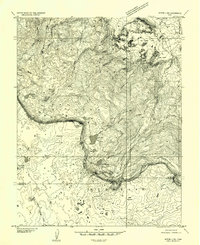 1952 Notom 3 NW1954 Print · USGSThe high plateau of Wayne County is captured in the early 1950s, documenting a remote landscape of alpine lakes and grazing lands. Researchers can trace historic water sources and stock routes through Donkey Meadows, Blind Lake, and Stink Flats.
 - 1952 Map of Notom 4 SE, 1954 Print
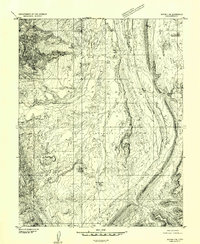 1952 Notom 4 SE1954 Print · USGSThe high plateaus of Garfield County come alive in the early fifties, showing a remote landscape of canyons and working ranches. Researchers can trace the water systems of Sandy Ranch, the steep walls of Cedar Mesa, and the path of the Bitter Spring Trail.
 - 1952 Map of Orange Cliffs 3 SW, 1954 Print
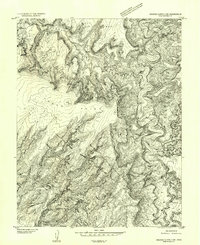 1952 Orange Cliffs 3 SW1954 Print · USGSGarfield County's canyonlands are captured in detail during the early fifties, showcasing the intricate drainage of the Dirty Devil River. Researchers can trace the elevation changes from the flat top of Bert Mesa to the depths of Poison Spring Canyon.
 - 1952 Map of Mount Ellen 4 SW, 1954 Print
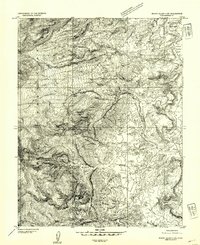 1952 Mount Ellen 4 SW1954 Print · USGSThe Henry Mountains in Garfield County are captured here in the early 1950s, showing a high-altitude wilderness before extensive modern development. Researchers can trace remote features like Pysents Hole, a lone Prospect, and the spring-fed waters of Crescent Creek.
 - 1952 Map of Notom 4 NW, 1954 Print
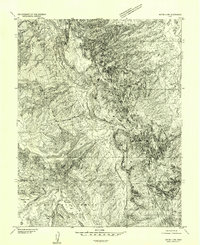 1952 Notom 4 NW1954 Print · USGSThe high desert canyons and cattle ranching territory of south-central Utah are documented here in the early fifties. Local historians can trace the bounds of the Dixie National Forest and identify landmarks like Pleasant Creek Ranch, Hanks Tower, and Ferns Nipple.
 - 1952 Map of Mt Pennell 2 NE, 1954 Print
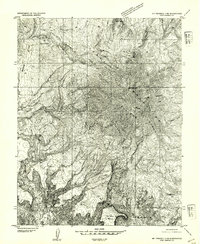 1952 Mt Pennell 2 NE1954 Print · USGSGarfield County in the early fifties is captured here as a remote landscape of high peaks and deep incisions. Researchers can trace the rugged drainage of Bullfrog Creek and Scratch Canyon, or locate landmarks like Mt Pennell and the isolated No Man Mesa.
 - 1952 Map of Mancos Mesa, 1954 Print
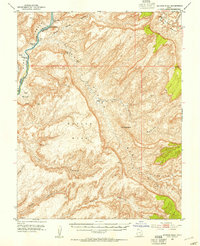 1952 Mancos Mesa1954 Print · USGSSan Juan and Garfield counties appear as a wilderness of deep canyons and mesas in the early fifties before major regional developments. Trace the course of the Colorado River past Monte Cristo Island and the remote Landing Strip near Ticaboo No 1 Rapids.3 unique versions available
 - 1952 Map of Mt Pennell 1 NE, 1954 Print
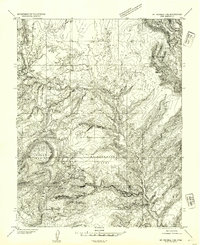 1952 Mt Pennell 1 NE1954 Print · USGSGarfield County's remote canyon country is captured here in the early fifties, centering on the lonely outpost at Trachyte Ranch. Trace the remnants of an Abandoned Ditch or locate vital water sources like Maidenwater Spring among the formations of Black Table.
 - 1952 Map of Notom 4 SW, 1954 Print
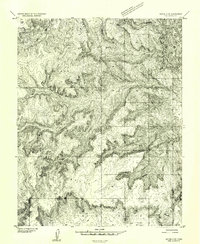 1952 Notom 4 SW1954 Print · USGSGarfield County’s high desert landscape is captured here in the early fifties during a period of preliminary topographic mapping. Researchers can trace the drainage of Tantalus Creek and find family-named landmarks like Yergy Flat and the Circle Cliffs.
 - 1952 Map of Notom 4 NE, 1954 Print
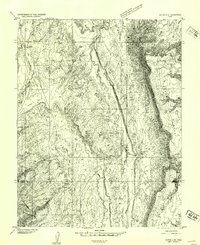 1952 Notom 4 NE1954 Print · USGSSoutheast Utah at the start of the fifties reveals a world of desert outposts and livestock routes along the base of the mesas. Trace the seasonal drainages of Burro Wash and the landmarks at Tenison Flats or the remote Bloody Hands Gap.
 - 1952 Map of Notom 3 SE, 1954 Print
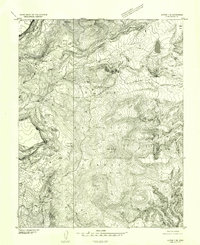 1952 Notom 3 SE1954 Print · USGSGarfield County high country in the early fifties shows a remote landscape of forest service outposts and high-altitude pastures. Researchers can trace the water and grazing network of the Aquarius Plateau through Wildcat Ranger Sta, Bowns Reservoir, and Wildcat Pasture.
 - 1952 Map of Mt Hillers, 1954 Print
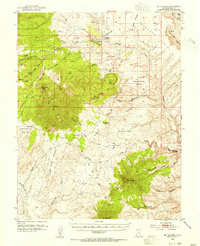 1952 Mt Hillers1954 Print · USGSThe Henry Mountains stand as a formidable landmark in Garfield County during the early 1950s, a time of remote ranching and mining prospects. Researchers can trace isolated outposts like Trachyte Ranch, the Del Monte Mine, and a lonely Landing Strip set among high peaks.4 unique versions available
 - 1952 Map of Mt. Ellen 4 NW, 1954 Print
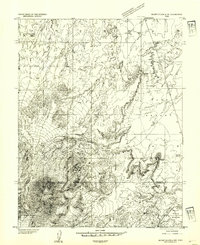 1952 Mt. Ellen 4 NW1954 Print · USGSThe high desert of Wayne and Garfield counties comes into focus in the early 1950s before modern development reached these remote canyons. Trace early ranching footprints at Fairview Ranch and follow rugged routes like Sawmill Road past Bull Mountain.
Showing maps 1-25 of 878
Top cities of Garfield County
- Panguitch historical maps
- Escalante historical maps
- Tropic historical maps
- Bryce Canyon City historical maps
- Henrieville historical maps
- Cannonville historical maps
See more
Frequently asked questions
- What are the different types of historical maps available for Garfield County?
- What is the oldest map of Garfield County?
- Where can I purchase historical maps of Garfield County for my home or office?
- Where can I download high-res historical maps of Garfield County?
- Are there historical topographic maps available for Garfield County?
- Is there historical aerial imagery available for Garfield County?
- Where are historical maps of Garfield County sourced from?