1900s (20th Century) Maps of Vermont
Explore 567 historic maps of Vermont from the 1900s (20th Century). These maps offer a rare glimpse into what life looked like during the 1900s — showing old roads, neighborhoods, homes, and landmarks that have changed or disappeared over time.
Whether you're researching your family's past, planning a metal detecting trip, or studying how Vermont's landscape evolved across the 1900s, these high-resolution maps are a powerful tool for exploring the history of this region.
- Focus on a specific era: All maps on this page are from the 1900s, giving you a focused view of this time period.
- See what’s changed: Compare century-old streets, trails, and buildings to today's modern landscape using overlays and satellite layers.
- Research with precision: Use these maps for genealogy, historical research, land use analysis, or educational projects.
- View, download, or print: Maps are fully viewable online in high resolution, and can be downloaded or printed for your own records.
Start exploring Vermont's history through authentic maps from the 1900s. This is your window into the past.
Vermont maps
(567)- 1900 Map of Whitefield
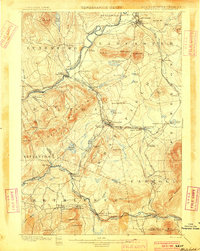 1900 Whitefield1900 Print · USGSWhite Mountains rail and tourism reached a peak at the turn of the century, as seen in this 1897 survey. Trace the old junctions and grand hotels of the era, from the Mount View House to the busy tracks at Whitefield Junction and Wing Road.5 unique versions available
 - 1900 Map of Taconic
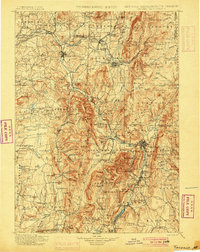 1900 Taconic1900 Print · USGSThe tri-state border region of the Taconic Mountains thrived at the turn of the century as a hub of rail travel and valley industry. Genealogists and historians can trace the early footprints of Hoosick Falls, Bennington, and the winding path of the Rutland R.R.4 unique versions available
 - 1900 Map of Equinox
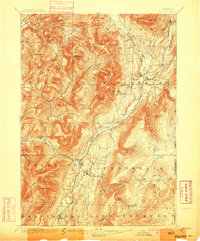 1900 Equinox1900 Print · USGSBennington County’s valley corridor and high mountain notches are captured here in the final years of the nineteenth century. Researchers can trace the early rail-and-river network through Manchester Depot, identify old homesteads at Kelley Stand, and locate vanished landmarks like Fayville.7 unique versions available
 - 1901 Map of Fort Ann
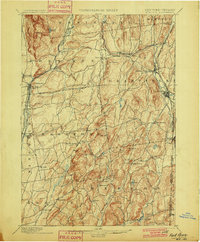 1901 Fort Ann1901 Print · USGSWashington County at the close of the nineteenth century was a vital corridor of New York commerce, defined by its historic canal and rail lines. You can trace the early industrial landscape through Smith Basin, find family homesteads near Slyboro, and follow the Mettawee River as it crosses the Vermont border.
 - 1901 Map of Cambridge
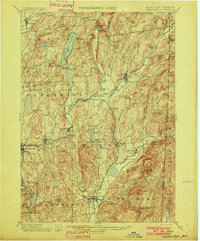 1901 Cambridge1901 Print · USGSWashington County at the turn of the century is a landscape of river-powered industry and sprawling rail networks connecting New York to Vermont. Genealogists and historians can trace the paths of the Batten Kill, find old rail stops at Easton Sta., and locate vanished names like Pumpkin Hook.8 unique versions available
 - 1902 Map of Whitehall
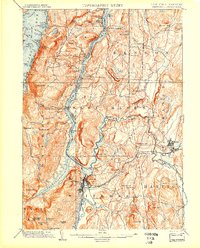 1902 Whitehall1902 Print · USGSThe borderlands of New York and Vermont at the turn of the century show a region defined by the Champlain Canal and the Delaware and Hudson R.R. maritime and rail networks. Genealogists and historians can trace the early layout of Whitehall, small lakeside landings like Snody Dock, and the winding Poultney River.10 unique versions available
 - 1902 Map of Ticonderoga
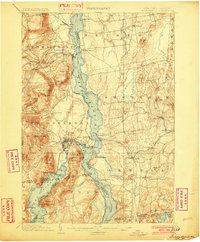 1902 Ticonderoga1902 Print · USGSThe Champlain Valley at the start of the twentieth century is captured here in the borderlands of New York and Vermont. Researchers can trace the military grounds of Fort Ticonderoga, identify operations at the Iron Mine, and locate rural stations like Burdick Crossing.11 unique versions available
 - 1902 Map of Brandon, 1956 Print
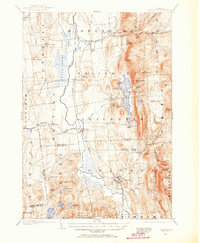 1902 Brandon1956 Print · USGSCentral Vermont at the turn of the century shows a landscape defined by the Otter Creek valley and the bustling Rutland Railroad. Genealogists and historians can trace old homesteads and rail sidings at Leicester Junction, Hyde Manor, and Forestdale.2 unique versions available
 - 1903 Map of Mettawee
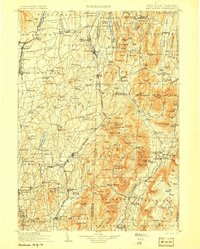 1903 Mettawee1903 Print · USGSThe New York and Vermont borderlands come alive in this turn-of-the-century survey of the Mettawee Valley. Genealogists can trace family footprints from Middletown Springs down to the Saratoga and Champlain Canal at Fort Ann.2 unique versions available
 - 1903 Map of Middlebury, 1956 Print
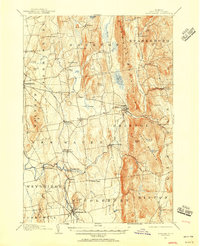 1903 Middlebury1956 Print · USGSAddison County at the turn of the century shows a landscape of mountain-shadowed valley towns and early iron mining. Researchers can trace the legacy of industry and transit at the Bristol Orebed, New Haven Mills, and along the historic Plank Road.2 unique versions available
 - 1904 Map of Fort Ann
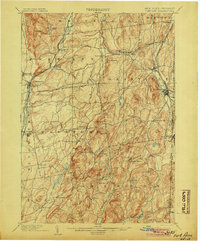 1904 Fort Ann1904 Print · USGSWashington County at the turn of the century shows a landscape defined by the slate industry and early rail lines along the Vermont border. Genealogists can locate family lands near Chamberlain Mills, Smith Basin, and the crossroads of North Hebron or Slyboro.6 unique versions available
 - 1904 Map of Brandon
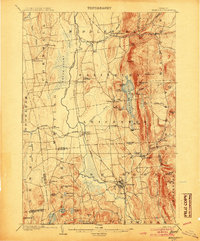 1904 Brandon1904 Print · USGSCentral Vermont at the opening of the century shows a landscape defined by the Rutland R.R. and the winding Otter Creek. Genealogists and researchers can trace local landmarks from Hyde Manor to the mills of Forestdale and the rail hub at Leicester Junction.5 unique versions available
 - 1905 Map of Middlebury
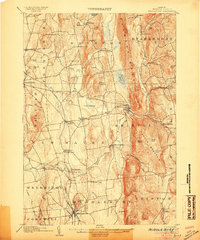 1905 Middlebury1905 Print · USGSAddison County at the start of the twentieth century shows a region defined by mountain ridges and the growing rail hub at Middlebury. Trace the path of the Rutland railroad through New Haven Junction or locate the historic Bristol Orebed.5 unique versions available
 - 1906 Map of Plattsburg
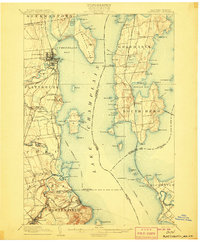 1906 Plattsburg1906 Print · USGSLake Champlain's northern waters are captured here in the early 1900s, showing the vital maritime and rail corridors of Clinton County and the islands of Vermont. Genealogists and historians can trace the Plattsburg Barracks, find old stops like Grand Isle Sta., and locate lighthouses such as Valcour L.H..6 unique versions available
 - 1906 Map of Burlington
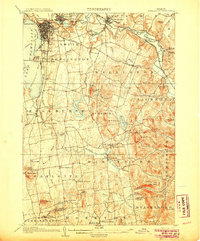 1906 Burlington1906 Print · USGSBurlington and the Lake Champlain shoreline appear at the height of the railroad era, showing a dense city grid and industrial waterfront. Researchers can locate early schools and burial grounds like the University of Vermont and Greenmount Cemetery, alongside vanished stops like Mechanicsville.7 unique versions available
 - 1906 Map of Hanover, 1956 Print
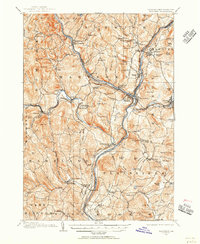 1906 Hanover1956 Print · USGSThe Upper Connecticut River Valley at the turn of the century is a hub of rail activity and collegiate life. Researchers can trace the early footprints of Dartmouth College or locate vanished rail infrastructure at White River Junction and Deweys Mills.2 unique versions available
 - 1907 Map of Rouse Point
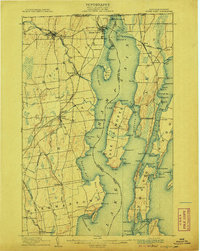 1907 Rouse Point1907 Print · USGSThe Lake Champlain shoreline at the turn of the century reveals a busy borderland of rail junctions and island settlements. Researchers can trace the early waterfront at Rouse Point, find the Fisk church on Isle La Motte, and locate Fort Montgomery near the Canadian boundary.5 unique versions available
 - 1908 Map of Hanover
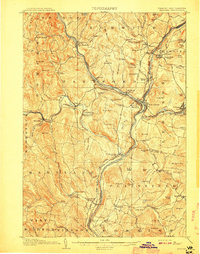 1908 Hanover1908 Print · USGSThe Upper Valley at the dawn of the twentieth century was a vital junction of Vermont and New Hampshire rail lines and river commerce. Researchers can trace the early layout of Dartmouth College, the rail yards of White River Junction, and numerous rural schoolhouses like Podunk School.7 unique versions available
 - 1911 Map of Woodstock, 1958 Print
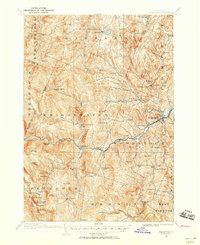 1911 Woodstock1958 Print · USGSWindsor County villages and mountain hollows are captured here at the dawn of the twentieth century. Researchers can trace the early path of the Woodstock Railroad or locate family sites near the Town Farm and Plymouth Notch.
 - 1913 Map of Milton
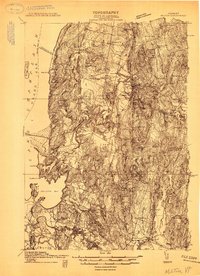 1913 Milton1913 Print · USGSVermont's northwestern lakefront settlements are captured here just before the Great War, showing a landscape of small school districts and lakeside camps. Trace early transport routes like the CENTRAL VERMONT railroad or locate historic homesites near Miltonborough, Georgia Plains, and Checkerberry Village.
 - 1913 Map of Woodstock
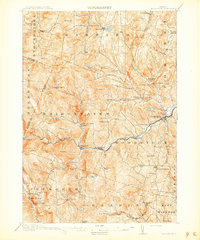 1913 Woodstock1913 Print · USGSWindsor County villages and narrow valley settlements are captured here in the decade before the First World War. Genealogists can trace family lines through numerous rural schoolhouses like Mendall School and early post offices at Bridgewater Center Briggs P O.5 unique versions available
 - 1914 Map of St. Albans
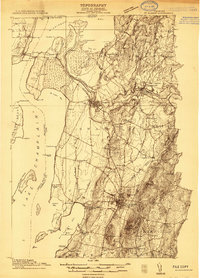 1914 St. Albans1914 Print · USGSFranklin County at the dawn of the Great War shows a landscape defined by the iron rails of the Central Vermont and a bustling lakefront. Genealogists can locate old family schoolhouses like Tuller School and historic landing points including Melville Landing.2 unique versions available
 - 1915 Map of Milton
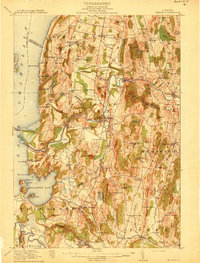 1915 Milton1915 Print · USGSNorthwest Vermont's shoreline and interior towns come alive in the decade before the Great War, showing a network of rural schools and lakeside camps. Trace the early layout of Colchester, Westford, and Fort Ethan Allen, or locate family-named sites like Brigham Hill and Bowman Corners.5 unique versions available
 - 1915 Map of Rochester, 1963 Print
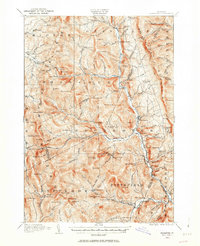 1915 Rochester1963 Print · USGSThe Green Mountains in the early twentieth century were a landscape of remote hollow schools and narrow valley settlements. Genealogists and historians can trace old property lines and landmarks like the Williams Mine, Hancock Tunnel, and the Texas School.
 - 1916 Map of St. Albans
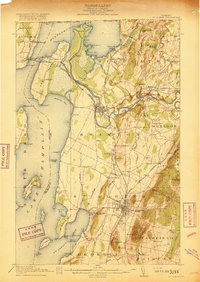 1916 St. Albans1916 Print · USGSNorthwestern Vermont at the start of the Great War was a busy junction of international rail lines and lakeside resorts. Genealogists and historians can trace the early 20th-century footprints of St Albans and Swanton, or locate specific rural sites like Fonda Quarry and the Tuller School.6 unique versions available
Showing maps 1-25 of 567
Top cities of Vermont
- Burlington historical maps
- South Burlington historical maps
- Colchester historical maps
- Rutland City historical maps
- Essex historical maps
- Essex Junction historical maps
See more
Top counties of Vermont
- Chittenden County historical maps
- Rutland County historical maps
- Washington County historical maps
- Windsor County historical maps
- Windham County historical maps
- Bennington County historical maps
See more
Frequently asked questions
- What are the different types of historical maps available for Vermont?
- What is the oldest map of Vermont?
- Where can I purchase historical maps of Vermont for my home or office?
- Where can I download high-res historical maps of Vermont?
- Are there historical topographic maps available for Vermont?
- Is there historical aerial imagery available for Vermont?
- Where are historical maps of Vermont sourced from?