1930s Maps of Greenbrier County, West Virginia
Explore 11 historic maps of Greenbrier County from the 1930s. These maps offer a rare glimpse into what life looked like during the 1930s — showing old roads, neighborhoods, homes, and landmarks that have changed or disappeared over time.
Whether you're researching your family's past, planning a metal detecting trip, or studying how Greenbrier County's landscape evolved across the 1930s, these high-resolution maps are a powerful tool for exploring the history of this region.
- Focus on a specific era: All maps on this page are from the 1930s, giving you a focused view of this time period.
- See what’s changed: Compare century-old streets, trails, and buildings to today's modern landscape using overlays and satellite layers.
- Research with precision: Use these maps for genealogy, historical research, land use analysis, or educational projects.
- View, download, or print: Maps are fully viewable online in high resolution, and can be downloaded or printed for your own records.
Start exploring Greenbrier County's history through authentic maps from the 1930s. This is your window into the past.
Greenbrier County, WV maps
(11)- 1930 Map of Mountain Grove
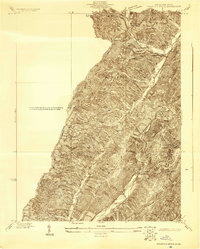 1930 Mountain Grove1930 Print · USGSThe Virginia and West Virginia borderlands in the late 1920s are captured here during a time of isolated mountain settlements and river-bottom farming. Genealogists can trace family footprints through the numerous named hollows and crossings like Mcclintic Bridge, Mountain Grove, and Mooretown.
 - 1932 Map of Falling Spring
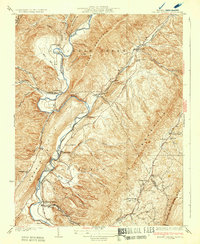 1932 Falling Spring1932 Print · USGSThe Virginia and West Virginia borderlands in the early 1930s reveal a landscape of mountain ridges and riverside rail industry. Genealogists can trace family footprints at Greavers Mill, Jenkins Ford, and the old Cedar Creek Sch.3 unique versions available
 - 1933 Map of Mountain Grove
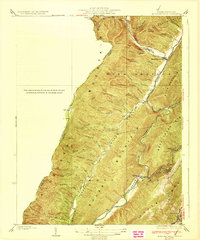 1933 Mountain Grove1933 Print · USGSBath County's high ridges and river valleys are captured here in the early 1930s as a network of mountain hollows and small settlements. Genealogists and local historians can locate Mooretown, trace the namesake Mountain Grove, and find the Mailbox Sch and Eden Ch.3 unique versions available
 - 1935 Map of Lobelia, 1959 Print
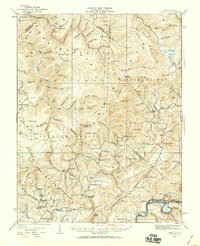 1935 Lobelia1959 Print · USGSThe Greenbrier County backcountry is shown in the mid-1930s, just as the regional forest service infrastructure was expanding. Genealogists and historians can trace numerous rural schoolhouses and churches, from Beulah Church to the Baldwin School and the remote Trout PO.2 unique versions available
 - 1935 Map of Clintonville, 1962 Print
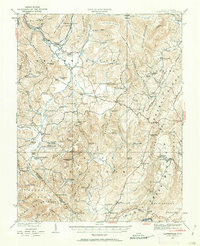 1935 Clintonville1962 Print · USGSGreenbrier County is captured here in the mid-1930s, showing a landscape defined by small farming hamlets and a remarkable density of rural schools. Researchers can locate family landmarks like Berrys Mill, the landmark Sam Black Church, and the mineral waters of Blue Sulphur Springs.
 - 1935 Map of Richwood, 1962 Print
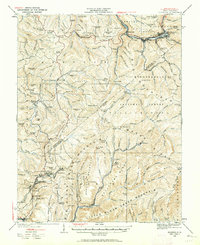 1935 Richwood1962 Print · USGSRichwood and the surrounding coal and timber lands of Nicholas and Greenbrier Counties are shown here in the mid-1930s. Researchers can trace the early industrial footprint of the Chesapeake and Ohio railroad through mountain settlements like Quinwood, Saxman, and Marfrance.2 unique versions available
 - 1935 Map of White Sulphur Springs, 1965 Print
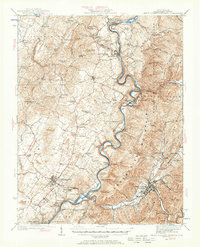 1935 White Sulphur Springs1965 Print · USGSGreenbrier County is shown here in the mid-1930s, featuring a landscape of mountain ridges and river-bottom settlements connected by the Chesapeake and Ohio railroad. Researchers can locate many now-rare landmarks, from Camp Alleghany to the Enon Church and schools like Dansie School.
 - 1939 Map of Clintonville
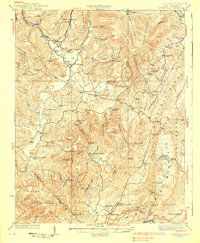 1939 Clintonville1939 Print · USGSGreenbrier County's high ridges and creek valleys are documented here in the late 1930s, showing a landscape thick with local institutions. Genealogists can locate dozens of historic schools and churches, from Sam Black Church and Berrys Mill to the remote Sawmill Hollow School.2 unique versions available
 - 1939 Map of Lobelia
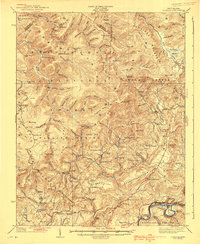 1939 Lobelia1939 Print · USGSGreenbrier and Pocahontas counties appear here in the years before the war, characterized by high mountain plateaus and a dense network of rural schoolhouses. Researchers can trace family roots through sites like Rockcamp Cem, Bethel Church, and the Trout Valley Trout Post Office.2 unique versions available
 - 1939 Map of White Sulphur Springs
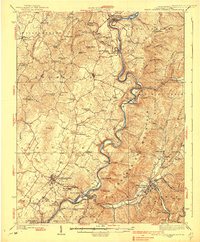 1939 White Sulphur Springs1939 Print · USGSGreenbrier County is captured here in the late 1930s, showing a landscape defined by the winding Greenbrier River and the expanding road network of Lewisburg. Genealogists and historians can trace numerous rural institutions, from the grounds of Camp Alleghany to local centers like Frankford and Pilgrim Rest Church.2 unique versions available
 - 1939 Map of Richwood
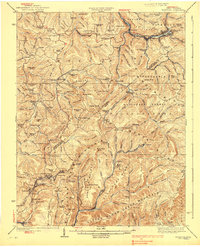 1939 Richwood1939 Print · USGSThe West Virginia coal and timber country around Richwood and Quinwood is shown here during its industrial peak. Researchers can trace the Chesapeake and Ohio RR to remote hollows and find lost schools and churches like Bamboo School and Mountain Chapel.2 unique versions available
End of results
Showing maps 1-11 of 11
Top cities of Greenbrier County
- Lewisburg historical maps
- White Sulphur Springs historical maps
- Fairlea historical maps
- Ronceverte historical maps
- Rainelle historical maps
- Rupert historical maps
See more
Frequently asked questions
- What are the different types of historical maps available for Greenbrier County?
- What is the oldest map of Greenbrier County?
- Where can I purchase historical maps of Greenbrier County for my home or office?
- Where can I download high-res historical maps of Greenbrier County?
- Are there historical topographic maps available for Greenbrier County?
- Is there historical aerial imagery available for Greenbrier County?
- Where are historical maps of Greenbrier County sourced from?