1990s Maps of Greenbrier County, West Virginia
Explore 18 historic maps of Greenbrier County from the 1990s. These maps offer a rare glimpse into what life looked like during the 1990s — showing old roads, neighborhoods, homes, and landmarks that have changed or disappeared over time.
Whether you're researching your family's past, planning a metal detecting trip, or studying how Greenbrier County's landscape evolved across the 1990s, these high-resolution maps are a powerful tool for exploring the history of this region.
- Focus on a specific era: All maps on this page are from the 1990s, giving you a focused view of this time period.
- See what’s changed: Compare century-old streets, trails, and buildings to today's modern landscape using overlays and satellite layers.
- Research with precision: Use these maps for genealogy, historical research, land use analysis, or educational projects.
- View, download, or print: Maps are fully viewable online in high resolution, and can be downloaded or printed for your own records.
Start exploring Greenbrier County's history through authentic maps from the 1990s. This is your window into the past.
Greenbrier County, WV maps
(18)- 1995 Map of Fork Mountain, 1998 Print
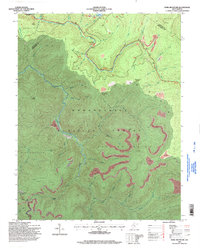 1995 Fork Mountain1998 Print · USGSThe West Virginia highlands in the 1990s show a landscape of intense resource extraction within the Monongahela National Forest. Trace the impact of several Strip Mines near landmarks like Cold Knob and Summit Lk.
 - 1995 Map of Duo, 1998 Print
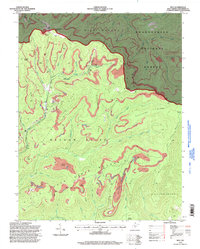 1995 Duo1998 Print · USGSGreenbrier County's coal country is captured here during the 1990s, where heavy industry meets the mountain wilderness. Researchers can trace the footprint of the settlement at Duo alongside extensive Strip Mines and the Stag Dump infrastructure.
 - 1995 Map of Lake Sherwood, 1998 Print
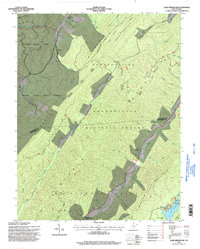 1995 Lake Sherwood1998 Print · USGSThe West Virginia high country in the mid-nineties is documented here as a vast network of state and federal forest lands. Researchers can locate secluded sites such as Columbia Sulphur Springs, May Chapel, and the remote Landing Strip near the Greenbrier County line.
 - 1995 Map of Alvon, 1998 Print
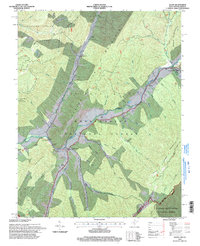 1995 Alvon1998 Print · USGSGreenbrier County, West Virginia, is shown in the mid-1990s as a forested mountain landscape where the state border meets two national forests. Researchers can trace rural life and industry through labels for Neola, Anthony Creek Sch, and the Anthony Correctional Center.
 - 1995 Map of Droop, 1998 Print
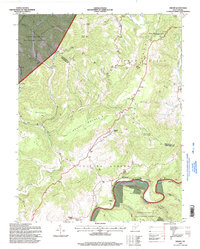 1995 Droop1998 Print · USGSThe Greenbrier highlands come into focus in the mid-nineties, showing the intersection of agricultural plateaus and national forest wilderness. Genealogists can trace family landmarks like Sunset Cem and Kellison Cem near Droop or the Covered Bridge on Locust Creek.
 - 1995 Map of Rucker Gap, 1998 Print
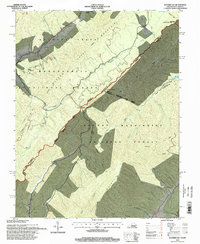 1995 Rucker Gap1998 Print · USGSThe high ridges of the Virginia-West Virginia border are captured here in the mid-1990s, where national forests meet at the crest of Allegheny Mountain. Trace local heritage through landmarks like Watts Chapel Cem and the mineral springs at Columbia Sulphur Springs.
 - 1995 Map of Nettie, 1998 Print
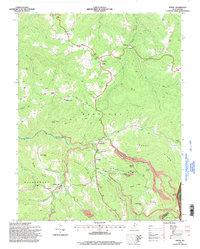 1995 Nettie1998 Print · USGSNicholas County in the mid-nineties shows a landscape defined by mountain settlements and coal operations along the edge of the national forest. Genealogists and historians can trace community roots at Downtain Chapel, Leivasy, and Fairview Cem while locating old Strip Mines.
 - 1995 Map of Denmar, 1998 Print
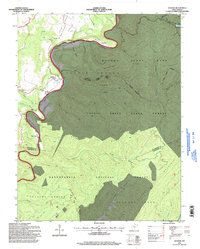 1995 Denmar1998 Print · USGSThe Greenbrier River valley in the mid-1990s remained a remote landscape of state forests and small riverfront outposts. Researchers can trace historic sites like the Denmar State Hospital and Old Droop Ch, or locate the settlements at Beard and Burnsides.
 - 1995 Map of Quinwood, 1998 Print
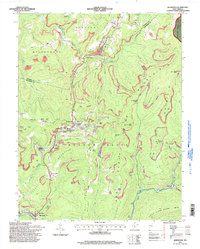 1995 Quinwood1998 Print · USGSMid-century mining settlements across the Greenbrier and Nicholas county line are documented here as coal production continued to shape the landscape. Local historians can trace family locations near Quinwood, Anjean, and rural landmarks like Hilltop Ch and Greenbrier West High Sch.
 - 1995 Map of Webster Springs SW, 1998 Print
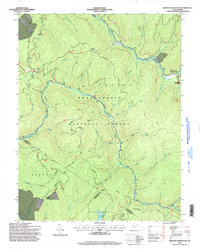 1995 Webster Springs SW1998 Print · USGSThe Monongahela National Forest highlands are captured here in the mid-nineties, showing a landscape of rugged mountain peaks and river headwaters. Researchers can trace the Mills Mtn Ch, local Cem, and the remote Three Forks of Williams River.
 - 1995 Map of Trout, 1998 Print
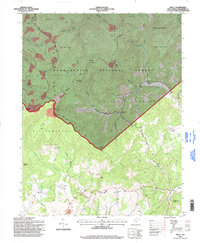 1995 Trout1998 Print · USGSGreenbrier County in the mid-nineties shows a landscape where timber and mining interests meet small mountain farming communities. Researchers can locate remote landmarks like Friars Hill, Band of Hope Ch, and the high-elevation strip mines near Blue Knob.
 - 1995 Map of Anthony, 1998 Print
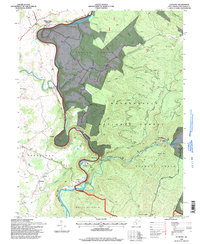 1995 Anthony1998 Print · USGSGreenbrier County's river-cut valley is captured here in the mid-nineties, showing a landscape of forest ridges and riverside hamlets. Researchers can trace the Greenbrier River Trail through Anthony and Falling Spring or locate family sites like Walnut Grove Cem.
 - 1995 Map of Richwood, 1998 Print
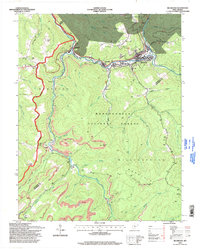 1995 Richwood1998 Print · USGSThe Cherry River valley in the 1990s reveals a landscape defined by mountain industry and forest conservation. Genealogists and historians can trace the foundations of local life through rural landmarks like New Hope Ch, Baber Cem, and the high-elevation settlement of Saxman.
 - 1995 Map of Lobelia, 1998 Print
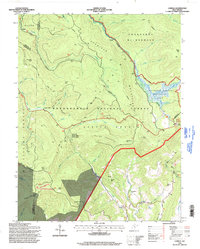 1995 Lobelia1998 Print · USGSPocahontas County in the mid-nineties shows a landscape of high-elevation wilderness and small forest communities. Trace the roads through Lobelia to find Emmanuel Ch or explore the unique terrain of the Cranberry Glades Botanical Area.
 - 1995 Map of White Sulphur Springs, 1998 Print
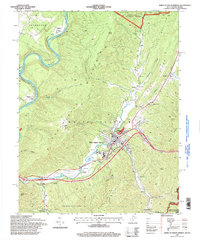 1995 White Sulphur Springs1998 Print · USGSThe Greenbrier Valley in the mid-1990s showcases a balance of mountain forest and resort-town development. Genealogists and historians can trace family-named landmarks and rural outposts like Mapledale, Eckle Ch, and the high ridges of Coles Mountain.
 - 1995 Map of Jerrys Run, 1998 Print
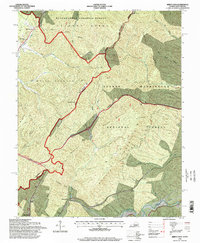 1995 Jerrys Run1998 Print · USGSThe Virginia and West Virginia borderlands in the mid-nineties reveal a landscape of mountain engineering and national forest tracts. Researchers can trace the path of numerous rail and utility tunnels like Lewis Tunnels and Moores Tunnel near Alleghany.
 - 1995 Map of Mountain Grove, 1998 Print
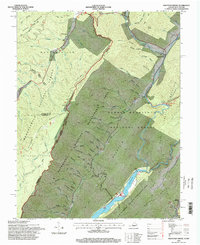 1995 Mountain Grove1998 Print · USGSThe Virginia and West Virginia borderlands are shown in the 1990s as a landscape of forest management and early recreation. Researchers can trace family-named hollows and historic rural sites like Cochran Creek Ch and the northern tip of Lake Moomaw.
 - 1998 Map of Lewisburg, 2000 Print
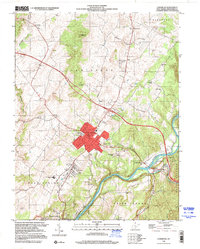 1998 Lewisburg2000 Print · USGSGreenbrier County is captured in the late nineties as a thriving valley anchored by Lewisburg. Genealogists and historians can trace local landmarks like Arbuckle Sch, Liberty Ch, and the winding course of the Greenbrier River.
End of results
Showing maps 1-18 of 18
Top cities of Greenbrier County
- Lewisburg historical maps
- White Sulphur Springs historical maps
- Fairlea historical maps
- Ronceverte historical maps
- Rainelle historical maps
- Rupert historical maps
See more
Frequently asked questions
- What are the different types of historical maps available for Greenbrier County?
- What is the oldest map of Greenbrier County?
- Where can I purchase historical maps of Greenbrier County for my home or office?
- Where can I download high-res historical maps of Greenbrier County?
- Are there historical topographic maps available for Greenbrier County?
- Is there historical aerial imagery available for Greenbrier County?
- Where are historical maps of Greenbrier County sourced from?