1900s (20th Century) Maps of Douglas, Wyoming
Explore 12 historic maps of Douglas from the 1900s (20th Century). These maps offer a rare glimpse into what life looked like during the 1900s — showing old roads, neighborhoods, homes, and landmarks that have changed or disappeared over time.
Whether you're researching your family's past, planning a metal detecting trip, or studying how Douglas's landscape evolved across the 1900s, these high-resolution maps are a powerful tool for exploring the history of this region.
- Focus on a specific era: All maps on this page are from the 1900s, giving you a focused view of this time period.
- See what’s changed: Compare century-old streets, trails, and buildings to today's modern landscape using overlays and satellite layers.
- Research with precision: Use these maps for genealogy, historical research, land use analysis, or educational projects.
- View, download, or print: Maps are fully viewable online in high resolution, and can be downloaded or printed for your own records.
Start exploring Douglas's history through authentic maps from the 1900s. This is your window into the past.
Douglas, WY maps
(12)- 1949 Map of Irvine, 1960 Print
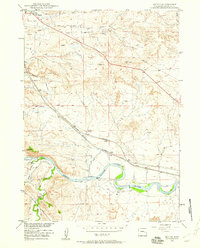 1949 Irvine1960 Print · USGSThe North Platte River valley in the late 1940s reveals a landscape of irrigation and rail transport. Researchers can trace the Chicago and Northwestern line through Irvine or locate markers like Beacon 11A and Miller.2 unique versions available
 - 1949 Map of Douglas, 1971 Print
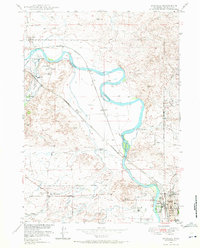 1949 Douglas1971 Print · USGSDouglas and the surrounding Converse County ranchlands appear here in the late 1940s, anchored by the historical junction of the North Platte River and early migration routes. Researchers can trace the legacy of the Old West at the Site of Old Fort Fetterman, the Bozeman Trail, and the Bill Hooker Monument.3 unique versions available
 - 1949 Map of Chalk Buttes, 1975 Print
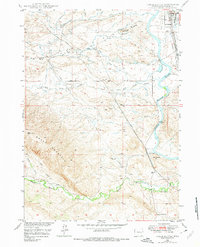 1949 Chalk Buttes1975 Print · USGSConverse County at the end of the 1940s shows a landscape where historic overland routes meet modern rail and aviation. Trace the path of the Emigrant Trail past the Oregon Trail Monument or locate early landmarks like the Municipal Airport and Hot Springs.3 unique versions available
 - 1949 Map of Antelope Creek, 1981 Print
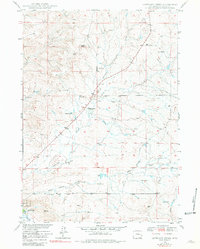 1949 Antelope Creek1981 Print · USGSRanching life in Converse County comes into focus in this late-1940s survey of the plains near Douglas. Researchers can locate family landmarks like Combs Ranch and Wallis Ranch, or trace the grounds of the Graves School (Abandoned).
 - 1950 Map of Douglas
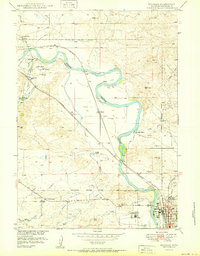 1950 Douglas1950 Print · USGSThe Douglas area in the mid-twentieth century was a vital crossroads of rail and river, deeply rooted in its frontier past. Trace the path of historical migrations at the Bozeman Trail Marker or locate the Site of Old Fort Fetterman and State Fair Grounds.
 - 1950 Map of Irvine
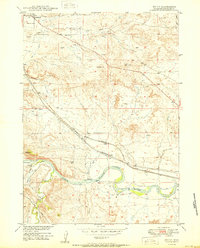 1950 Irvine1950 Print · USGSConverse County rangeland and the Platte River valley are captured here at mid-century as the rail and ranching economy thrived. Genealogists and historians can locate family-named landmarks like Miller and Foster, or trace the paths of the Chicago and Northwestern and the Burlington railroads.
 - 1950 Map of Antelope Creek
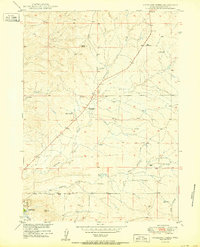 1950 Antelope Creek1950 Print · USGSConverse County ranching country is captured here at mid-century, showing the isolated homesteads and vital water sources of the high plains. Genealogists and local historians can locate Combs Ranch, Wallis Ranch, and the Graves School (Abandoned).
 - 1950 Map of Chalk Buttes
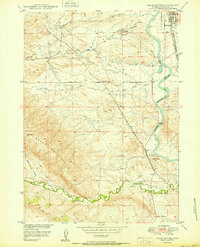 1950 Chalk Buttes1950 Print · USGSConverse County seen at the start of the 1950s shows the city of Douglas as a critical rail hub where the North Platte River meets the high plains. Researchers can trace the path of the Oregon Trail Monument alongside modern infrastructure like pipe lines and the Municipal Airport.
 - 1954 Map of Torrington, 1963 Print
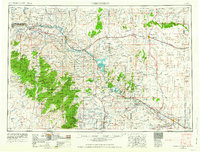 1954 Torrington1963 Print · USGSEastern Wyoming and the Nebraska borderlands are captured here during the mid-fifties, showing a landscape shaped by the Platte River and the Laramie Range. Researchers can trace deep history at the Fort Laramie National Historical Site, the Old Doty Ranch Site, and along the Old Fetterman Road.4 unique versions available
 - 1958 Map of Torrington
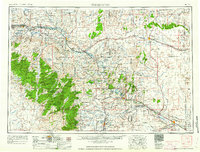 1958 Torrington1958 Print · USGSEastern Wyoming and the Nebraska borderlands are captured in the late fifties, showcasing a landscape of high plains ranching and river-fed industry. Trace the historic paths of the Union Pacific railroad and find legacy sites like Fort Laramie and Sunrise.
 - 1973 Map of Antelope Creek, 1975 Print
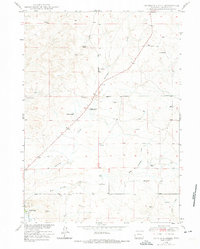 1973 Antelope Creek1975 Print · USGSThe ranching country of Converse County is documented here during the early seventies, showing a landscape of family-owned spreads and upland drainage. Trace the locations of historic properties like Combs Ranch and the site of the Graves School.
 - 1981 Map of Douglas
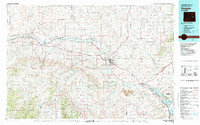 1981 Douglas1981 Print · USGSThe North Platte River corridor in the early eighties shows a landscape shaped by energy and iron. Genealogists and industrial historians can trace rail-side settlements like Glenrock, explore the Big Muddy Oil Field, and locate the old siding at Fetterman.
End of results
Showing maps 1-12 of 12
Frequently asked questions
- What are the different types of historical maps available for Douglas?
- What is the oldest map of Douglas?
- Where can I purchase historical maps of Douglas for my home or office?
- Where can I download high-res historical maps of Douglas?
- Are there historical topographic maps available for Douglas?
- Is there historical aerial imagery available for Douglas?
- Where are historical maps of Douglas sourced from?