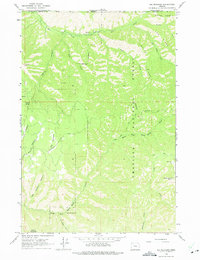
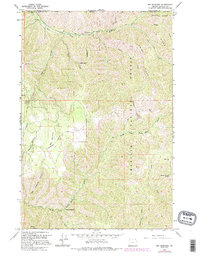
1963 Map of Big Meadows
USGS Topo · Published 1975About this map
The North Fork Walla Walla River carves through this portion of the Umatilla National Forest, defining a landscape of deep drainages and prominent ridges in the 1960s. The convergence of numerous watercourses, including Mill Creek, Webb Creek, and Tiger Creek, highlights the complex hydrology of the Blue Mountains region along the border of Walla Walla and Umatilla counties. Early infrastructure is visible through the primitive Government Mountain Road and various jeep tracks that provided access to high-elevation points like Pikes Peak 4485 and Yellow Jacket Point. Local landmarks such as the Kiwanis Camp and the aptly named The Horseshoe bend in the river reflect the recreational and geographical identity of this wilderness area. The map captures a specific era of forest management and backcountry navigation before modern road improvements altered these historic paths.
Find a feature on this map
29 named features on this map. Tap any name to fly to it.
Don’t see what you’re looking for? This feature index may not catch every label — zoom into the map to look around manually.
Map Details
Editions of this 1963 Big Meadows Map
5 editions found
Other maps of this area
1919 · Walla Walla
USGS Topo · 1:125,000
1921 · Walla Walla
USGS Topo · 1:125,000
1937 · Pomeroy
USGS Topo · 1:96,000
1942 · Pomeroy
USGS Topo · 1:125,000
1953 · Pendleton
USGS Topo · 1:250,000
1953 · Walla Walla
USGS Topo · 1:250,000
1955 · Pullman
USGS Topo · 1:250,000
1955 · Grangeville
USGS Topo · 1:250,000
1956 · Pendleton
USGS Topo · 1:250,000
1958 · Pullman
USGS Topo · 1:250,000