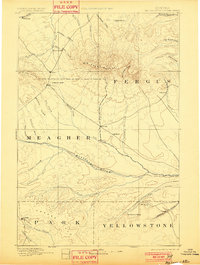
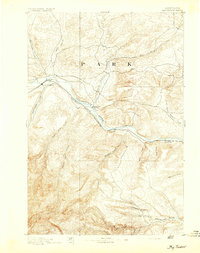
1893 Map of Big Snowy Mountain
USGS Topo · Published 1901About this map
Big Snowy Mountain dominates this central Montana landscape, acting as a dramatic topographical hub from which dozens of creeks radiate toward the Judith River and Musselshell River systems. Surveyed between 1882 and 1887, the map captures a network of small, widely spaced settlements such as Ubet, Filbrook, and Melville that served as early ranching and stage stops before the arrival of major rail lines. The terrain is marked by significant natural corridors like Judith Gap, a critical pass between the mountains that historically funneled travel and weather through the region. In the southeast, landmarks such as Locomotive Butte and Mt. Sinai rise from the plains, while the northern slopes are defined by deep drainage cuts like Cottonwood Creek and Beaver Creek. This reconnaissance work by E.M. Douglas provides a clear view of the frontier era, where early post offices and isolated outposts like Bercail and Halbert anchored the burgeoning livestock economy across the sprawling borders of Fergus and Meagher counties.
Find a feature on this map
47 named features on this map. Tap any name to fly to it.
Don’t see what you’re looking for? This feature index may not catch every label — zoom into the map to look around manually.
Map Details
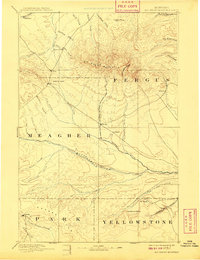
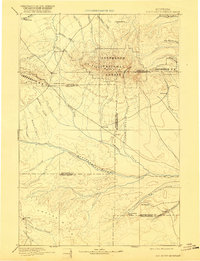
Editions of this 1893 Big Snowy Mountain Map
4 editions found
Other maps of this area
1886 · Little Belt Mts.
USGS Topo · 1:250,000
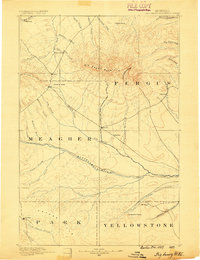
1889 · Big Snowy Mountain
USGS Topo · 1:250,000
1890 · Fort Benton
USGS Topo · 1:250,000
1891 · Livingston
USGS Topo · 1:250,000
1891 · Big Timber
USGS Topo · 1:125,000
1892 · Fort Benton
USGS Topo · 1:250,000
1892 · Stillwater
USGS Topo · 1:125,000
1893 · Livingston
USGS Topo · 1:250,000
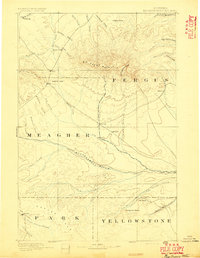
1893 · Big Snowy Mountain
USGS Topo · 1:250,000
1893 · Big Timber
USGS Topo · 1:125,000