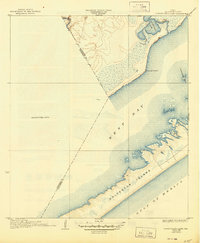
1933 Map of Carancahua Lake
USGS Topo · Published 1944About this map
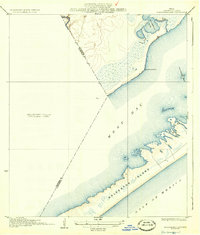
Galveston Island serves as a prominent barrier against the Gulf of Mexico, its northern tip showing the transition from salt marshes into the waters of West Bay. Surveyed in 1929 and published in the early 1940s, this chart captures the intricate hydrology of the Texas coast, where Halls Bayou enters the bay near the western boundary of Galveston County. The landscape is defined by tidal inlets and shallow basins, most notably Carancahua Lake and its connecting Carancahua Bayou. A significant portion of the mainland is marked as an Unsurveyed Area, contrasting with the detailed topographic lines tracing the elevations along the bay shores. These details are particularly useful for understanding the historical shoreline and the location of Carancahua Point and the offshore Carancahua Reef before subsequent decades of coastal erosion and development.
Find a feature on this map
11 named features on this map. Tap any name to fly to it.
Don’t see what you’re looking for? This feature index may not catch every label — zoom into the map to look around manually.
Map Details
Editions of this 1933 Carancahua Lake Map
2 editions found
Other maps of this area
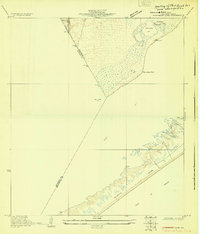
1929 · Karankawa Lake
USGS Topo · 1:24,000
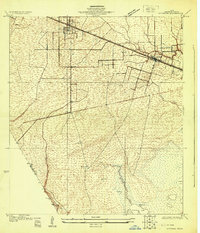
1929 · Hitchcock
USGS Topo · 1:24,000
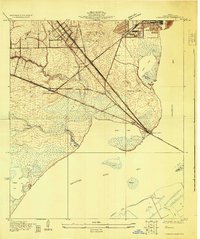
1929 · Virginia Point
USGS Topo · 1:24,000
1931 · Lake Como
USGS Topo · 1:24,000
1932 · Hitchcock
USGS Topo · 1:31,680
1932 · Mustang Bayou
USGS Topo · 1:31,680
1932 · Virginia Point
USGS Topo · 1:31,680
1933 · Karankawa Lake
USGS Topo · 1:31,680
1933 · San Luis Pass
USGS Topo · 1:31,680
1933 · Lake Como
USGS Topo · 1:31,680