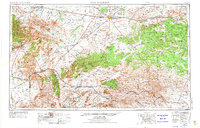
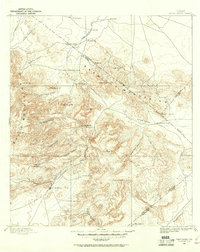
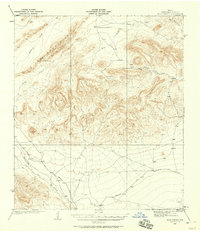
1954 Map of Fort Stockton
USGS Topo · Published 1974About this map
Fort Stockton and the surrounding Trans-Pecos landscape appear here during a period of transition, following a 1973 revision that updated the mid-century 1:250,000 scale survey. The map details the intersection of high desert plateaus and dramatic mountain ranges, including the Davis Mountains and the Glass Mountains. These peaks provided a natural barrier that influenced the path of the Southern Pacific and Atchison Topeka and Santa Fe railroads, which remain critical corridors for West Texas commerce. Regional landmarks such as the Fort Davis National Historic Site and Davis Mountains State Park are documented alongside irrigation-fed water bodies like Leon Lake and Balmorhea Lake. The map reveals a land defined by distance and resource management, where small ranching hubs like Bakersfield and Altuda connect via long stretches of U S 290 and U S 90.
Find a feature on this map
45 named features on this map. Tap any name to fly to it.
Don’t see what you’re looking for? This feature index may not catch every label — zoom into the map to look around manually.
Map Details
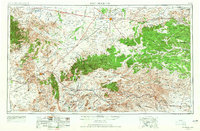
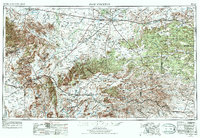
Editions of this 1954 Fort Stockton Map
3 editions found
Other maps of this area
1894 · Valentine
USGS Topo · 1:125,000
1894 · Fort Davis
USGS Topo · 1:125,000
1895 · Marfa
USGS Topo · 1:125,000
1895 · Alpine
USGS Topo · 1:125,000
1896 · Shafter
USGS Topo · 1:125,000
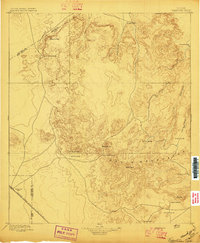
1897 · Valentine
USGS Topo · 1:125,000
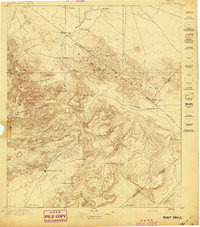
1897 · Fort Davis
USGS Topo · 1:125,000
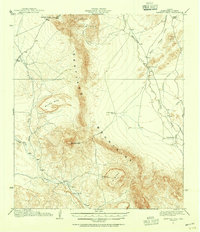
1917 · Santiago Peak
USGS Topo · 1:62,500
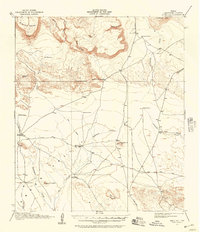
1917 · Buck Hill
USGS Topo · 1:62,500
1917 · Hood Spring
USGS Topo · 1:62,500