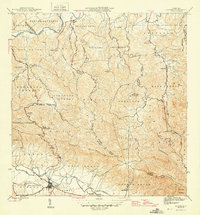
1946 Map of Gurabo
USGS Topo · Published 1946About this map
The Río Grande de Loíza winds through a landscape of traditional agricultural barrios in the mid-1940s, marking the boundaries between Trujillo Alto and Carolina. This period captures the rural educational infrastructure of the era, visible in the distributed locations of the Escuela Segunda Unidad de Cacao and Escuela Segunda Unidad de Carruzos. These "second unit" schools were central to the rural community, often focusing on vocational and agricultural training for local families.
Find a feature on this map
58 named features on this map. Tap any name to fly to it.
Don’t see what you’re looking for? This feature index may not catch every label — zoom into the map to look around manually.
Map Details
Editions of this 1946 Gurabo Map
3 editions found
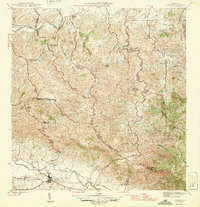
Other maps of this area
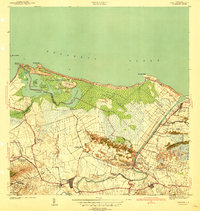
1940 · Carolina
USGS Topo · 1:30,000
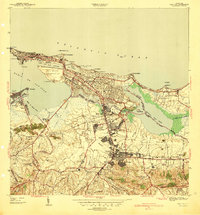
1941 · San Juan
USGS Topo · 1:30,000
1941 · Rio Grande
USGS Topo · 1:30,000
1941 · Carolina
USGS Topo · 1:30,000
1945 · El Yunque
USGS Topo · 1:30,000
1946 · El Yunque
USGS Topo · 1:30,000
1946 · Aguas Buenas
USGS Topo · 1:30,000
1946 · Humacao
USGS Topo · 1:30,000
1946 · Gurabo
USGS Topo · 1:30,000
1946 · Juncos
USGS Topo · 1:30,000
Featured Places
- Gurabo
- La Marina, Canóvanas
- Sector Los Canales, Carolina
- Sector El Counte, Carolina
- Colinas de Cacao, Carolina