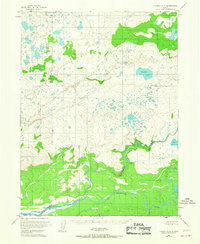
1952 Map of Iliamna A-8
USGS Topo · Published 1967About this map
The Alagnak River dominates this mid-century Alaskan landscape, winding through a complex network of wetlands and tributaries. Established through photogrammetric methods from 1951 aerial photography, the map reveals a remote wilderness before modern development or intensive infrastructure. The Nonvianuk River converges with the Alagnak in the southern reaches, marked by significant Rapids that characterize the area's hydrology. Further north, the terrain transitions into a mosaic of small ponds and larger water bodies like Reindeer Lake. Flowing into this system is Ole Creek, which drains a high-altitude area of the northern interior. The lack of roads or established trails on this sheet, as noted by the Bureau of Land Management surveying efforts, emphasizes the reliance on waterways for navigation during this era of Alaskan exploration.
Find a feature on this map
5 named features on this map. Tap any name to fly to it.
Don’t see what you’re looking for? This feature index may not catch every label — zoom into the map to look around manually.
Map Details
Editions of this 1952 Iliamna A-8 Map
This is the sole edition of this map. No revisions or reprints were ever made.
Other maps of this area
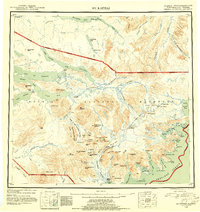
1948 · Mt Katmai
USGS Topo · 1:250,000
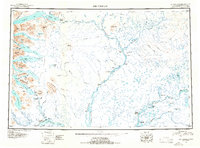
1951 · Dillingham
USGS Topo · 1:250,000
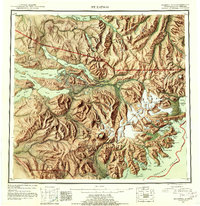
1951 · Mt Katmai
USGS Topo · 1:250,000
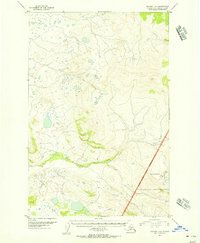
1951 · Naknek D-1
USGS Topo · 1:63,360
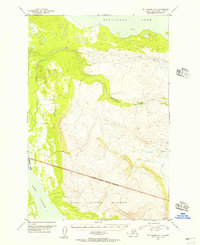
1951 · Mount Katmai D-5
USGS Topo · 1:63,360
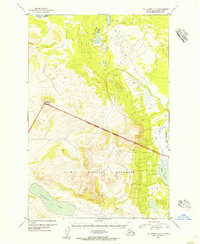
1951 · Mount Katmai D-6
USGS Topo · 1:63,360
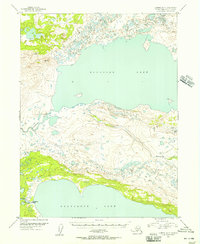
1951 · Iliamna A-7
USGS Topo · 1:63,360
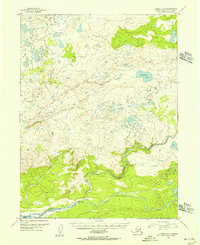
1951 · Iliamna A-8
USGS Topo · 1:63,360
1951 · Iliamna B-7
USGS Topo · 1:63,360
1951 · Dillingham A-1
USGS Topo · 1:63,360