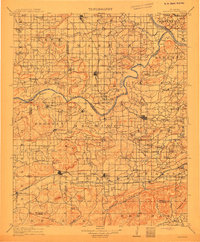
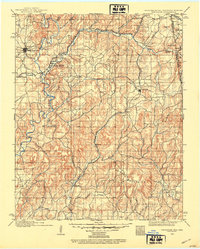
1911 Map of Sansbois
USGS Topo · Published 1911About this map
The Arkansas River and Canadian River define the northern and western reaches of this landscape, framing a region of eastern Oklahoma characterized by small agrarian settlements and numerous rural institutions. The 1909 cultural revision reveals a dense network of country schools and churches, including the notable Belle Starr School and Pope Chapel, which served the local farming communities. Transportation relies on the Fort Smith and Western Railroad passing through Quinton and Kinta, while further north, the Thornton Ferry provides a vital river crossing. The presence of varied terrain like Beaver Mtn and Tucker Knobs breaks up the township grids, while established centers like Stigler and Porum emerge as the primary hubs for commerce and social life in the early twentieth century.
Find a feature on this map
91 named features on this map. Tap any name to fly to it.
Don’t see what you’re looking for? This feature index may not catch every label — zoom into the map to look around manually.
Map Details
Editions of this 1911 Sansbois Map
3 editions found
Other maps of this area
1896 · Okmulgee
USGS Topo · 1:125,000

1898 · McAlester
USGS Topo · 1:125,000
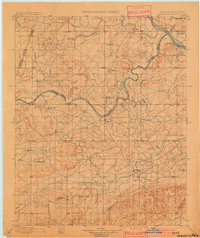
1898 · Tahlequah
USGS Topo · 1:125,000
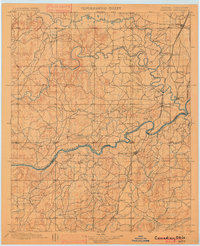
1900 · Sansbois
USGS Topo · 1:125,000
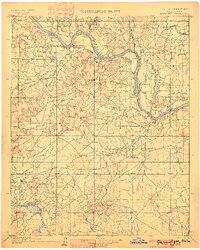
1900 · Canadian
USGS Topo · 1:125,000
1900 · Okmulgee
USGS Topo · 1:125,000
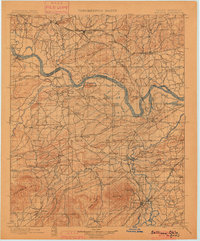
1900 · Sallisaw
USGS Topo · 1:125,000
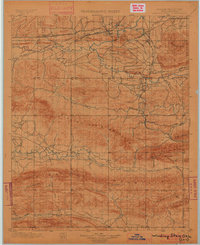
1900 · Winding Stair
USGS Topo · 1:125,000
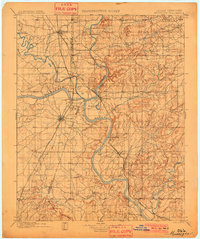
1901 · Muscogee
USGS Topo · 1:125,000
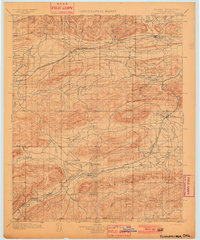
1901 · Tuskahoma
USGS Topo · 1:125,000