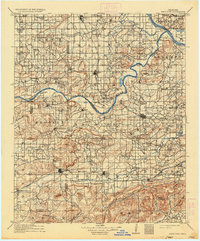
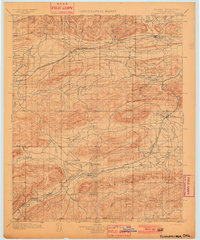
1911 Map of Sans Bois
USGS Topo · Published 1936About this map
Sans Bois Mountains dominate the southern portion of this region, creating a dramatic physical boundary that shaped the early 20th-century settlement and transport patterns of eastern Oklahoma. The map shows the area shortly after statehood, during a period of transition where the Arkansas River and Canadian River served as primary natural corridors while new steel rails began to define commerce. The Midland Valley railroad cuts through the northeast, passing near Stigler, while the Fort Smith and Western line parallels the southern mountain range, connecting towns like Quinton and Kinta. Notable for genealogists is the high density of rural schoolhouses and local meeting points, such as the Belle Starr School and Pope Chapel, which reflect the distributed nature of community life before the consolidation of these smaller districts.
Find a feature on this map
134 named features on this map. Tap any name to fly to it.
Don’t see what you’re looking for? This feature index may not catch every label — zoom into the map to look around manually.
Map Details
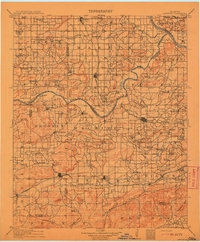
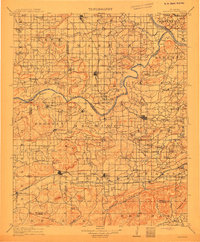
Editions of this 1911 Sans Bois Map
3 editions found
Other maps of this area
1896 · Okmulgee
USGS Topo · 1:125,000
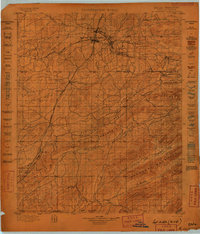
1898 · McAlester
USGS Topo · 1:125,000
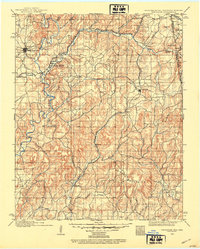
1898 · Tahlequah
USGS Topo · 1:125,000
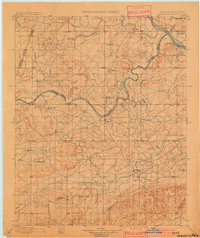
1900 · Sansbois
USGS Topo · 1:125,000
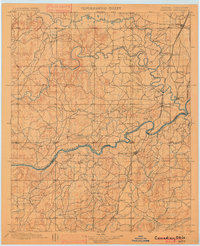
1900 · Canadian
USGS Topo · 1:125,000
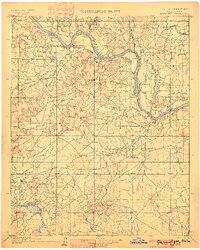
1900 · Okmulgee
USGS Topo · 1:125,000
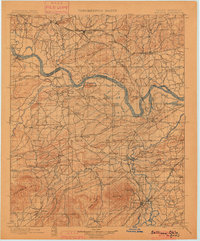
1900 · Sallisaw
USGS Topo · 1:125,000
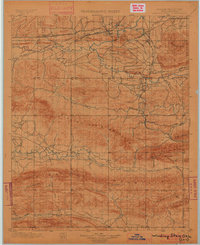
1900 · Winding Stair
USGS Topo · 1:125,000
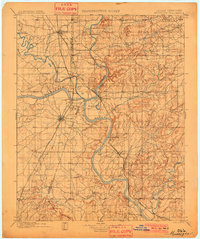
1901 · Muscogee
USGS Topo · 1:125,000
1901 · Tuskahoma
USGS Topo · 1:125,000