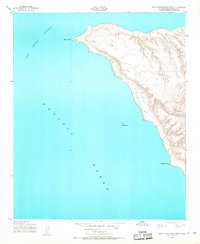
1943 Map of Santa Rosa Island West
USGS Topo · Published 1952About this map
Sandy Point anchors the westernmost reaches of Santa Rosa Island in this mid-century topographic record, where the windswept coastline meets the San Miguel Passage. Mapped during the Second World War for the Army Map Service, the terrain exhibits a stark, undeveloped character defined by deep erosional features like Arlington Canyon and Canada Tecolote that carve through the island's interior toward the eastern edge of the sheet. The offshore environment is dominated by the Pacific Ocean, punctuated by maritime hazards and landmarks such as the solitary Bee Rock and the southern protrusion of Cluster Point. The interior topography includes several surveying marks like Blunt and Sand 2, which hint at the logistical efforts required to document this remote California landscape during a period of heightened coastal surveillance.
Find a feature on this map
10 named features on this map. Tap any name to fly to it.
Don’t see what you’re looking for? This feature index may not catch every label — zoom into the map to look around manually.
Map Details
Editions of this 1943 Santa Rosa Island West Map
This is the sole edition of this map. No revisions or reprints were ever made.
Other maps of this area
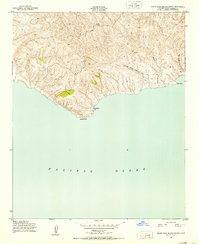
1943 · Santa Rosa Island South
USGS Topo · 1:24,000
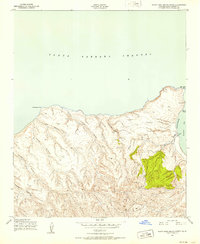
1943 · Santa Rosa Island North
USGS Topo · 1:24,000
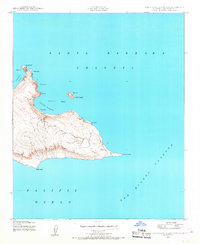
1943 · San Miguel Island East
USGS Topo · 1:24,000
1948 · Santa Maria
USGS Topo · 1:250,000
1950 · San Miguel Island East
USGS Topo · 1:24,000
1956 · Santa Maria
USGS Topo · 1:250,000
1957 · Santa Maria
USGS Topo · 1:250,000
1958 · Santa Maria
USGS Topo · 1:250,000
1962 · Santa Maria
USGS Topo · 1:250,000
1981 · Point Conception
USGS Topo · 1:100,000