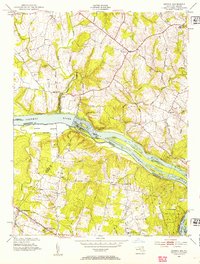
1952 Map of Seneca
USGS Topo · Published 1954About this map
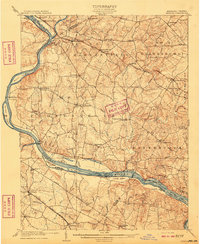
The Potomac River corridor serves as the primary boundary between Maryland and Virginia in this mid-century survey, defined by its numerous islands and the parallel course of the Chesapeake and Ohio Canal. In Montgomery County, the rural landscape is anchored by the crossroads of Darnestown and Quince Orchard, while the community of Seneca sits at the confluence where Seneca Creek meets the river. The Maryland side features a network of historic thoroughfares like Montevideo Road and Query Mill Road, winding through terrain dotted with isolated schools such as Forestville Sch. Across the water in Fairfax County, the Leesburg Turnpike connects Dranesville to Herndon Junction, marking a period when these now-suburban areas were still largely agrarian. Notable riverside landmarks like Blockhouse Point and Lowes Island overlook a complex waterway of smaller landforms including Sycamore Island and Clagett Island.
Find a feature on this map
43 named features on this map. Tap any name to fly to it.
Don’t see what you’re looking for? This feature index may not catch every label — zoom into the map to look around manually.
Map Details
Editions of this 1952 Seneca Map
4 editions found
Other maps of this area
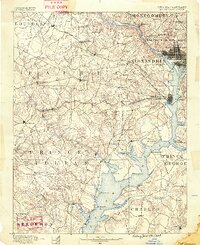
1890 · Mt. Vernon
USGS Topo · 1:125,000
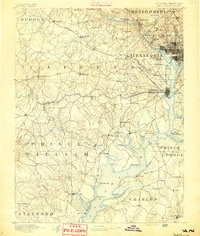
1891 · Mt. Vernon
USGS Topo · 1:125,000
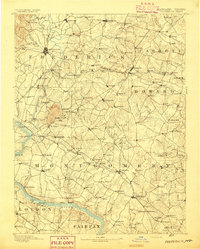
1893 · Frederick
USGS Topo · 1:125,000
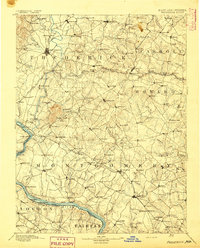
1894 · Frederick
USGS Topo · 1:125,000
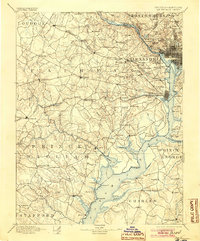
1894 · Mt. Vernon
USGS Topo · 1:125,000
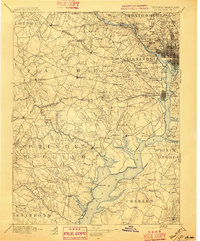
1897 · Mt. Vernon
USGS Topo · 1:125,000
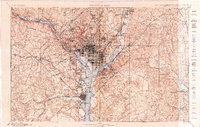
1900 · Washington
USGS Topo · 1:62,500
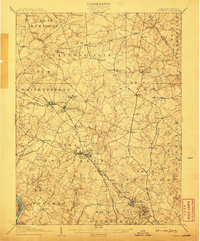
1908 · Rockville
USGS Topo · 1:62,500
1908 · Seneca
USGS Topo · 1:62,500
1915 · Fairfax
USGS Topo · 1:62,500