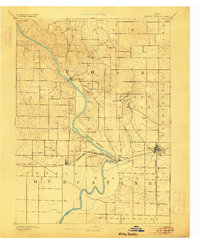
1891 Map of Wilton Junction
USGS Topo · Published 1906About this map
The Cedar River carves a deep, winding valley through the heart of this landscape, its steep bluffs and complex drainage patterns contrasting with the flatter agricultural uplands of Muscatine and Cedar Counties. Published from an 1889 survey, the map illustrates a region defined by its transit corridors. The Chicago Rock Island and Pacific Railroad serves as the primary artery for commerce, linking a string of important local stations including Atalissa, Moscow, and the bustling junction at Wilton. Smaller, perhaps now-faded settlements like Rochester and Lime City are documented here, positioned along the river and Sugar Creek respectively. The detailed contour work by W.J. Peters provides a precise view of the terrain as it was managed at the close of the nineteenth century, showing the relationship between early town placements and the natural water gaps.
Find a feature on this map
19 named features on this map. Tap any name to fly to it.
Don’t see what you’re looking for? This feature index may not catch every label — zoom into the map to look around manually.
Map Details
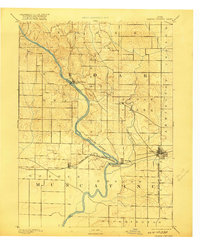
Editions of this 1891 Wilton Junction Map
3 editions found
Other maps of this area
1889 · Tipton
USGS Topo · 1:62,500
1890 · Durant
USGS Topo · 1:62,500
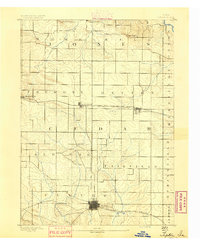
1890 · Tipton
USGS Topo · 1:62,500
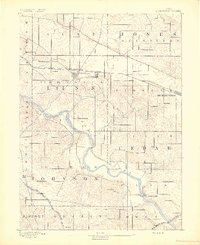
1891 · Mechanicsville
USGS Topo · 1:62,500
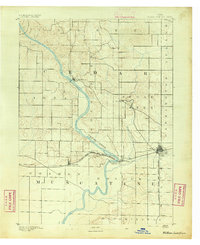
1891 · Wilton Junction
USGS Topo · 1:62,500
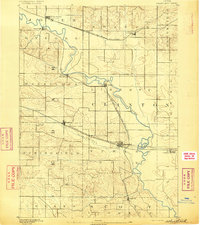
1892 · Wheatland
USGS Topo · 1:62,500
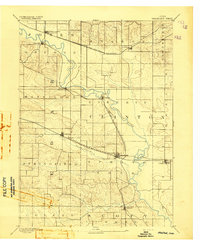
1894 · Wheatland
USGS Topo · 1:62,500
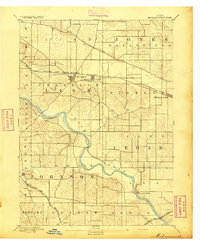
1894 · Mechanicsville
USGS Topo · 1:62,500
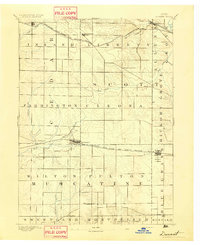
1894 · Durant
USGS Topo · 1:62,500
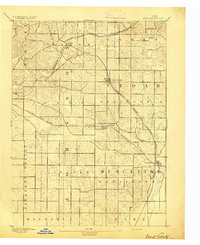
1894 · West Liberty
USGS Topo · 1:62,500