1950s Maps of Jackson County, Alabama
Explore 24 historic maps of Jackson County from the 1950s. These maps offer a rare glimpse into what life looked like during the 1950s — showing old roads, neighborhoods, homes, and landmarks that have changed or disappeared over time.
Whether you're researching your family's past, planning a metal detecting trip, or studying how Jackson County's landscape evolved across the 1950s, these high-resolution maps are a powerful tool for exploring the history of this region.
- Focus on a specific era: All maps on this page are from the 1950s, giving you a focused view of this time period.
- See what’s changed: Compare century-old streets, trails, and buildings to today's modern landscape using overlays and satellite layers.
- Research with precision: Use these maps for genealogy, historical research, land use analysis, or educational projects.
- View, download, or print: Maps are fully viewable online in high resolution, and can be downloaded or printed for your own records.
Start exploring Jackson County's history through authentic maps from the 1950s. This is your window into the past.
Jackson County, AL maps
(24)- 1950 Map of Lim Rock
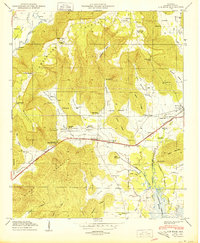 1950 Lim Rock1950 Print · USGSJackson County settlement and the Southern Railway come into focus in this mid-century look at the Cumberland Plateau edge. Researchers can trace rural life through landmarks like Lim Rock School, Larkinsville, and the Peters Cove Cem.2 unique versions available
 - 1950 Map of Swearengin
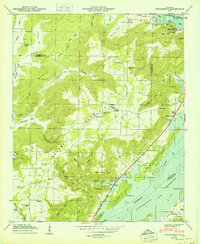 1950 Swearengin1950 Print · USGSNortheast Alabama hill country meets the Tennessee River in the late 1940s, showing a landscape defined by mountain coves and the backwaters of the reservoir. Researchers can locate family landmarks like Zions Rest Cem, New Prospect School, and the scattered homes of Swearengin.2 unique versions available
 - 1950 Map of Eureka
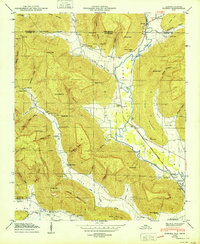 1950 Eureka1950 Print · USGSThe Alabama and Tennessee borderlands come alive in the late 1940s, showing a landscape defined by mountain gaps and valley railways. Genealogists can trace family names through the Willis Cem, Matthews Cem, and the community surrounding Helton Memorial Church.
 - 1950 Map of Paint Rock
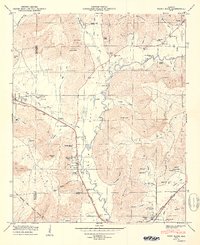 1950 Paint Rock1950 Print · USGSThe Paint Rock River valley in the late 1940s reveals a corridor of rail-and-road activity connecting Jackson and Madison counties. Genealogists can trace family names across Rousseau Cem, the Conyers-Rosenwald School, and the river crossing at Walker Mill Ford.2 unique versions available
 - 1950 Map of Stevenson
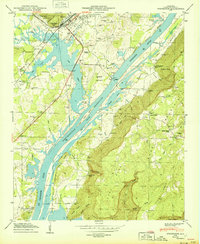 1950 Stevenson1950 Print · USGSThe Tennessee River valley at Stevenson comes into focus during the post-war era, showing a landscape shaped by the new reservoir and historic rail lines. Genealogists can locate family landmarks like Wimberley Cem and Rudders Chapel or trace the old river crossings at Caperton Ferry.2 unique versions available
 - 1950 Map of Wannville
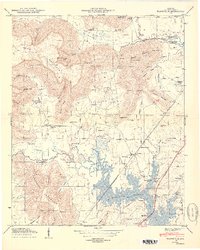 1950 Wannville1950 Print · USGSJackson County settlement meets the rising waters of the Tennessee River in the mid-twentieth century. Family historians can locate dozens of burial sites like Pauper Cem and Rorex Cem, plus local landmarks including the Rosenwald Sch and Fackler.2 unique versions available
 - 1950 Map of Grant
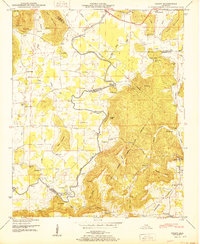 1950 Grant1950 Print · USGSNortheast Alabama at mid-century shows a landscape of river-valley farms and steep ridges at the intersection of three counties. Trace old river crossings at Helium Ford and Fishtrap Ford, or locate family landmarks like Poplar Ridge, Butler Mill, and the D A R Sch.2 unique versions available
 - 1950 Map of Dutton
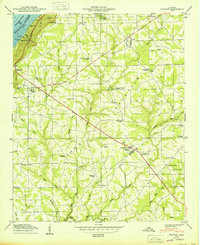 1950 Dutton1950 Print · USGSSand Mountain in the post-war era is a landscape of high-plateau farms and rural crossroads along the Jackson and De Kalb County line. Researchers can trace the heritage of local communities through landmarks like Hancock Crossroads, Old Shady Grove Church, and Tomlin Sch.2 unique versions available
 - 1950 Map of Henagar
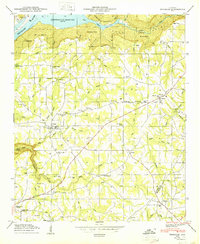 1950 Henagar1950 Print · USGSDeKalb and Jackson Counties sit atop the plateau during the post-war era, showing a landscape of high-elevation farms and riverfront boundaries. Genealogists can trace family roots at Clark Cem, Sublett Sch, and the old Morris Mill.
 - 1950 Map of Hollywood
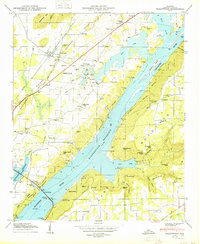 1950 Hollywood1950 Print · USGSMid-century Jackson County is defined here by the rising waters of the Guntersville Reservoir as it reshapes the Tennessee River valley. Genealogists and local historians can trace old community ties through sites like Bellefonte, the Hollywood School, and the Chisenhall Cem.2 unique versions available
 - 1950 Map of Scottsboro
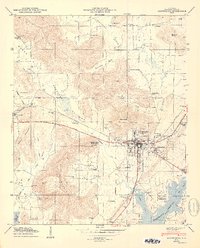 1950 Scottsboro1950 Print · USGSJackson County at the mid-century shows Scottsboro as a rail and highway hub alongside the new Guntersville Reservoir. Genealogists can trace family landmarks like Cedar Hill Cem, Woods Cove Church, and the Webb Addition.2 unique versions available
 - 1950 Map of Sylvania
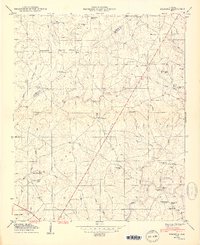 1950 Sylvania1950 Print · USGSDeKalb County and the Sand Mountain plateau are captured here just after the war, showing the area's rural crossroads and family settlements. Genealogists can locate family-named landmarks like Wilkes Store, Mahan Crossroads, and the Mahan Cem.2 unique versions available
 - 1950 Map of Langston
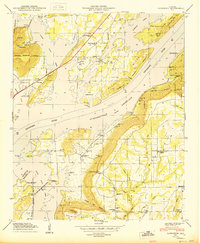 1950 Langston1950 Print · USGSNortheast Alabama's river valley comes to life in the mid-twentieth century as the Tennessee River waters fill the reservoir. Genealogists and local historians can trace family roots at Langston Cem and Kelly Cem, or locate long-standing rural landmarks like Temperance Hill School.
 - 1950 Map of Doran Cove
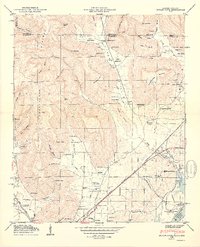 1950 Doran Cove1950 Print · USGSJackson County, Alabama, is shown here as the post-war industrial era arrives along the Tennessee River. Researchers can trace family sites at Hackworth Cem, visit Coopers Mill, or locate the Widows Creek Steam Plant during its construction.2 unique versions available
 - 1951 Map of King Cove
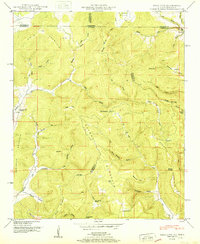 1951 King Cove1951 Print · USGSHighland coves along the Alabama-Tennessee border appear here as they were in the early fifties, a landscape of family-named gaps and hollows. Genealogists can locate several remote burial sites like King Cove Cem and Maxwell Cem or trace the early community at Francisco.2 unique versions available
 - 1951 Map of Estill Fork
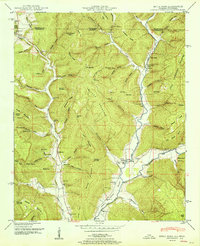 1951 Estill Fork1951 Print · USGSThe Alabama-Tennessee borderlands in the early postwar years show a landscape defined by deep ridges and valley settlements. Researchers can trace family history through sites like Grays Chapel School, Halla Chapel, and the Old Bostick Hill Cem.
 - 1951 Map of Princeton
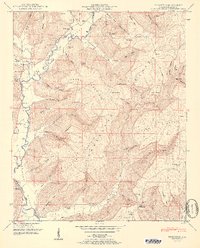 1951 Princeton1951 Print · USGSJackson County valley life in the early fifties centers on the river forks and mountain coves. Genealogists can trace family names at Latham Cem and Prince Cem or locate the rural congregations of Camp Ground Church and Guess Creek Church.2 unique versions available
 - 1951 Map of Hollytree
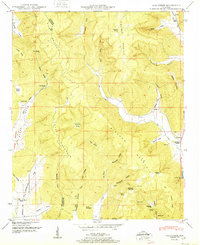 1951 Hollytree1951 Print · USGSThe Tennessee Valley Authority and USGS recorded this rugged Jackson County landscape in the early postwar era as the mountain communities remained deeply tied to their upland coves. Researchers can trace family origins through several burial sites like Maples Cem and Moon Cem or find old congregation sites such as Pleasant Mount Church.2 unique versions available
 - 1951 Map of Mud Creek
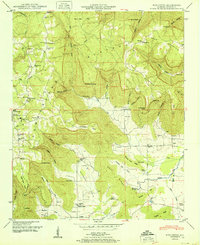 1951 Mud Creek1951 Print · USGSJackson County, Alabama, is captured here in the early 1950s, showing a rugged landscape of ridges and coves before modern development. Family historians can trace ancestral roots through dozens of local landmarks like Holland Chapel, Kyles Sch No 1, and the Maynard Cove settlement.2 unique versions available
 - 1951 Map of Hytop
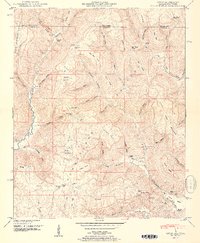 1951 Hytop1951 Print · USGSThe Cumberland Plateau of Jackson County is captured here in the early fifties, showing a remote landscape of high ridges and deep coves. Genealogists can trace family landmarks like Walnut Grove School and numerous burial sites including Clark Cem and Haddon Cem.2 unique versions available
 - 1955 Map of Rome
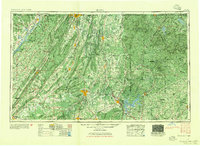 1955 Rome1955 Print · USGSThe tri-state borderlands of Georgia, Alabama, and Tennessee appear in the mid-fifties as a landscape of ridge-and-valley industry and river navigation. Genealogists can trace family footprints near Chattanooga, the iron works of Gadsden, and textile towns like Trion or Summerville.
 - 1956 Map of Gadsden, 1966 Print
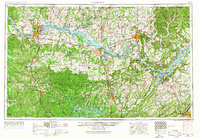 1956 Gadsden1966 Print · USGSNorth Alabama in the mid-1950s shows a region transformed by river engineering and federal industry. Genealogists and local historians can trace the development of the Tennessee Valley through the growth of Huntsville, the sprawling Redstone Arsenal, and the expansive Guntersville Lake.3 unique versions available
 - 1958 Map of Gadsden
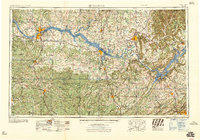 1958 Gadsden1958 Print · USGSNorth Alabama comes alive in the late 1950s as the Tennessee Valley Authority’s massive river projects and the rise of the space industry reshaped the landscape. Researchers can trace the mid-century footprints of Huntsville, Redstone Arsenal, and the riverside rail networks of the Southern railroad.
 - 1958 Map of Rome, 1966 Print
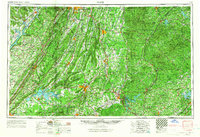 1958 Rome1966 Print · USGSNorthwest Georgia and neighboring Tennessee and Alabama are captured here in the late fifties, showcasing a landscape of high ridges and river valleys. Researchers can trace historic rail lines like the Seaboard Air Line RR and explore the bounds of Cloudland Canyon State Park or Fort Oglethorpe.3 unique versions available
End of results
Showing maps 1-24 of 24
Top cities of Jackson County
- Scottsboro historical maps
- Bridgeport historical maps
- Stevenson historical maps
- Hollywood historical maps
- Skyline historical maps
- Section historical maps
See more
Frequently asked questions
- What are the different types of historical maps available for Jackson County?
- What is the oldest map of Jackson County?
- Where can I purchase historical maps of Jackson County for my home or office?
- Where can I download high-res historical maps of Jackson County?
- Are there historical topographic maps available for Jackson County?
- Is there historical aerial imagery available for Jackson County?
- Where are historical maps of Jackson County sourced from?