1930s Maps of Huntsville, Alabama
Explore 15 historic maps of Huntsville from the 1930s. These maps offer a rare glimpse into what life looked like during the 1930s — showing old roads, neighborhoods, homes, and landmarks that have changed or disappeared over time.
Whether you're researching your family's past, planning a metal detecting trip, or studying how Huntsville's landscape evolved across the 1930s, these high-resolution maps are a powerful tool for exploring the history of this region.
- Focus on a specific era: All maps on this page are from the 1930s, giving you a focused view of this time period.
- See what’s changed: Compare century-old streets, trails, and buildings to today's modern landscape using overlays and satellite layers.
- Research with precision: Use these maps for genealogy, historical research, land use analysis, or educational projects.
- View, download, or print: Maps are fully viewable online in high resolution, and can be downloaded or printed for your own records.
Start exploring Huntsville's history through authentic maps from the 1930s. This is your window into the past.
Huntsville, AL maps
(15)- 1936 Map of Jeff
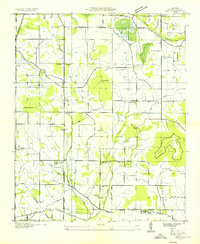 1936 Jeff1936 Print · USGSMadison County rural life is captured in the mid-1930s, showing a landscape defined by ancestral lines and small-town centers. Trace family roots through Indian Creek Cem, St John Cem, and old schools like Little Indian Creek Sch.
 - 1936 Map of Capshaw
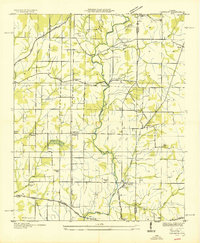 1936 Capshaw1936 Print · USGSLimestone and Madison counties are captured here in the mid-1930s as the Tennessee Valley Authority and Alabama Power began modernizing the rural landscape. Researchers can locate numerous vanished country schools like Grimett Sch, family landmarks such as McCully Mill, and the community at Wesley Chapel.
 - 1936 Map of Triana
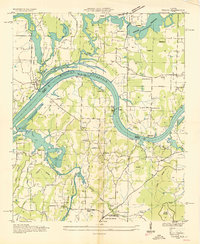 1936 Triana1936 Print · USGSThe Tennessee River bend near the Madison and Morgan county line is captured here just as the Tennessee Valley Authority era began. Researchers can trace the layout of early rural school districts like Horton Sch and Union Sch or locate congregations at Mt Mariah Ch and Talucah Ch.
 - 1936 Map of New Hope
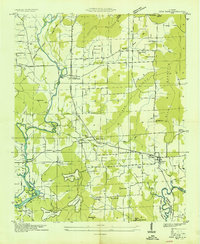 1936 New Hope1936 Print · USGSThe Flint River valley in the mid-1930s shows a landscape on the brink of change as the Wheeler Reservoir reaches its high-water mark. Researchers can locate family landmarks like Baker Cem, Owens Cross Roads, and local hubs like Buggs Chapel or Cherokee School.
 - 1936 Map of Madison
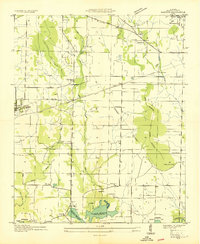 1936 Madison1936 Print · USGSMadison and its surrounding farmstead landscape are captured in the mid-1930s just as the Tennessee Valley Authority began transforming the river valley. Researchers can locate numerous vanished landmarks like Lankford Mill, trace the CHICKASAW BOUNDARY, and find family sites near Brandontown or Fuller Chapel.
 - 1936 Map of Meridianville
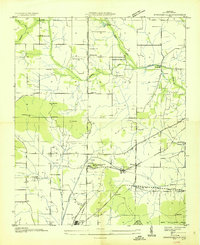 1936 Meridianville1936 Print · USGSMadison County in the mid-1930s is shown here as a landscape of crossroads settlements and small farm communities connected by multiple rail lines. Genealogists and local historians can trace family roots through numerous sites like Pope Cem, Taylor Chapel, and the Meridianville Bottom Sch.
 - 1936 Map of Moontown
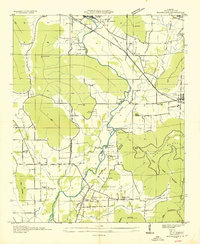 1936 Moontown1936 Print · USGSMadison County at the height of the Great Depression is captured here as a landscape of small river towns and mountain hollows. Family historians can trace ancestral locations near Sublett Mill, Adair Ford, or several rural congregations like Acklin Ch.
 - 1936 Map of Maysville
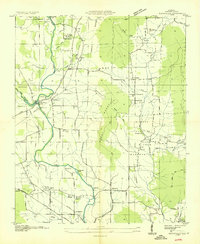 1936 Maysville1936 Print · USGSMadison County is documented here in the mid-1930s, showing a rural landscape defined by the Flint River and its tributary branches. Genealogists can trace family roots through numerous sites like Belleview Cem, Deposit, and the Bell Factory.
 - 1936 Map of Mason Ridge
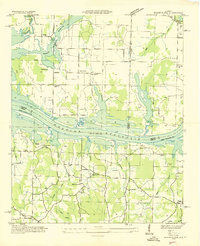 1936 Mason Ridge1936 Print · USGSThe Tennessee River valley underwent a total transformation in the mid-1930s as the new Wheeler Reservoir filled. Researchers can trace displaced landmarks like Cane Landing or visit upland sites like Needmore Sch and Kolb Cem.
 - 1936 Map of Tanner
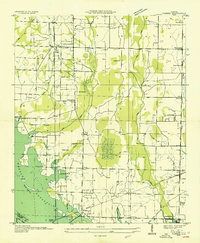 1936 Tanner1936 Print · USGSLimestone County is captured during the transformative years of the Tennessee Valley Authority project. Researchers can trace family sites and rural landmarks like Mooresville, Taylor Pride Cem, and the Alabama State Farm near the rising waters of Wheeler Reservoir.
 - 1936 Map of Greenbrier
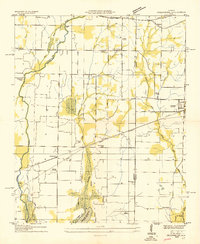 1936 Greenbrier1936 Print · USGSAlabama's Tennessee Valley was undergoing a massive transformation in the mid-1930s as the river was harnessed for power. Genealogists can locate family-named settlements like Peete Corners, small rural schools like Betz Sch, and old spiritual centers like Fletcher Chapel.
 - 1936 Map of Farley
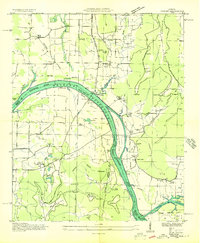 1936 Farley1936 Print · USGSThe Tennessee River valley is captured here in the mid-1930s during its transformation by the TVA. Researchers can trace historic family names and early rural sites like Gaines Chapel, Whitesburg, and the Old Chickasaw Boundary.
 - 1936 Map of Huntsville
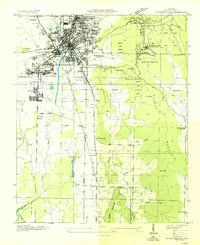 1936 Huntsville1936 Print · USGSHuntsville was a bustling railway and textile hub in the mid-thirties, just before the arrival of the space industry. Genealogists and historians can trace the footprint of early mill villages like Merrimac or locate family plots at Maple Hill Cem and Sivley Cem.
 - 1938 Map of Tanner
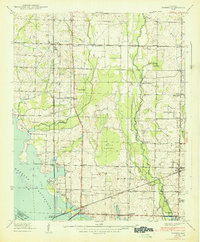 1938 Tanner1938 Print · USGSLimestone County in the late thirties shows a landscape transformed by the new Wheeler Reservoir and its rising waters. Genealogists can trace family holdings and community hubs like Anderson Plantation, Taylor Pride Cem, and Mooresville.
 - 1938 Map of Greenbrier
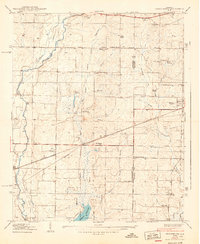 1938 Greenbrier1938 Print · USGSLimestone and Madison Counties are shown in the late 1930s as a landscape of rural schoolhouses and family cemeteries. Genealogists can trace local heritage through sites like Ragland Cem, Mt Pleasant Sch, and the crossroads at Burgreen Corner.3 unique versions available
End of results
Showing maps 1-15 of 15
Top cities near Huntsville
- Decatur historical maps
- Madison historical maps
- Athens historical maps
- Hartselle historical maps
- Meridianville historical maps
- Moores Mill historical maps
See more
Top neighborhoods of Huntsville
- Bucks Canyon historical maps
- Forest Park historical maps
- Windsor Manor historical maps
- Valley Park historical maps
- Bluewood Estates historical maps
- Eastridge historical maps
See more
Frequently asked questions
- What are the different types of historical maps available for Huntsville?
- What is the oldest map of Huntsville?
- Where can I purchase historical maps of Huntsville for my home or office?
- Where can I download high-res historical maps of Huntsville?
- Are there historical topographic maps available for Huntsville?
- Is there historical aerial imagery available for Huntsville?
- Where are historical maps of Huntsville sourced from?