1960s Maps of Fort Collins, Colorado
Explore 11 historic maps of Fort Collins from the 1960s. These maps offer a rare glimpse into what life looked like during the 1960s — showing old roads, neighborhoods, homes, and landmarks that have changed or disappeared over time.
Whether you're researching your family's past, planning a metal detecting trip, or studying how Fort Collins's landscape evolved across the 1960s, these high-resolution maps are a powerful tool for exploring the history of this region.
- Focus on a specific era: All maps on this page are from the 1960s, giving you a focused view of this time period.
- See what’s changed: Compare century-old streets, trails, and buildings to today's modern landscape using overlays and satellite layers.
- Research with precision: Use these maps for genealogy, historical research, land use analysis, or educational projects.
- View, download, or print: Maps are fully viewable online in high resolution, and can be downloaded or printed for your own records.
Start exploring Fort Collins's history through authentic maps from the 1960s. This is your window into the past.
Fort Collins, CO maps
(11)- 1960 Map of Fort Collins, 1962 Print
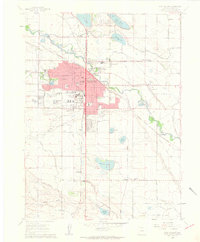 1960 Fort Collins1962 Print · USGSFort Collins during the early sixties shows a university town transitioning into a regional hub while maintaining its irrigation-fed agricultural roots. Researchers can trace historic neighborhoods near Buckingham, old burial sites at Harmony Cem, and the rail-side industry of the Sugar Refinery.6 unique versions available
 - 1960 Map of Timnath, 1962 Print
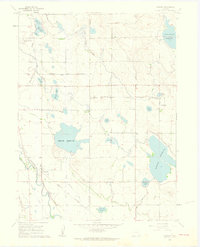 1960 Timnath1962 Print · USGSTimnath and the surrounding Colorado farm country are captured here at the dawn of the 1960s, defined by a complex network of irrigation canals and reservoirs. Genealogists and local historians can locate the Timnath Cem, Boxelder Sch, and rail-side settlements like Kluver and Kerns.4 unique versions available
 - 1960 Map of Wellington, 1963 Print
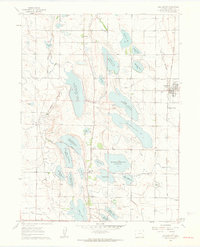 1960 Wellington1963 Print · USGSNorth of Fort Collins in the early sixties, this region reveals a complex system of high-plains water management and rail commerce. Trace the local history of Wellington and Waverly, and locate rural landmarks like Rocky Ridge Sch and Meyers Corner.6 unique versions available
 - 1960 Map of Loveland, 1965 Print
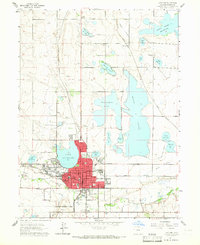 1960 Loveland1965 Print · USGSMid-century Larimer County comes to life in this detailed map of the Loveland area and its extensive reservoir system. Researchers can trace the industrial footprint of the Sugar Refinery or locate family sites near Lakeside Cem and Trilby Corner.
 - 1961 Map of Greeley
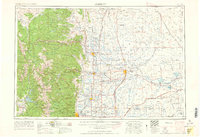 1961 Greeley1961 Print · USGSNorthern Colorado's transition from high mountain peaks to irrigated plains is captured here just as the post-war population boom reached the Front Range. Researchers can trace early water infrastructure and rail lines like the Great Western RR connecting sugar beet hubs from Fort Collins to Greeley.
 - 1961 Map of Masonville, 1973 Print
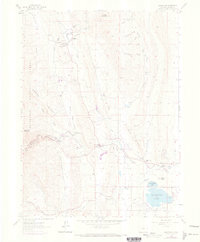 1961 Masonville1973 Print · USGSIn the foothills of Larimer County during the early sixties and seventies, this area shows a landscape defined by water engineering and stone quarrying. Genealogists and local historians can trace family-named landmarks like Buckhorn Community Ch, the Big Thompson Sch, and the original Masonville Post Office.
 - 1962 Map of Loveland, 1963 Print
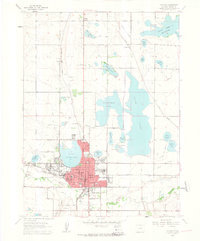 1962 Loveland1963 Print · USGSLoveland and the surrounding Larimer County lakes are captured here in the early sixties, showing a landscape defined by water and rail. Researchers can trace the lines of the Great Western railroad, locate the Sugar Refinery, or find rural landmarks like Trilby Corner and Mt Hope Sch.4 unique versions available
 - 1962 Map of Masonville, 1964 Print
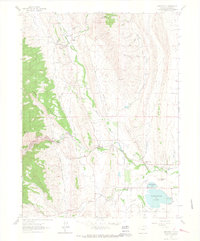 1962 Masonville1964 Print · USGSThe Masonville area in the early sixties showcases a complex intersection of mountain foothills and high-plains irrigation. Genealogists and local historians can locate the Masonville Community Ch, Big Thompson Sch, and traces of early industry at various Quarries.6 unique versions available
 - 1962 Map of Horsetooth Reservoir, 1964 Print
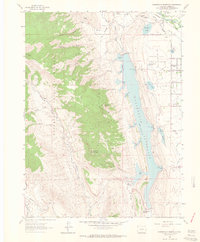 1962 Horsetooth Reservoir1964 Print · USGSThe foothills of Larimer County come alive in the early sixties as Horsetooth Reservoir reshapes the landscape near the Roosevelt National Forest. Researchers can locate the Overland Stage Station, Laporte Cem, and the historic Colorado and Southern rail line.8 unique versions available
 - 1964 Map of Greeley
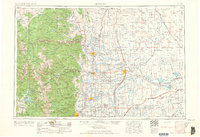 1964 Greeley1964 Print · USGSThe Front Range corridor and high peaks of the Rockies appear here in the mid-1960s, showing the intersection of mountain wilderness and plains agriculture. Trace the rail routes of the Great Western RR or locate landmarks like Longs Peak and Horsetooth Reservoir.
 - 1965 Map of Greeley
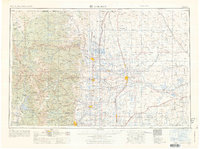 1965 Greeley1965 Print · USGSNorthern Colorado in the mid-sixties shows a landscape defined by high mountain summits and the growing irrigation networks of the plains. Genealogists and historians can trace rail-side towns like Wellington or follow the early tracks of the Union Pacific Railroad past Longs Peak.
End of results
Showing maps 1-11 of 11
Top cities near Fort Collins
- Greeley historical maps
- Loveland historical maps
- Windsor historical maps
- Johnstown historical maps
- Severance historical maps
- Milliken historical maps
See more
Top neighborhoods of Fort Collins
- Harmony Crossing historical maps
- Library Stage historical maps
- Meadow Lark Heights historical maps
- Fairway Estates historical maps
- Oakridge Estates historical maps
- Fairway Estates historical maps
See more
Frequently asked questions
- What are the different types of historical maps available for Fort Collins?
- What is the oldest map of Fort Collins?
- Where can I purchase historical maps of Fort Collins for my home or office?
- Where can I download high-res historical maps of Fort Collins?
- Are there historical topographic maps available for Fort Collins?
- Is there historical aerial imagery available for Fort Collins?
- Where are historical maps of Fort Collins sourced from?