1960s Maps of Ware County, Georgia
Explore 21 historic maps of Ware County from the 1960s. These maps offer a rare glimpse into what life looked like during the 1960s — showing old roads, neighborhoods, homes, and landmarks that have changed or disappeared over time.
Whether you're researching your family's past, planning a metal detecting trip, or studying how Ware County's landscape evolved across the 1960s, these high-resolution maps are a powerful tool for exploring the history of this region.
- Focus on a specific era: All maps on this page are from the 1960s, giving you a focused view of this time period.
- See what’s changed: Compare century-old streets, trails, and buildings to today's modern landscape using overlays and satellite layers.
- Research with precision: Use these maps for genealogy, historical research, land use analysis, or educational projects.
- View, download, or print: Maps are fully viewable online in high resolution, and can be downloaded or printed for your own records.
Start exploring Ware County's history through authentic maps from the 1960s. This is your window into the past.
Ware County, GA maps
(21)- 1965 Map of Chesser Island, 1966 Print
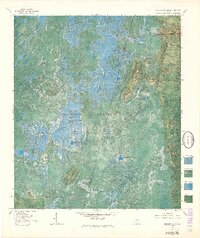 1965 Chesser Island1966 Print · USGSThe Okefenokee National Wildlife Refuge is shown in detail during the mid-sixties via this unique experimental photomap. Researchers can trace the Suwanee Canal and locate remote camps and landmarks like Camp Cornelia, Chesser Island, and Goose House Gap.3 unique versions available
 - 1965 Map of Chase Prairie, 1967 Print
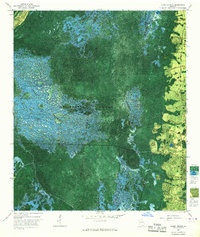 1965 Chase Prairie1967 Print · USGSThe Okefenokee wilderness in the mid-sixties reveals a landscape of massive open prairies and historical timber trails. Trace the path of the Dismantled Logging Tram or locate the ancient Indian Mounds preserved on Floyds Island.
 - 1965 Map of Blackjack Island, 1967 Print
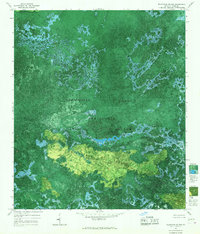 1965 Blackjack Island1967 Print · USGSThe Okefenokee Swamp is seen here in the mid-1960s through an experimental photomap based on 1963 aerial imagery. Researchers can trace the legacy of local timber harvesting via the Dismantled Logging Tram or explore the landscape of Blackjack Island and Blackjack Lake.
 - 1966 Map of Billys Island, 1967 Print
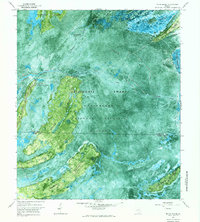 1966 Billys Island1967 Print · USGSThe Okefenokee swamp interior is captured here in the mid-sixties, showing the transition from a timber landscape to a protected refuge. Genealogists and historians can locate the Lee Cem, the traces of a Dismantled Logging Tram, and the site of Camp Stephen Foster.2 unique versions available
 - 1966 Map of The Pocket, 1967 Print
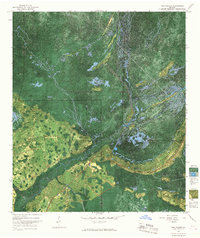 1966 The Pocket1967 Print · USGSThe Suwannee River headwaters and the southern Okefenokee Swamp are captured here in the mid-1960s. Researchers can trace the path of a Dismantled Logging Tram and locate family-named landmarks like Mixons Hammock and Jack Island.
 - 1966 Map of Cravens Island, 1968 Print
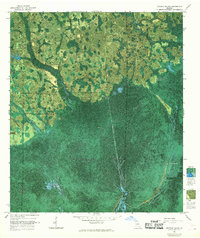 1966 Cravens Island1968 Print · USGSWare County and the Okefenokee Swamp are captured in this mid-century photomap during an era of experimental cartography. Researchers can trace the heritage of the timber industry through a Dismantled Logging Tram and local landmarks like Mc Leods Mill.
 - 1967 Map of Strange Island
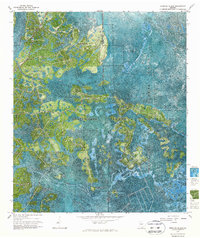 1967 Strange Island1967 Print · USGSThe Georgia wetlands in the late sixties reveal a landscape defined by the vast Okefenokee Swamp. Trace the history of regional timber harvesting through a Dismantled Tram Logging route and locate remote points like Indian Mound Island.2 unique versions available
 - 1967 Map of Moniac, 1968 Print
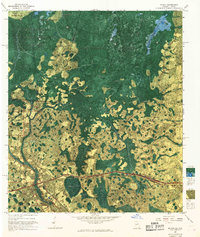 1967 Moniac1968 Print · USGSThe Georgia-Florida state line meets the great swamp in the late sixties, where the river and rail lines converge. Trace local history at Moniac and Baxter, find the Moniac Cem, or follow the Dismantled Logging Tram through the marsh.
 - 1967 Map of Waycross SE, 1968 Print
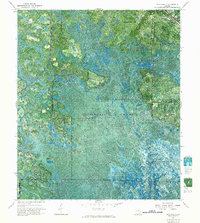 1967 Waycross SE1968 Print · USGSThe northern reaches of the Okefenokee are captured here in the late sixties, showcasing a labyrinth of named islands and aquatic prairies. Researchers can trace the legacy of the regional timber industry via the Dismantled Logging Tram and the small settlement at Braganza.
 - 1967 Map of Spooner, 1968 Print
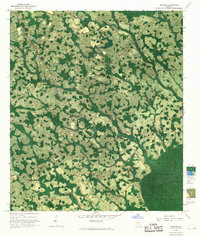 1967 Spooner1968 Print · USGSSoutheast Georgia's dense marshlands are captured in detail during the late 1960s as federal surveyors mapped the hydrologic complexity of the Okefenokee Swamp. Genealogists and historians can locate isolated points of interest like Antioch Ch, the junction at The Wye, and the historic Dismal Logging Tram.2 unique versions available
 - 1967 Map of Sargent, 1968 Print
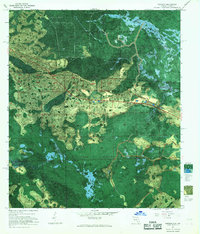 1967 Sargent1968 Print · USGSThe Georgia-Florida borderlands come alive in this late-sixties experimental survey, where the great southern swamps meet the rail line. Researchers can trace the Southern railroad through the Okefenokee Swamp past Sargent and Moorehead.
 - 1967 Map of Fort Mudge, 1968 Print
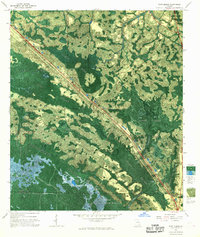 1967 Fort Mudge1968 Print · USGSThe Okefenokee wilderness in the late sixties reveals a landscape shaped by timber interests and conservation. Researchers can trace the Seaboard Coast Line through Fort Mudge and locate the Indian Mounds near Billy Landing Island.
 - 1967 Map of Eddy, 1968 Print
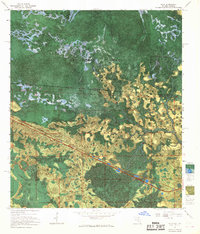 1967 Eddy1968 Print · USGSThe Florida-Georgia borderlands near the Okefenokee Swamp are captured in the late 1960s, showing a remote landscape of wetlands and rails. Trace the path of the Southern railroad past the Radio Lookout Tower and islands like Mitchell Island.
 - 1967 Map of Hoboken West, 1969 Print
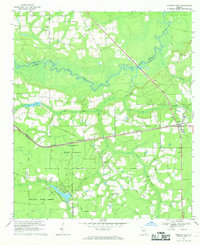 1967 Hoboken West1969 Print · USGSBrantley and Ware counties are shown in the late 1960s, a period defined by the timber industry and the railroad's path through the pine flatwoods. Genealogists can trace family names through numerous rural landmarks like Thrift Cem, St Johns Ch, and the community of Schlatterville.2 unique versions available
 - 1967 Map of Waycross West, 1969 Print
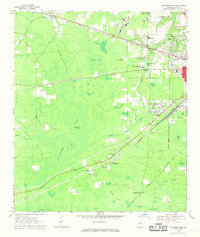 1967 Waycross West1969 Print · USGSWestern Ware County in the late sixties shows the expansion of Waycross toward the wetlands of Cloughs Bay. Researchers can trace rural church history at Old Ruskin Ch or locate old rail stops like Eightmile Post and Wahoma.2 unique versions available
 - 1967 Map of Pine Valley, 1969 Print
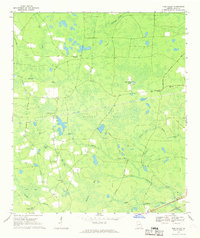 1967 Pine Valley1969 Print · USGSWare County’s wetland landscape is captured here in the late 1960s, showing a rural community shaped by timber management and tradition. Genealogists can trace family roots at Zenith Ch Cem, Crews Crossing, and the small settlement of Glenmore.2 unique versions available
 - 1967 Map of Waycross East, 1969 Print
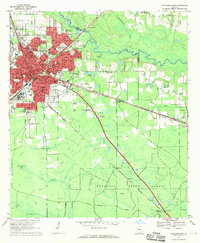 1967 Waycross East1969 Print · USGSWaycross during the late sixties was a thriving railway and educational center at the edge of the Georgia wetlands. Genealogists and historians can trace neighborhood growth through dozens of named schools and cemeteries like Hazzard Hill Cem and Oakland Cemetery.
 - 1967 Map of Waycross SW, 1969 Print
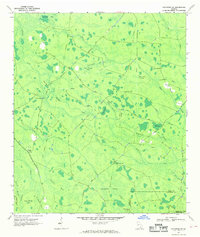 1967 Waycross SW1969 Print · USGSThe Okefenokee swamp interior and the Ware County borderlands are mapped here in the late sixties. Genealogists and local historians can locate remote landmarks like Pittman Chapel, Carter Cem, and distance markers like Twelvemile Post.2 unique versions available
 - 1968 Map of Homerville East, 1969 Print
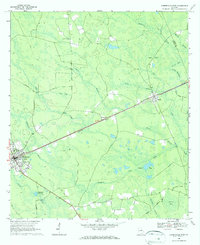 1968 Homerville East1969 Print · USGSClinch County in the late sixties shows a landscape of rail-driven settlements and expansive southern wetlands. Genealogists can locate family landmarks like New Pine Grove Ch and Shiloh Ch, or trace the rail corridor through Argyle and Travisville.3 unique versions available
 - 1968 Map of Manor, 1970 Print
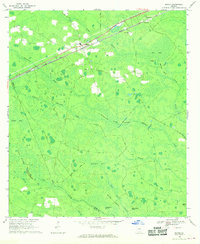 1968 Manor1970 Print · USGSSouth Georgia's wetland landscape comes into focus in the late 1960s as a region defined by its rail hubs and vast bays. Genealogists and researchers can trace the vicinity of Manor and Glenmore, identifying local landmarks like Providence Ch and the High School.2 unique versions available
 - 1968 Map of Cogdell, 1970 Print
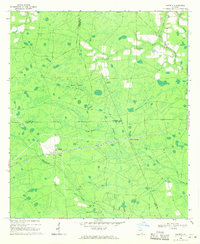 1968 Cogdell1970 Print · USGSIn the late 1960s, the rural community of Cogdell was a landscape of remote bays and creeks where three Georgia counties met. Genealogists and historians can trace family locations near Zion Hill Ch or along the old Stage Road and Suwannee Creek.2 unique versions available
End of results
Showing maps 1-21 of 21
Top cities of Ware County
Frequently asked questions
- What are the different types of historical maps available for Ware County?
- What is the oldest map of Ware County?
- Where can I purchase historical maps of Ware County for my home or office?
- Where can I download high-res historical maps of Ware County?
- Are there historical topographic maps available for Ware County?
- Is there historical aerial imagery available for Ware County?
- Where are historical maps of Ware County sourced from?