Old Maps of Cassia County, Idaho for Academic Research
Study the evolution of Cassia County with 470 high-resolution historic maps. Whether you're teaching, researching, or modeling changes in land use, these maps provide essential visual documentation of urban, environmental, and geographic change.
- Analyze long-term change: Track patterns in development, transportation, and natural features.
- Ideal for environmental or urban studies: Support academic projects with primary historical map data.
- Use in the classroom or lab: Educators and researchers rely on these maps to bring historical context to life.
These maps are a powerful tool for teaching, research, and visualizing how Cassia County has changed over the decades.
Cassia County, ID maps
(470)- 1954 Map of Pocatello, 1963 Print
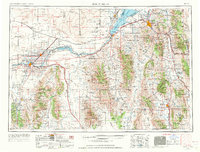 1954 Pocatello1963 Print · USGSSoutheast Idaho in the mid-1950s reveals a landscape shaped by massive water reclamation and mountain forests. Researchers can trace the development of the Fort Hall Indian Reservation or locate specific landmarks like the Arbon P O and Emerson School.4 unique versions available
 - 1954 Map of Brigham City, 1968 Print
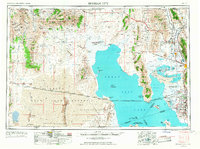 1954 Brigham City1968 Print · USGSNorthern Utah and the edges of the Great Salt Lake are captured here during the mid-fifties, showing the region's transition from pioneer rail hubs to modern military ranges. Researchers can find old sidings like Lemay Siding, the Golden Spike Monument, and settlements like Washakie.4 unique versions available
 - 1955 Map of Twin Falls, 1963 Print
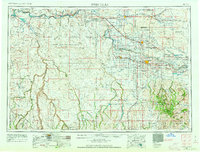 1955 Twin Falls1963 Print · USGSThe Magic Valley flourished in the mid-1950s as a sophisticated network of irrigation and rail lines connected high-desert outposts. Researchers can trace the engineering of the Milner-Gooding Canal, the remote Murphy Hot Springs, and the Union Pacific rail network.3 unique versions available
 - 1955 Map of Wells, 1966 Print
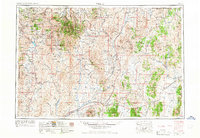 1955 Wells1966 Print · USGSNortheastern Nevada's high basin-and-range country is documented here in the mid-fifties, showing a landscape of remote ranching outposts and massive federal forest lands. Researchers can locate the early mining districts at Delano Mines and trace the paths of the Southern Pacific railroad through settlements like Deeth and Cobre.4 unique versions available
 - 1958 Map of Wells
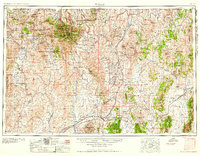 1958 Wells1958 Print · USGSNortheastern Nevada's high desert and mountain ranges are documented here in the late fifties as the regional rail and ranching economy thrived. Genealogists and historians can trace the paths of the Southern Pacific railroad to remote stations at Cobre and Metropolis, or locate the high-altitude Delno Mines.
 - 1958 Map of Twin Falls
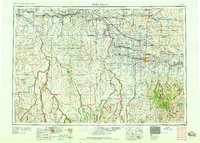 1958 Twin Falls1958 Print · USGSThe Magic Valley and Snake River Plain are captured here in the late fifties, showcasing a region defined by transformative irrigation projects and desert military ranges. Researchers can trace the Union Pacific rail lines and locate small outlying settlements like Wickahoney, Rogerson, and Hollister.2 unique versions available
 - 1958 Map of Pocatello
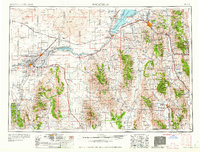 1958 Pocatello1958 Print · USGSSoutheastern Idaho in the late fifties was a landscape of expanding reservoirs and historic trails. Genealogists and historians can trace the Old Oregon Trail, locate the Bannock Creek Indian Day School, and study the many Union Pacific rail sidings.2 unique versions available
 - 1958 Map of Brigham City
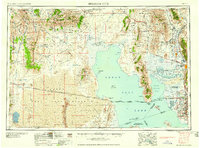 1958 Brigham City1958 Print · USGSNorthern Utah in the late fifties shows a landscape of extremes, from the salt flats to the bustling Bear River Valley. Trace historical routes like the Old Immigrant Trail and locate local landmarks such as the Brigham Sugar Mill and Booth Valley School.
 - 1958 Map of Sublett, 1960 Print
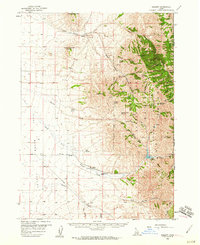 1958 Sublett1960 Print · USGSThe high country of Cassia County is captured here in the late fifties, showing the interplay between national forest lands and remote ranching. Researchers can locate named water sources like Moonshine Spring and trace the Van Camp Trail past Broken Circle Ranch.2 unique versions available
 - 1959 Map of Strevell, 1960 Print
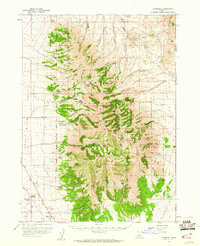 1959 Strevell1960 Print · USGSThe high ridges and mineral-rich canyons of southern Idaho come into focus in the late fifties. Genealogists and historians can trace mining activity at the Ruth Mine and Silver Hills Mine or locate the remote Gunnell Guard Station near the Utah border.
 - 1959 Map of Cotton Thomas Basin, 1960 Print
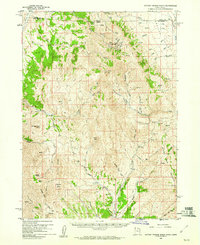 1959 Cotton Thomas Basin1960 Print · USGSThe high desert border between Utah and Idaho was a hub of mining and ranching activity during the late fifties. Genealogists and historians can trace old operations like the Vipont Mine and Skoro Mine, or locate the site of Holt Basin (Ruins) and Beatty Springs.2 unique versions available
 - 1959 Map of Kelton Pass, 1960 Print
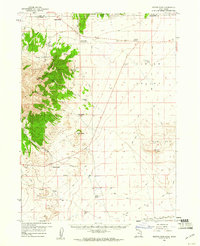 1959 Kelton Pass1960 Print · USGSThe high desert of Box Elder County is captured here in the late fifties, showcasing a network of family ranches and historical travel routes. Genealogists can locate named homesteads like the Vern Steeds Ranch or trace the Cedar Creek (Old Stage Station) at Kelton Pass.
 - 1959 Map of Park Valley, 1960 Print
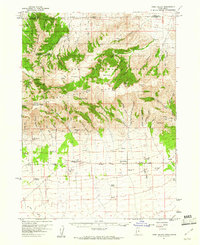 1959 Park Valley1960 Print · USGSIn the late 1950s, the Utah-Idaho border region was a landscape of high peaks and foothill ranching communities. Genealogists and local historians can trace the foundations of Park Valley and Rosette or locate high-country landmarks like the One Mile Guard Sta.3 unique versions available
 - 1959 Map of Yost, 1960 Print
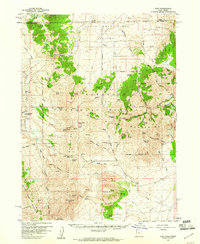 1959 Yost1960 Print · USGSBox Elder County and the Idaho borderlands are shown here in the late fifties, centered on the high valleys of the Raft River. Researchers can locate family sites near Yost, Lynn, the Junction School, and the Yost Cemetery.2 unique versions available
 - 1959 Map of Lake Walcott, 1961 Print
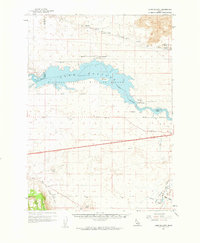 1959 Lake Walcott1961 Print · USGSSouthern Idaho in the late fifties was defined by the intersection of industrial progress and wildlife preservation along the Snake River. Researchers can trace the Union Pacific line through Hawley, locate the Cotterel (Site), and see the Minidoka Dam in its mid-century state.
 - 1959 Map of Yale, 1961 Print
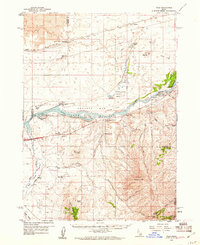 1959 Yale1961 Print · USGSThe Snake River valley in the late fifties was a place of remote ranches and conservation efforts along the Minidoka National Wildlife Refuge. Researchers can locate legacy family holdings like Fenstermaker Ranch or trace the Union Pacific rail line through Wapi.2 unique versions available
 - 1961 Map of Wells
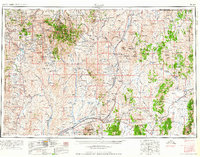 1961 Wells1961 Print · USGSNortheastern Nevada's high basin and range country is captured here during the early sixties, showing the vital rail corridors and ranching outposts. Researchers can trace the heritage of remote settlements like Metropolis, locate the Delano Mines, and follow the path of the Southern Pacific through the Pequop Mountains.
 - 1961 Map of Gollaher Mountain, 1963 Print
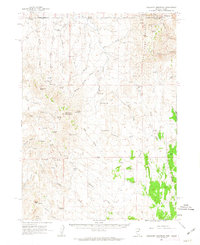 1961 Gollaher Mountain1963 Print · USGSThe Nevada-Idaho borderlands come into focus in the early sixties, showing a landscape shaped by high-desert springs and remote peaks. Researchers can locate named water sources like Indian Mike Spring and Moonshine Spring or trace routes through Devils Pass.2 unique versions available
 - 1961 Map of Goose Creek, 1963 Print
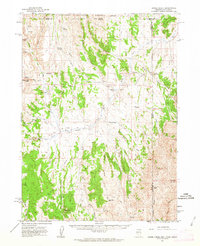 1961 Goose Creek1963 Print · USGSThe tri-state border region of Nevada, Utah, and Idaho comes alive in this early 1960s survey of the High Desert. Historians and genealogists can trace the Old Emigrant Trail and locate family-run outposts like Trout Creek Ranch and Judd Ranch.3 unique versions available
 - 1962 Map of Brigham City
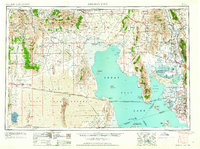 1962 Brigham City1962 Print · USGSNorthern Utah in the early sixties reveals a landscape of vast salt flats and growing towns along the Wasatch Front. Researchers can trace the Southern Pacific line past the Golden Spike Monument or locate landmarks like Indian Cave and Donner-Reed Pass.
 - 1964 Map of Burley SW, 1965 Print
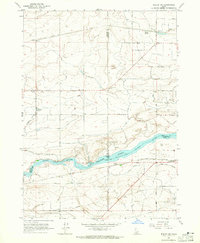 1964 Burley SW1965 Print · USGSSouthern Idaho in the mid-sixties shows an agricultural landscape defined by the Snake River and its massive irrigation projects. Genealogists and historians can trace the early river economy through sites like Starrhs Ferry and rail stops at Schodde or Hynes.2 unique versions available
 - 1964 Map of Rupert SE, 1965 Print
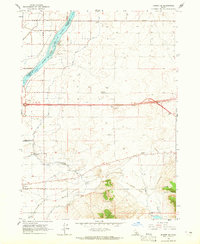 1964 Rupert SE1965 Print · USGSAgricultural life in Cassia County during the mid-sixties revolved around the town of Declo and its sophisticated irrigation network. Genealogists and researchers can trace the Old Railroad Grade, locate the High Sch, and find family-named sites like the Newcomb Substation.2 unique versions available
 - 1964 Map of View, 1965 Print
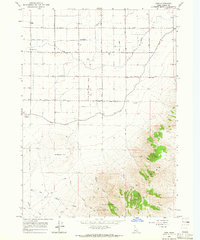 1964 View1965 Print · USGSCassia County farmsteads and irrigation networks meet the rising peaks of the Albion Range in the mid-1960s. Researchers can locate family landmarks like the Grange Hall, trace the grounds of View Cemetery, and find rural centers at Unity and Marchant.3 unique versions available
 - 1964 Map of Kenyon, 1965 Print
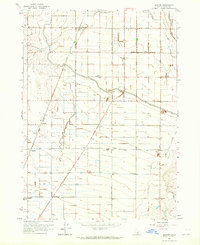 1964 Kenyon1965 Print · USGSCassia County agriculture was in full swing in the 1960s, shaped by a network of canals and the reach of the railroad. Researchers can locate the Pella Ward Cem, trace the Union Pacific line through Beetville, and see the layout of the Labor Camp.2 unique versions available
 - 1964 Map of Milner, 1965 Print
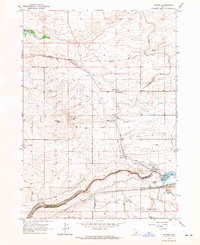 1964 Milner1965 Print · USGSThe Snake River plains in the 1960s reveal an intricate web of desert irrigation and rail transport. Genealogists and historians can trace small settlements like Greenwood and Milner, alongside landmarks like Hazelton Butte and the Milner Dam.
Showing maps 1-25 of 470
Top cities of Cassia County
- Burley historical maps
- Oakley historical maps
- Declo historical maps
- Albion historical maps
- Malta historical maps
Frequently asked questions
- What are the different types of historical maps available for Cassia County?
- What is the oldest map of Cassia County?
- Where can I purchase historical maps of Cassia County for my home or office?
- Where can I download high-res historical maps of Cassia County?
- Are there historical topographic maps available for Cassia County?
- Is there historical aerial imagery available for Cassia County?
- Where are historical maps of Cassia County sourced from?