1950s Maps of Vermilion County, Illinois
Explore 17 historic maps of Vermilion County from the 1950s. These maps offer a rare glimpse into what life looked like during the 1950s — showing old roads, neighborhoods, homes, and landmarks that have changed or disappeared over time.
Whether you're researching your family's past, planning a metal detecting trip, or studying how Vermilion County's landscape evolved across the 1950s, these high-resolution maps are a powerful tool for exploring the history of this region.
- Focus on a specific era: All maps on this page are from the 1950s, giving you a focused view of this time period.
- See what’s changed: Compare century-old streets, trails, and buildings to today's modern landscape using overlays and satellite layers.
- Research with precision: Use these maps for genealogy, historical research, land use analysis, or educational projects.
- View, download, or print: Maps are fully viewable online in high resolution, and can be downloaded or printed for your own records.
Start exploring Vermilion County's history through authentic maps from the 1950s. This is your window into the past.
Vermilion County, IL maps
(17)- 1950 Map of Danville SW
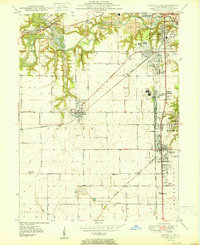 1950 Danville SW1950 Print · USGSThe Vermilion County coalfields and rail hubs are captured here at mid-century. Researchers can trace family history through sites like Sts Peter and Paul Cem or the industrial landscape of the D Day Mine and Wabash Railroad.
 - 1950 Map of Danville NW
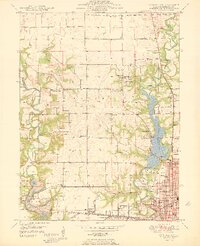 1950 Danville NW1950 Print · USGSThe northwestern outskirts of Danville and the Vermilion River valley are captured here in the mid-century, as industrial mining and new recreational parks met. Genealogists and historians can trace the New York Central rail line past Eureka Sch, Hillery, and the grounds of Kickapoo State Park.
 - 1950 Map of Danville SE, 1960 Print
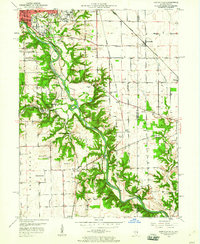 1950 Danville SE1960 Print · USGSThe Illinois-Indiana borderlands at mid-century reveal a landscape defined by the winding Vermilion River and the expansion of southern Danville. Genealogists and local researchers can trace a dense network of family landmarks and rural institutions, from Sandhill Memorial Park to the Willow Springs Sch and Morey Chapel.
 - 1950 Map of Danville NE, 1962 Print
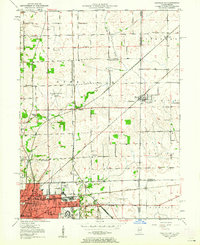 1950 Danville NE1962 Print · USGSDanville and the surrounding Illinois-Indiana borderlands are captured here at a mid-century peak of rail and industry. Researchers can trace family roots through numerous rural institutions like Grange Hall Sch, Spring Hill Cemetery, and the Hopewell Ch.
 - 1951 Map of Danville NE
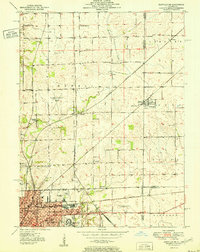 1951 Danville NE1951 Print · USGSThe Illinois and Indiana state line comes alive in the early 1950s as Danville's rail-and-road network reaches toward the border. Researchers can trace family history at Oaklawn Cem and Bryley Cem or locate vanished rural schoolhouses like Lamb Sch and Ash Corner Sch.
 - 1951 Map of Danville SE
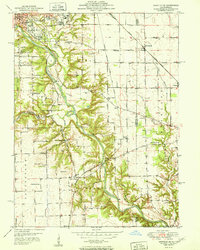 1951 Danville SE1951 Print · USGSVermilion County at mid-century reveals a landscape balancing heavy industry with deep-rooted rural communities. Genealogists and historians can trace family landmarks like Morey Chapel, the Langley Cemetery, and numerous country schools from Grape Creek Sch to Jenkins Sch.
 - 1953 Map of Danville, 1965 Print
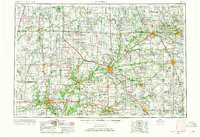 1953 Danville1965 Print · USGSIndiana and Illinois crossroads come to life in this mid-century survey as the interstate era begins to reshape the river-and-rail landscape. Genealogists and collectors can trace the historic paths of the Nickel Plate railroad or locate smaller communities like Veedersburg, Goodland, and Bismarck.3 unique versions available
 - 1953 Map of Indianapolis, 1965 Print
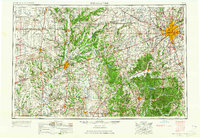 1953 Indianapolis1965 Print · USGSCentral Indiana and the Illinois borderlands are captured in the mid-sixties, showing the growth of Indianapolis and its industrial rail corridors. Genealogists and historians can trace the development of outlying towns like Zionsville or Beech Grove and find landmarks such as Atterbury AAF and Turkey Run State Park.4 unique versions available
 - 1955 Map of Danville
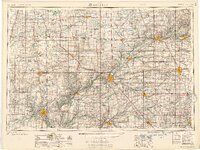 1955 Danville1955 Print · USGSThe Indiana-Illinois borderlands during the mid-fifties reveal a landscape of thriving rail hubs and university towns. Researchers can trace the legacy of Purdue University, the Tippecanoe Battlefield, and the path of the Pennsylvania RR.
 - 1955 Map of Humrick, 1956 Print
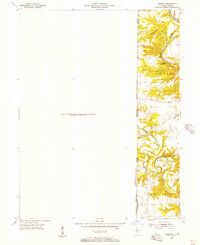 1955 Humrick1956 Print · USGSThe Illinois and Indiana borderlands come alive in the mid-fifties along the winding Vermilion River and the tracks of the Chicago and St Louis railroad. Genealogists can trace family names at Brown Cem and Patrick Cem or explore the sharp terrain of Devils Backbone.
 - 1955 Map of Scottland, 1957 Print
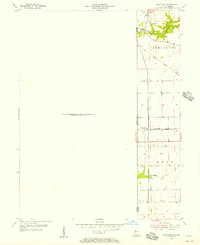 1955 Scottland1957 Print · USGSThe Illinois-Indiana state line during the mid-fifties shows a landscape of rural rail junctions and early pioneer landmarks. Trace family history and regional industry through the Old Hopewell Cem, the village of Quaker, and the Baltimore and Ohio railroad corridor.
 - 1956 Map of Danville
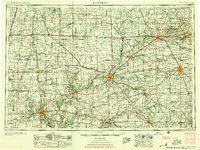 1956 Danville1956 Print · USGSMid-century Indiana and Illinois are captured here as the river-and-rail economy evolved into the modern highway era. Researchers can trace ancestral roots and old transport lines through Logansport, Battle Ground, and the dams at Lake Shafer.
 - 1956 Map of Indianapolis
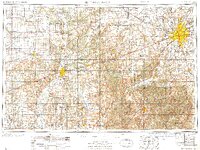 1956 Indianapolis1956 Print · USGSCentral Indiana in the mid-fifties is captured during a period of industrial growth and military presence. Genealogists and historians can trace the rail networks of the New York Central or locate regional landmarks like Fort Benjamin Harrison and Camp Atterbury.
 - 1956 Map of Newman, 1957 Print
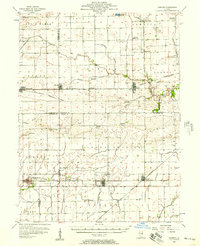 1956 Newman1957 Print · USGSThe borderlands of Champaign and Douglas counties are seen here in the mid-fifties, when small-town rail depots still served as the region's heartbeat. Genealogists can trace family names through rural landmarks like Stutler Cem, Fairfield Ch, and the small community of Maizetown.2 unique versions available
 - 1957 Map of Indianapolis
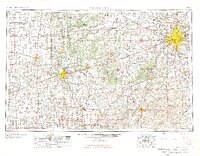 1957 Indianapolis1957 Print · USGSCentral Indiana in the mid-fifties is captured here as a crossroads of major rail lines and nascent federal highways. Genealogists and historians can trace family-named ridges like Poplar Ridge or locate strategic sites like Camp Atterbury and Speedway.2 unique versions available
 - 1957 Map of Fithian, 1958 Print
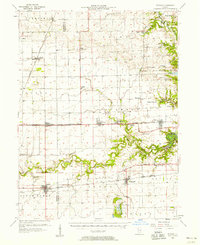 1957 Fithian1958 Print · USGSVermilion and Champaign counties come alive in the late fifties as a network of rail-side towns and river bends. Genealogists and historians can locate long-standing landmarks like Belgium Row, Corner Chapel, and the Township High Sch near the Salt Fork.3 unique versions available
 - 1957 Map of Potomac, 1958 Print
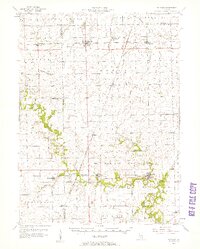 1957 Potomac1958 Print · USGSVermilion County rural life is captured here in the late fifties, showing a landscape defined by rail lines and river crossings. Trace family history through dozens of landmarks like St Lawrence Cem, Selsor Ford, and the Science Hill Sch.2 unique versions available
End of results
Showing maps 1-17 of 17
Top cities of Vermilion County
- Danville historical maps
- Hoopeston historical maps
- Georgetown historical maps
- Westville historical maps
- Tilton historical maps
- Catlin historical maps
See more
Frequently asked questions
- What are the different types of historical maps available for Vermilion County?
- What is the oldest map of Vermilion County?
- Where can I purchase historical maps of Vermilion County for my home or office?
- Where can I download high-res historical maps of Vermilion County?
- Are there historical topographic maps available for Vermilion County?
- Is there historical aerial imagery available for Vermilion County?
- Where are historical maps of Vermilion County sourced from?