1960s Maps of Vermilion County, Illinois
Explore 16 historic maps of Vermilion County from the 1960s. These maps offer a rare glimpse into what life looked like during the 1960s — showing old roads, neighborhoods, homes, and landmarks that have changed or disappeared over time.
Whether you're researching your family's past, planning a metal detecting trip, or studying how Vermilion County's landscape evolved across the 1960s, these high-resolution maps are a powerful tool for exploring the history of this region.
- Focus on a specific era: All maps on this page are from the 1960s, giving you a focused view of this time period.
- See what’s changed: Compare century-old streets, trails, and buildings to today's modern landscape using overlays and satellite layers.
- Research with precision: Use these maps for genealogy, historical research, land use analysis, or educational projects.
- View, download, or print: Maps are fully viewable online in high resolution, and can be downloaded or printed for your own records.
Start exploring Vermilion County's history through authentic maps from the 1960s. This is your window into the past.
Vermilion County, IL maps
(16)- 1962 Map of Indianapolis
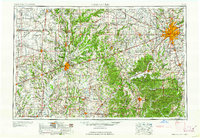 1962 Indianapolis1962 Print · USGSCentral Indiana and the Illinois borderlands are captured here in the early sixties, showing the region's dense rail networks and growing urban centers. Genealogists and historians can locate family-named landmarks and institutions like Crown Hill Cem, Indiana University, and the Indianapolis Motor Speedway.
 - 1964 Map of Hoopeston, 1965 Print
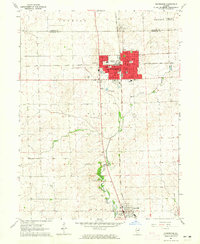 1964 Hoopeston1965 Print · USGSHoopeston and the surrounding Vermilion County prairie are captured here in the mid-sixties, showcasing a landscape defined by rail intersections and small-town growth. Genealogists and local historians can trace the foundations of Rossville, the grounds of Floral Hill Cem, and local landmarks like Mc Ferren Park.
 - 1964 Map of Bismarck, 1965 Print
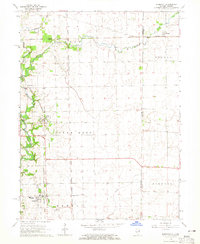 1964 Bismarck1965 Print · USGSBismarck and the Illinois-Indiana borderlands are shown in the mid-1960s as a hub for the Chicago and Eastern Illinois and Milwaukee Road rail lines. Genealogists and local historians can trace family roots through Miller Cem, locate the Township High Sch in Bismarck, or follow the Old Railroad Grade near Alvin.2 unique versions available
 - 1964 Map of Henning, 1965 Print
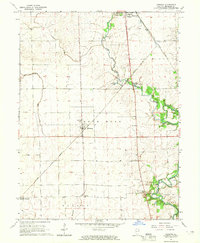 1964 Henning1965 Print · USGSVermilion County rural life in the mid-1960s is centered around the rail lines and river forks that shaped these Illinois townships. Genealogists and local historians can trace early school sites, several Cem locations, and landmarks like Manns Chapel or the village of Henning.
 - 1964 Map of Ambia, 1965 Print
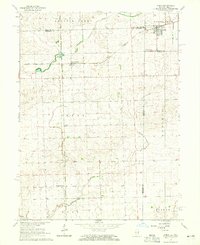 1964 Ambia1965 Print · USGSThe Illinois-Indiana borderlands of the mid-1960s are captured here during a period of active rail transit and rural agriculture. Genealogists and local historians can trace family roots through settlements like Cheneyville, Powley Corners, and the rural Antioch Ch.
 - 1965 Map of Humrick, 1967 Print
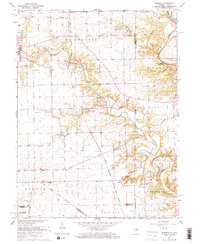 1965 Humrick1967 Print · USGSVermilion County transitions from prairie to river bluffs in the mid-1960s as rail lines converge near the state line. Researchers can trace the Old Indian Treaty Boundary and locate community sites like McKendree Ch or the Wingard Sch.2 unique versions available
 - 1965 Map of Scottland, 1967 Print
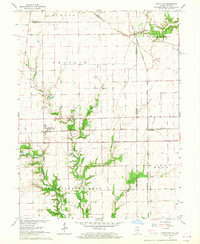 1965 Scottland1967 Print · USGSThe Illinois-Indiana borderlands in the mid-1960s are defined here by a network of cross-state railways and quiet rural crossroads. Researchers can trace ancestral roots through numerous family and community sites like Old Hopewell Cemetery, Wesley Chapel, and Quaker.2 unique versions available
 - 1966 Map of Georgetown, 1967 Print
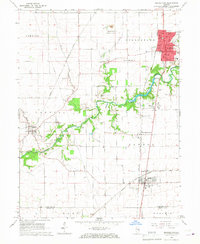 1966 Georgetown1967 Print · USGSThe Illinois and Indiana borderlands thrived in the mid-sixties as a hub of rail transit and agricultural commerce. Researchers can trace historic family burial sites like Sandusky Cem and Crown Hill Cem or locate community centers like Vermilion Grove and Bunsenville.2 unique versions available
 - 1966 Map of Danville SE, 1967 Print
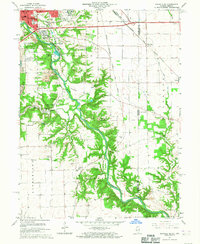 1966 Danville SE1967 Print · USGSThe bluffs of the Vermilion River and the expanding south side of Danville are captured here in the mid-sixties. Genealogists and historians can trace numerous rural burial sites like Atherton Cem or locate the University of Illinois Radio Telescope.2 unique versions available
 - 1966 Map of Danville SW, 1967 Print
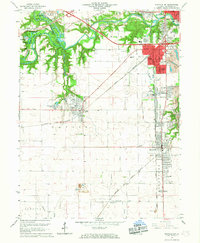 1966 Danville SW1967 Print · USGSVermilion County in the mid-sixties reveals a landscape shaped by coal extraction and heavy rail. Genealogists and historians can trace family plots at Oak Ridge Cemetery or study the industrial layout of the Deep Valley Mine and V-Day Mine.2 unique versions available
 - 1966 Map of Danville NE, 1967 Print
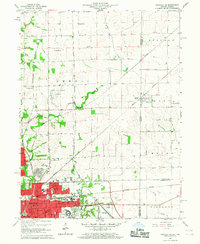 1966 Danville NE1967 Print · USGSThe Illinois-Indiana borderlands come to life in the mid-1960s as Danville expands toward the state line. Genealogists and historians can trace rail-side settlements like Newell and find several family-named landmarks including Leonard Cem and Bryley Cem.2 unique versions available
 - 1966 Map of Danville NW, 1967 Print
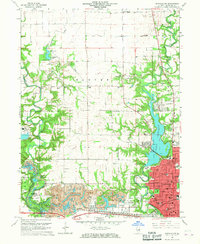 1966 Danville NW1967 Print · USGSThe northern edge of Danville in the mid-sixties reveals a landscape shaped by coal mining and river-fed recreation. Genealogists and historians can trace family burial sites like Snyder Cem and Thurman Cem or the industrial footprint of the Harmarttan Strip Mine.2 unique versions available
 - 1968 Map of Royal, 1969 Print
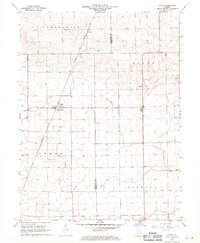 1968 Royal1969 Print · USGSThe eastern Illinois prairie comes into focus in the late 1960s, centered on the railroad hub of Royal. Researchers can trace the Chicago and Eastern Illinois line and locate local landmarks like Stearns Cem and Central Ch.
 - 1968 Map of Oakwood, 1969 Print
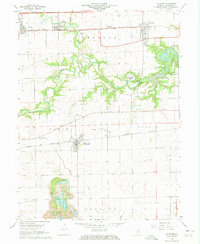 1968 Oakwood1969 Print · USGSVermilion County in the late sixties shows a landscape defined by the winding Salt Fork and active industry. Researchers can trace the Penn Central rail line through Fithian or locate family history at Hickman Cem and Daugherty Cem.3 unique versions available
 - 1968 Map of Homer, 1969 Print
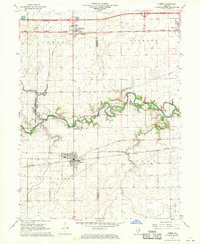 1968 Homer1969 Print · USGSChampaign County farming and rail life are at a crossroads in the late sixties as major water projects loom over the river valley. Trace the paths of the PENN CENTRAL and NORFOLK AND WESTERN railroads as they connect Homer, Ogden, and the riverside Homer Park.2 unique versions available
 - 1968 Map of Collison, 1970 Print
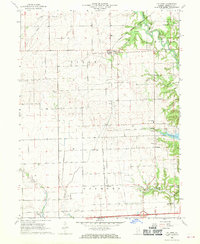 1968 Collison1970 Print · USGSVermilion County's prairie and river breaks are captured here in the late sixties, showing a landscape of established farmsteads and rural rail towns. Trace local lineages through numerous burial sites like Higginsville Cem or the vanished school at Newtown Sch.2 unique versions available
End of results
Showing maps 1-16 of 16
Top cities of Vermilion County
- Danville historical maps
- Hoopeston historical maps
- Georgetown historical maps
- Westville historical maps
- Tilton historical maps
- Catlin historical maps
See more
Frequently asked questions
- What are the different types of historical maps available for Vermilion County?
- What is the oldest map of Vermilion County?
- Where can I purchase historical maps of Vermilion County for my home or office?
- Where can I download high-res historical maps of Vermilion County?
- Are there historical topographic maps available for Vermilion County?
- Is there historical aerial imagery available for Vermilion County?
- Where are historical maps of Vermilion County sourced from?