Old Maps of Catahoula Parish, Louisiana for Metal Detecting
Plan your next treasure hunt with 210 historic maps of Catahoula Parish. Find old homesites, ghost towns, trails, and gathering spots that may be lost to time — perfect for identifying promising metal detecting locations.
- Locate forgotten sites: Uncover places like long-lost settlements, abandoned rail lines, or gathering spots.
- Plan better hunts: Use map overlays combined with LiDAR or satellite views to narrow in on historically rich areas.
- Made for detectorists: Thousands of hobbyists use these maps to discover relics, coins, and hidden history.
Use these historic maps to boost your research and find new opportunities beneath the surface of Catahoula Parish.
Catahoula Parish, LA maps
(210)- 1935 Map of Tooleys, 1936 Print
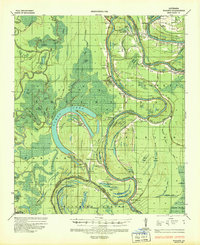 1935 Tooleys1936 Print · USGSThe alluvial wetlands of Concordia and Catahoula Parishes are documented here during the mid-1930s when river life revolved around local landings. Researchers can trace family roots at Larto Sch, identify ancestral sites near the B M Graveyard, or locate early homesteads by Island Bayou Ldg.
 - 1939 Map of Red Gum, 1941 Print
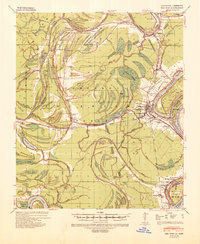 1939 Red Gum1941 Print · USGSConcordia Parish sits at a vital rail and river junction during the late thirties. Researchers can locate numerous historic landings and community pillars like the Rosenwald Sch, New St John Ch, and the crossroads at Ferriday.2 unique versions available
 - 1939 Map of Deer Park, 1951 Print
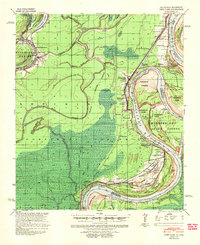 1939 Deer Park1951 Print · USGSThe Lower Mississippi River valley in the late thirties reveals a landscape of massive plantations and shifting river bends. Genealogists and historians can trace family land in Moro Plantation, locate schools like Central High School, or find small settlements such as Monterey and Arnot.
 - 1940 Map of Marksville, 1943 Print
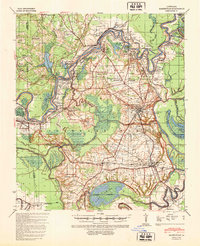 1940 Marksville1943 Print · USGSAvoyelles Parish life in the early 1940s is centered on the river-and-rail economy of the Red River valley. Genealogists and historians can trace family locations through numerous named churches and schools, such as Hickory Hill Sch, Vick, and the St Paul Ch & Cem.2 unique versions available
 - 1941 Map of Manifest, 1943 Print
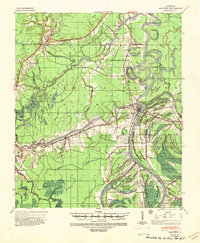 1941 Manifest1943 Print · USGSCatahoula Parish in the early 1940s is defined by its strategic river junctions and a sprawling network of bayous. Researchers can trace the riverfront development of Jonesville and Trinity or locate rural landmarks like Bethel Ch and the Indian Mound.
 - 1941 Map of Sicily Island, 1943 Print
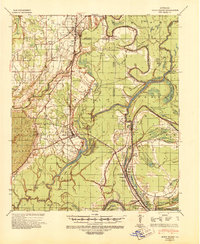 1941 Sicily Island1943 Print · USGSLouisiana's delta country comes alive in the 1940s as a complex network of bayous, landings, and rail lines. Genealogists and historians can trace the foundations of local life through rural landmarks like Sunnyside Sch & Ch, several Indian Mounds, and the Missouri Pacific rail corridor.2 unique versions available
 - 1941 Map of Jena, 1943 Print
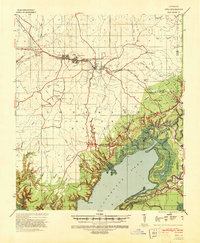 1941 Jena1943 Print · USGSLa Salle Parish at the start of the 1940s shows a landscape of timber towns and lowland lakes. Trace family roots at Fellowship Ch, see the industrial lines of the Louisiana & Arkansas RR, or locate old sites like Rhinehart and Nebo.
 - 1941 Map of Voorhies, 1943 Print
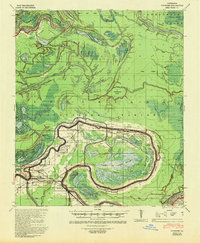 1941 Voorhies1943 Print · USGSAvoyelles Parish is captured here in the early 1940s, showcasing a river-bound landscape shaped by the Red River and its many oxbows. Genealogists can trace family roots through numerous landmarks like St James Ch & Cem, Voorhies School, and Moreauville.2 unique versions available
 - 1941 Map of Buckeye, 1944 Print
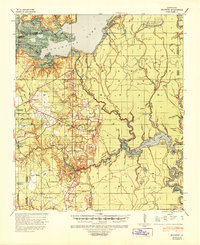 1941 Buckeye1944 Print · USGSCentral Louisiana’s wetland and prairie interface is captured here in the early 1940s, showing the intricate water systems of the Rapides and La Salle parish lines. Genealogists can locate family landmarks like Barron Chapel, Guillory School, and the settlement of Holloway.2 unique versions available
 - 1941 Map of Tooleys, 1946 Print
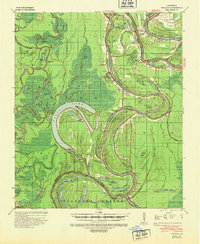 1941 Tooleys1946 Print · USGSLouisiana's river country comes to life in the 1940s as the confluence of the Black and Red Rivers shapes the delta parishes. Genealogists and historians can locate numerous landings like McDonald Ldg, local schools including Boggy Bayou Sch, and the Indian Mounds.2 unique versions available
 - 1941 Map of Harrisonburg, 1946 Print
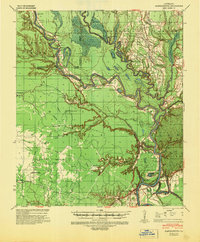 1941 Harrisonburg1946 Print · USGSThe Ouachita River valley in the early 1940s reveals a landscape of riverine commerce and upland settlements. Genealogists and researchers can locate historic community hubs like Harrisonburg, Siloam Ch, and the site of Fort Beauregard.
 - 1953 Map of Alexandria, 1963 Print
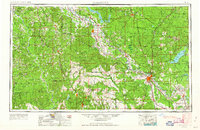 1953 Alexandria1963 Print · USGSCentral Louisiana during the early fifties is mapped here at the intersection of the piney woods and the Red River valley. Genealogists and historians can trace the rail-and-river network connecting towns like Alexandria, Natchitoches, and the grounds of Camp Beauregard.3 unique versions available
 - 1953 Map of Natchez, 1966 Print
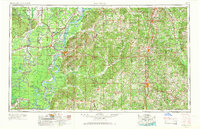 1953 Natchez1966 Print · USGSSouthwest Mississippi and the Louisiana border country come alive in this mid-century survey of the river valley and forest lands. Researchers can trace the rail lines of the Illinois Central RR and locate rural hubs like Gloster and Ferriday.3 unique versions available
 - 1955 Map of Alexandria
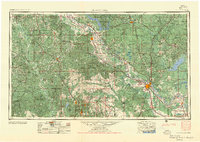 1955 Alexandria1955 Print · USGSCentral Louisiana in the mid-fifties is a landscape of river-port cities, sprawling timberlands, and massive military reservations. Genealogists and historians can trace the rail networks of the Texas & Pacific RR and locate sites like Camp Polk Military Reservation and Natchitoches.
 - 1955 Map of Olla, 1956 Print
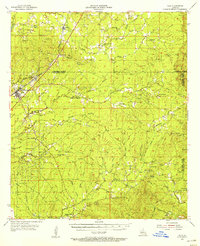 1955 Olla1956 Print · USGSThe Missouri Pacific Railroad and Bayou Funny Louis defined central Louisiana life in the mid-1950s. Genealogists and local historians can trace family roots through numerous sites like Kelly Sch, Aimwell Ch, and the Davis Cem.3 unique versions available
 - 1956 Map of Natchez
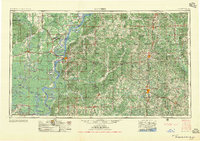 1956 Natchez1956 Print · USGSThe Mississippi River borderlands and the Pine Hills come alive in this mid-fifties study of the Natchez region. Genealogists and historians can trace rail-era towns along the Illinois Central RR and explore the oxbows of Lake Bruin and Lake Concordia.
 - 1957 Map of Sicily Island
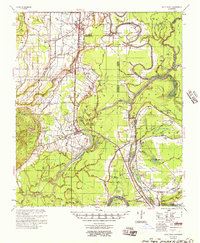 1957 Sicily Island1957 Print · USGSCatahoula Parish and the surrounding lowlands are captured in the late 1950s, showing a landscape shaped by the Tensas River and its many bayous. Genealogists can trace family roots at New Zion Ch & Cem 37, Loam Land Sch & Cem, or the old Lee Bayou School House.2 unique versions available
 - 1958 Map of Jena, 1959 Print
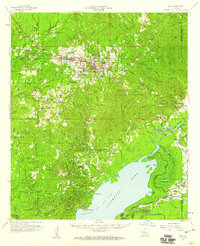 1958 Jena1959 Print · USGSLaSalle Parish timber and oil operations are in full swing during the late fifties, centered on the junction of the Louisiana and Arkansas Railway and the town of Jena. Researchers can trace family ties at the Nebo Sch, Searcy Cem, and the worker housing at Webb Quarters.2 unique versions available
 - 1959 Map of Natchez
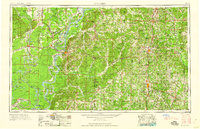 1959 Natchez1959 Print · USGSSouthwestern Mississippi and eastern Louisiana are captured in the late fifties, showing a landscape defined by the winding Mississippi River and the timbered Homochitto National Forest. Researchers can trace the sprawling Illinois Central RR and find rural landmarks like Union Church and Camp Van Dorn (Abandoned).
 - 1959 Map of Buckeye, 1960 Print
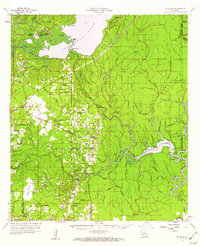 1959 Buckeye1960 Print · USGSLouisiana parish lines converge in this late-fifties landscape of complex bayous and oil fields. Researchers can trace rural family roots through numerous local landmarks like Marthas Chapel, Guillory Cem, and the old settlement of Buckeye.2 unique versions available
 - 1959 Map of Harrisonburg, 1960 Print
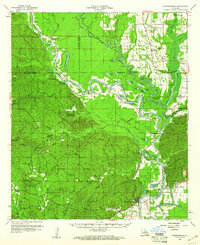 1959 Harrisonburg1960 Print · USGSThe Ouachita River valley comes to life in this late 1950s portrait of Catahoula Parish, showing a landscape of deep bayous and steep hills. Researchers can locate ancestral sites like Old Spring Ridge Cem, the community of Enterprise, and ancient Indian Mounds along the river bluffs.3 unique versions available
 - 1960 Map of Jonesville, 1961 Print
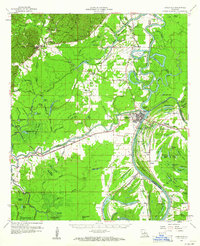 1960 Jonesville1961 Print · USGSThe river-junction town of Jonesville and the surrounding bayou country are captured here at the start of the 1960s. Researchers can trace old family burial grounds like Alexander Cem and rural centers including Lismore and Wallace Ridge.2 unique versions available
 - 1960 Map of Eva, 1961 Print
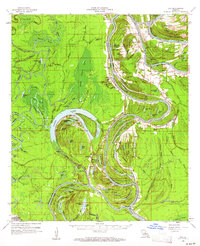 1960 Eva1961 Print · USGSCatahoula and Concordia Parishes in the early sixties reveal a landscape defined by the winding Black River and the rural communities of Mayna and Acme. Genealogists and local historians can trace family-named landmarks, old cemeteries like Dewey Cem, and rural churches including Glade Ch.3 unique versions available
 - 1961 Map of Ferriday, 1962 Print
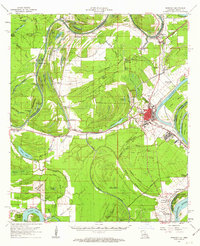 1961 Ferriday1962 Print · USGSConcordia Parish and the Mississippi River bottomlands are captured here in the early sixties, showing a landscape of bayous and rail towns. Researchers can locate many rural landmarks including St Peters Ch, Sevier High Sch, and family sites near Clayton and Frogmore.2 unique versions available
 - 1961 Map of Monterey, 1963 Print
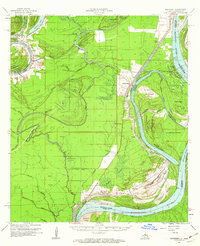 1961 Monterey1963 Print · USGSConcordia Parish in the early sixties is a landscape of winding bayous and active oil fields. Genealogists can locate family landmarks like Pt Pleasant Cem and Ashland Cem, or trace the path of the Old Railroad near Monterey.3 unique versions available
Showing maps 1-25 of 210
Top cities of Catahoula Parish
Frequently asked questions
- What are the different types of historical maps available for Catahoula Parish?
- What is the oldest map of Catahoula Parish?
- Where can I purchase historical maps of Catahoula Parish for my home or office?
- Where can I download high-res historical maps of Catahoula Parish?
- Are there historical topographic maps available for Catahoula Parish?
- Is there historical aerial imagery available for Catahoula Parish?
- Where are historical maps of Catahoula Parish sourced from?