1990s Maps of Oregon County, Missouri
Explore 13 historic maps of Oregon County from the 1990s. These maps offer a rare glimpse into what life looked like during the 1990s — showing old roads, neighborhoods, homes, and landmarks that have changed or disappeared over time.
Whether you're researching your family's past, planning a metal detecting trip, or studying how Oregon County's landscape evolved across the 1990s, these high-resolution maps are a powerful tool for exploring the history of this region.
- Focus on a specific era: All maps on this page are from the 1990s, giving you a focused view of this time period.
- See what’s changed: Compare century-old streets, trails, and buildings to today's modern landscape using overlays and satellite layers.
- Research with precision: Use these maps for genealogy, historical research, land use analysis, or educational projects.
- View, download, or print: Maps are fully viewable online in high resolution, and can be downloaded or printed for your own records.
Start exploring Oregon County's history through authentic maps from the 1990s. This is your window into the past.
Oregon County, MO maps
(13)- 1997 Map of Fremont, 1999 Print
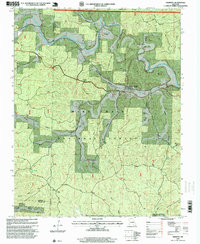 1997 Fremont1999 Print · USGSThe Ozark forest lands of Carter and Shannon counties appear here in the late nineties, documenting the industrial remains of the charcoal iron era. Researchers can locate numerous family burial grounds like New Hope Cemetery and trace the path of the Old Tram Road near the Site of Old Midco Iron Works.
 - 1997 Map of Wilderness, 1999 Print
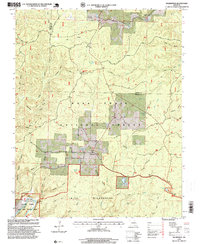 1997 Wilderness1999 Print · USGSThe Oregon and Carter County borderlands are shown here in the late nineties, showcasing a landscape of protected forest and river corridors. Researchers can find old logging traces like the Old Tram Road, the Wilderness settlement, and the Freeman Cemetery.
 - 1997 Map of Handy, 1999 Print
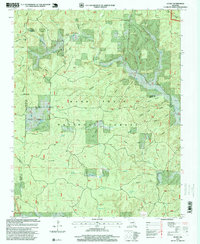 1997 Handy1999 Print · USGSThe Missouri Ozarks during the late 1990s reveal a landscape of deep hollows and forest settlements at the edge of the Irish Wilderness. Genealogists and hikers can locate Bristol Cemetery, Handy Church, and segments of the Ozark Trail.
 - 1997 Map of Birch Tree, 1999 Print
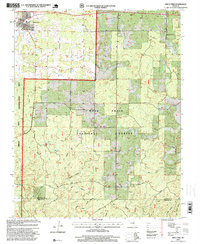 1997 Birch Tree1999 Print · USGSThe community of Birch Tree and the surrounding Ozark woodlands are documented here during the late nineties. Local researchers can locate family cemeteries, trace the courses of Hurricane Creek and Bee Fork, and identify landmarks like Fisher Pond and the Lookout Tower.
 - 1997 Map of Piedmont Hollow, 1999 Print
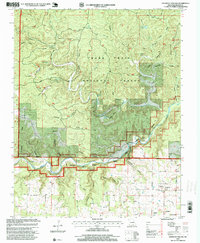 1997 Piedmont Hollow1999 Print · USGSThe Eleven Point River corridor in the late nineties serves as a preserved wilderness within the Mark Twain National Forest. Genealogists and local historians can trace rural landmarks like Macedonia Church, Spring Creek Cemetery, and family holdings in Johnsen Hollow.
 - 1997 Map of Bardley, 2000 Print
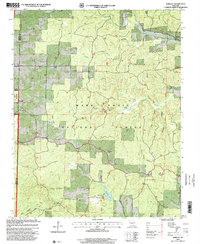 1997 Bardley2000 Print · USGSThe southern Missouri Ozarks come to life in the late nineties, showing a landscape defined by forest management and small rural communities. Genealogists and researchers can trace family landmarks like Pine School, Bardley Church, and the remote outpost of Bennett.
 - 1997 Map of Riverton, 2000 Print
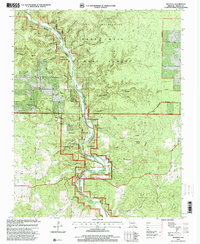 1997 Riverton2000 Print · USGSThe Eleven Point River corridor in Oregon County was undergoing modern forest management and conservation by the late nineties. Local researchers can locate family sites and landmarks like Riverton Cem, the Whitten Church, and the historic Boze Mill.
 - 1997 Map of Many Springs, 2000 Print
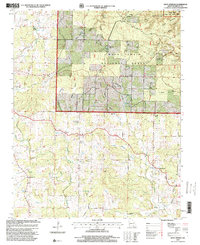 1997 Many Springs2000 Print · USGSOregon County is mapped here in the late twentieth century, showing a landscape defined by the Mark Twain National Forest and the Eleven Point River. Genealogists and local historians can trace rural roots at Allen Chapel, Hollis Cemetery, and the settlement of Couch.
 - 1997 Map of Billmore, 2000 Print
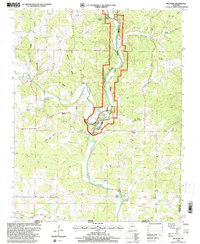 1997 Billmore2000 Print · USGSThe Ozark plateau in the late nineties is defined here by the winding Eleven Point River and its protected forest lands. Researchers can locate remote community landmarks like Liberty Church, Billmore, and the Mt Carmel Cemetery.
 - 1997 Map of Gatewood, 2000 Print
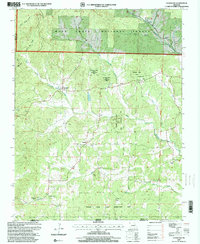 1997 Gatewood2000 Print · USGSRipley County is defined by its deep hollows and protected timberlands in the late 1990s. Researchers can trace rural lineage through landmarks like Gatewood, Tucker Church, and Johnson Chapel along the West Fork Fourche Creek.
 - 1997 Map of Greer, 2000 Print
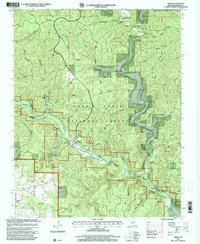 1997 Greer2000 Print · USGSOregon County is shown during the late 1990s as a haven of deep river hollows and cold-water springs within the Mark Twain National Forest. Genealogists and hikers can trace the Ozark Trail past Greer, old mills, and family sites like Saints Cemetery and Turners Mill.
 - 1997 Map of Low Wassie, 2000 Print
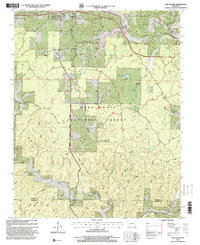 1997 Low Wassie2000 Print · USGSShannon County in the late nineties is documented here as the timber and water of the Missouri Ozarks meet at Winona. Researchers can trace the legacy of local industry and community via the Charcoal Kilns, Mount Zion Cemetery, and the Old Tram Road.
 - 1997 Map of Thomasville, 2000 Print
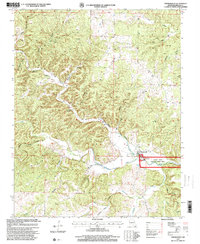 1997 Thomasville2000 Print · USGSThe community of Thomasville is documented in the late nineties, centered at the headwaters of the Eleven Point River. Genealogists and researchers can trace family landmarks like Jolliff Spring or locate the local Iron Mine and Cemetery.
End of results
Showing maps 1-13 of 13
Top cities of Oregon County
Frequently asked questions
- What are the different types of historical maps available for Oregon County?
- What is the oldest map of Oregon County?
- Where can I purchase historical maps of Oregon County for my home or office?
- Where can I download high-res historical maps of Oregon County?
- Are there historical topographic maps available for Oregon County?
- Is there historical aerial imagery available for Oregon County?
- Where are historical maps of Oregon County sourced from?