Old Maps of Grand Forks, North Dakota for Hiking & Exploration
Hike through history with 26 historic maps of Grand Forks. Explore old trails, ghost towns, and forgotten backroads — perfect for outdoor adventurers and local explorers.
- Rediscover forgotten places: Map out old mining camps, roads, and footpaths that no longer exist on modern maps.
- Layer with modern tools: Combine with LiDAR or satellite views to plan hikes through historical terrain.
- Made for exploration: Popular among hikers, overlanders, and local history lovers.
Use these maps to find adventure and explore the hidden past of Grand Forks.
Grand Forks, ND maps
(26)- 1934 Map of Grand Forks
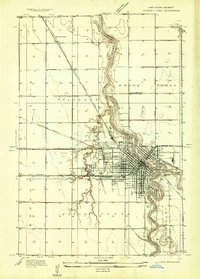 1934 Grand Forks1934 Print · USGSGrand Forks and East Grand Forks appear as a burgeoning rail and river hub in the mid-1930s. Researchers can trace the early footprint of the University of North Dakota or locate local landmarks like the State Elevator and Mill and Schumeier Switch.
 - 1934 Map of Grand Forks
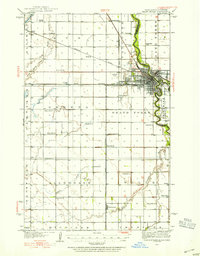 1934 Grand Forks1934 Print · USGSThe Red River Valley in the mid-1930s shows a landscape of growing river towns and a dense network of rural school districts. Genealogists can trace family connections to the UNIVERSITY OF NORTH DAKOTA, West Walle Ch, or early outposts like Merrifield and Schurmeier.2 unique versions available
 - 1938 Map of Grand Forks
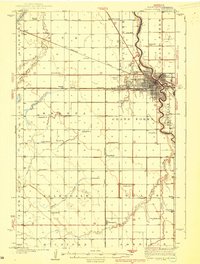 1938 Grand Forks1938 Print · USGSGrand Forks and East Grand Forks appear as thriving rail hubs in the mid-1930s at the confluence of the Red and Red Lake Rivers. Researchers can trace rural school locations from School No 25 to School No 6 and identify landmarks like the Landing Field and Brenna Ch.3 unique versions available
 - 1952 Map of Grand Forks, 1967 Print
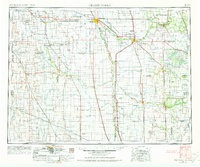 1952 Grand Forks1967 Print · USGSThe Red River Valley in the early fifties is shown here at the height of its rail-and-river agricultural economy. Researchers can locate small-town landmarks like the Pleasant View School, the Immanuel Lutheran Church, and trace the path of the Soo Line Railroad.3 unique versions available
 - 1956 Map of Grand Forks
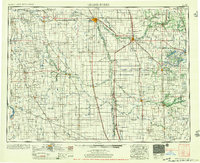 1956 Grand Forks1956 Print · USGSThe Red River Valley in the mid-fifties is captured here as a thriving corridor of grain elevators and rail-linked towns along the North Dakota and Minnesota border. Researchers can trace historic church sites like Immanuel Lutheran Church, vanished rail stops at Tilde Junction, and the boundaries of the White Earth Indian Reservation.
 - 1963 Map of Kelly, 1964 Print
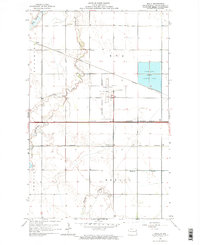 1963 Kelly1964 Print · USGSGrand Forks was expanding westward during the early sixties as aviation and rail lines shaped the prairie. Genealogists can locate old rural schoolhouses like School No 30 and small rail-side stops including Kelly and Powell.
 - 1963 Map of Grand Forks, 1965 Print
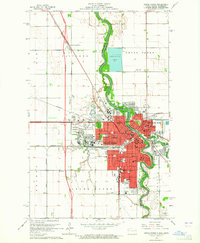 1963 Grand Forks1965 Print · USGSGrand Forks and the Red River Valley are seen here in the early 1960s as the urban footprint expanded around the university. Trace the city's growth through sites like the University of North Dakota, Calspur, and parochial schools such as St Marys Sch.2 unique versions available
 - 1966 Map of Grand Forks
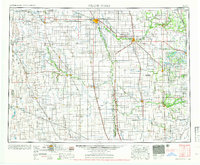 1966 Grand Forks1966 Print · USGSThe Red River Valley in the mid-sixties shows a landscape shaped by rail-line commerce and complex water management. Genealogists and historians can trace rail-side towns like Emerado and Hunter or locate rural landmarks like the Pleasant View Church.
 - 1971 Map of Thompson, 1973 Print
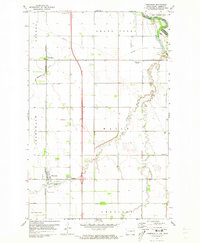 1971 Thompson1973 Print · USGSThe Red River Valley south of Grand Forks is captured here in the early seventies as a productive landscape of railroads and prairie streams. Genealogists and historians can trace local family roots through Walle Ch, Thompson Cem, and the settlement at Merrifield.
 - 1985 Map of Grand Forks
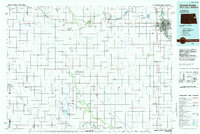 1985 Grand Forks1985 Print · USGSThe Red River Valley in the mid-1980s was a landscape of deep-rooted agriculture and rising military significance. Genealogists and researchers can trace the rail-tied development of towns like Larimore and Northwood alongside major landmarks like Grand Forks Air Force Base and Turtle River State Park.2 unique versions available
 - 1994 Map of Grand Forks, 1995 Print
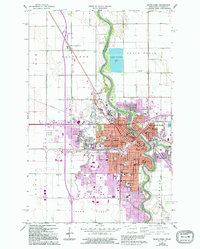 1994 Grand Forks1995 Print · USGSGrand Forks and its sister city across the Red River appear here in the mid-1990s, just before major floods altered the urban landscape. Researchers can trace the sprawling campus of the University of North Dakota and locate historic sites like Calvary Cem and the Burlington Northern lines.
 - 2011 Map of Thompson, 2011 Print
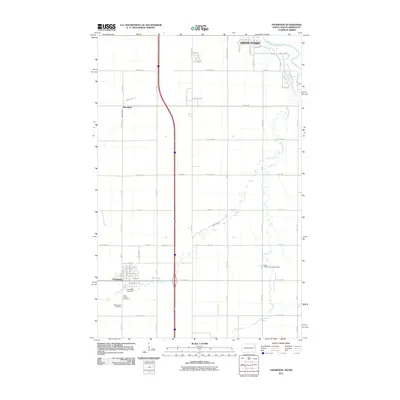 2011 Thompson2011 Print · USGSThe southern outskirts of Grand Forks and the rural plains near Thompson are captured in the early 2000s. Genealogists can trace family roots through sites like the Walle Lutheran Church Cemetery and Saint James Cemetery along the Red River of the North.
 - 2011 Map of Kelly, 2011 Print
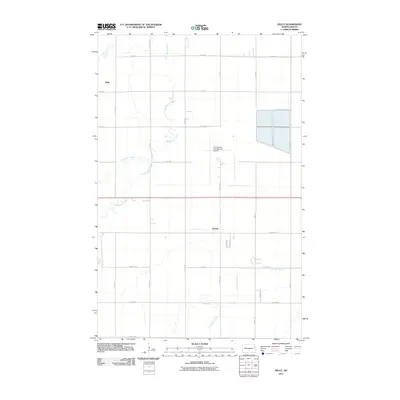 2011 Kelly2011 Print · USGSGrand Forks County at the start of the 2010s shows a landscape where aviation and agriculture meet on the open prairie. Genealogists and local historians can trace the vicinity of Kelly and Powell or follow the paths of Salt Water Coulee and English Coulee.
 - 2011 Map of Grand Forks, 2011 Print
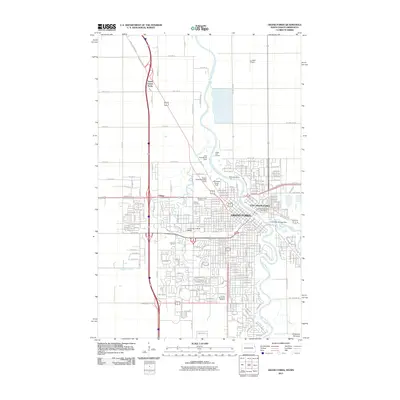 2011 Grand Forks2011 Print · USGSThe Red River Valley's twin cities are shown here in the early twenty-first century, spanning the border between North Dakota and Minnesota. Researchers can locate the University of North Dakota campus, Calvary Cemetery, and the East Grand Forks Post Office.
 - 2014 Map of Grand Forks, 2014 Print
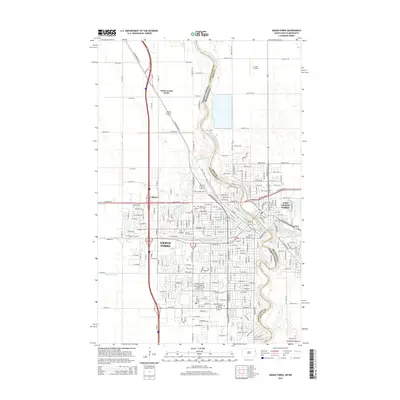 2014 Grand Forks2014 Print · USGSGrand Forks and East Grand Forks straddle the Red River border in the early 21st century, showing a landscape defined by collegiate growth and river geography. Researchers can trace the sprawling campus of the Univ of North Dakota or locate family sites at Memorial Park Cem and Sunset Memorial Gardens.
 - 2014 Map of Kelly, 2014 Print
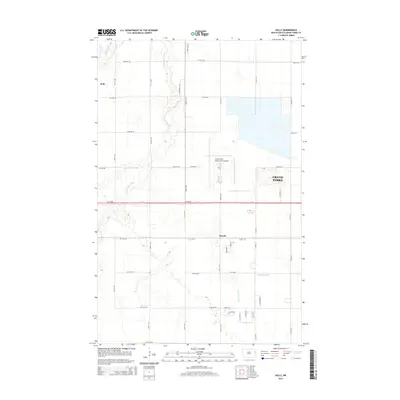 2014 Kelly2014 Print · USGSGrand Forks County is shown here during a period of transition as the city expands westward toward the prairie settlements of Kelly and Powell. Researchers can trace the layout of the Grand Forks International Airport alongside natural landmarks like Kelly Slough and English Coulee.
 - 2014 Map of Thompson, 2014 Print
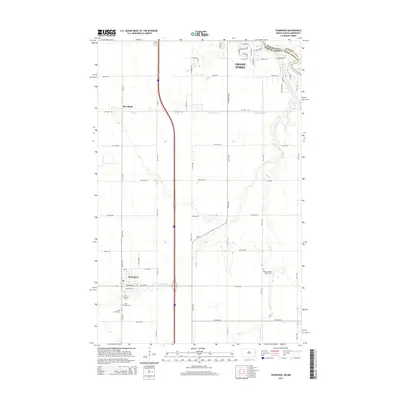 2014 Thompson2014 Print · USGSThe Red River Valley's agricultural and suburban landscape is captured here in the early twenty-first century. Genealogists and local historians can locate Thompson and Merrifield, along with significant sites like Walle Lutheran Church Cem and Thompson Cem.
 - 2017 Map of Kelly, 2017 Print
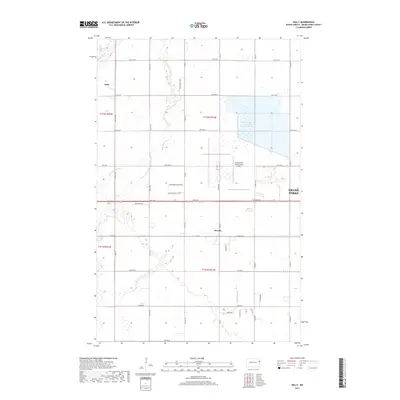 2017 Kelly2017 Print · USGSGrand Forks County at the start of the twenty-first century shows a landscape where aviation and agriculture meet. Trace the rural crossroads of Kelly and Powell or the drainage of Kelly Slough and English Coulee near the Grand Forks International Airport.
 - 2017 Map of Thompson, 2017 Print
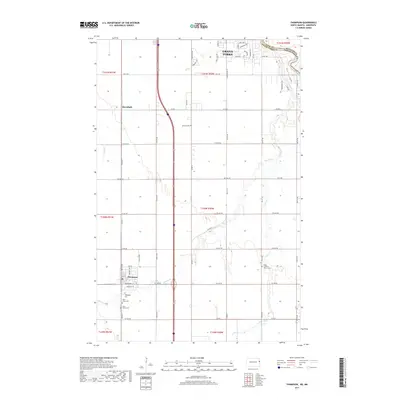 2017 Thompson2017 Print · USGSThe Red River Valley south of Grand Forks is shown here in the late twenty-tens, defined by organized drainage and rural church life. Genealogists can locate several burial grounds including Thompson Cem and Saint Judes Cem, or trace the winding path of Elm Coulee.
 - 2017 Map of Grand Forks, 2017 Print
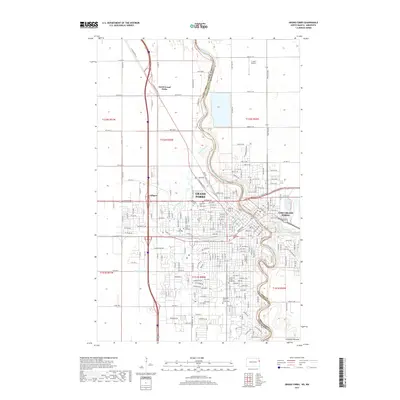 2017 Grand Forks2017 Print · USGSThe twin cities on the Red River are shown here in the late 2010s, detailing a period of continued urban and academic development. Researchers can trace the sprawling Univ of North Dakota campus, local cemeteries like North Cem, and the path of the BNSF RAILWAY.
 - 2020 Map of Kelly, 2020 Print
 2020 Kelly2020 Print · USGSGrand Forks and its western agricultural outskirts are captured here during a period of steady infrastructure expansion. Researchers can trace the development of the Grand Forks International Airport and the hydrological paths of Kelly Slough and English Coulee.
 - 2020 Map of Grand Forks, 2020 Print
 2020 Grand Forks2020 Print · USGSThe Red River Valley's urban hub comes into sharp focus during the early twenty-first century as it spans the border between North Dakota and Minnesota. Genealogy and history researchers can trace local institutions like the University of North Dakota and Montefiore Cem.
 - 2020 Map of Thompson, 2020 Print
 2020 Thompson2020 Print · USGSThe fertile prairie south of Grand Forks is captured here during a period of steady rural continuity. Family historians can locate several local burial sites, including the Walle Lutheran Church Cem and Thompson Cem, alongside the small rail-aligned settlement of Merrifield.
 - 2024 Map of Kelly, 2024 Print
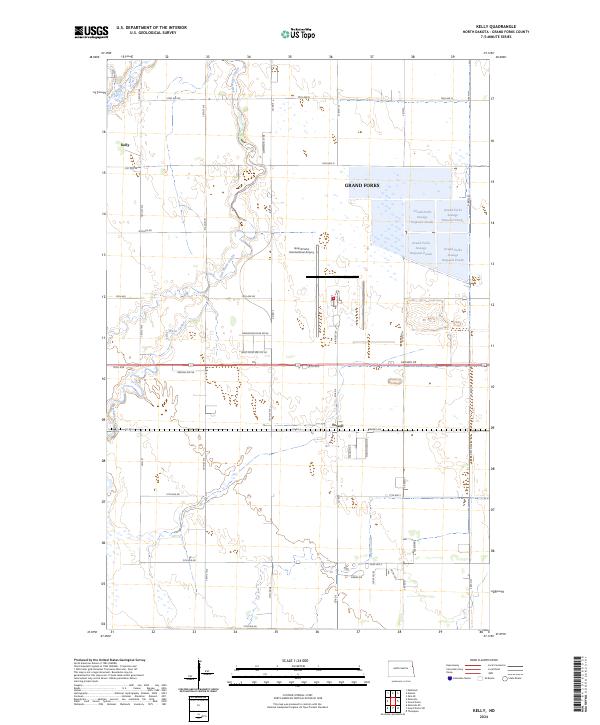 2024 Kelly2024 Print · USGSGrand Forks County in the 2020s is defined by its vital wildlife corridors and critical infrastructure. Trace the modern landscape near Kelly and Powell, including the extensive Kellys Slough National Wildlife Refuge and Grand Forks International Airport.
 - 2024 Map of Grand Forks, 2024 Print
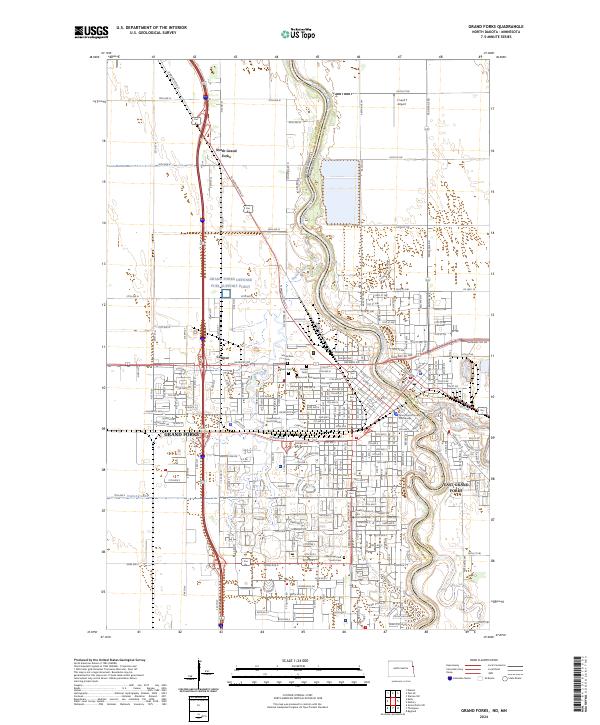 2024 Grand Forks2024 Print · USGSThe Red River Valley's urban heart is captured here in contemporary detail, showing the twin cities of the North Dakota-Minnesota border. Researchers can trace the layout of the University of North Dakota, several historic cemeteries like Calvary Cem, and the path of the BNSF Railway.
Showing maps 1-25 of 26
Top cities near Grand Forks
- East Grand Forks historical maps
- Thompson historical maps
- Manvel historical maps
- Bygland historical maps
Top neighborhoods of Grand Forks
Frequently asked questions
- What are the different types of historical maps available for Grand Forks?
- What is the oldest map of Grand Forks?
- Where can I purchase historical maps of Grand Forks for my home or office?
- Where can I download high-res historical maps of Grand Forks?
- Are there historical topographic maps available for Grand Forks?
- Is there historical aerial imagery available for Grand Forks?
- Where are historical maps of Grand Forks sourced from?