Old Maps of Healdton, Oklahoma for Hiking & Exploration
Hike through history with 30 historic maps of Healdton. Explore old trails, ghost towns, and forgotten backroads — perfect for outdoor adventurers and local explorers.
- Rediscover forgotten places: Map out old mining camps, roads, and footpaths that no longer exist on modern maps.
- Layer with modern tools: Combine with LiDAR or satellite views to plan hikes through historical terrain.
- Made for exploration: Popular among hikers, overlanders, and local history lovers.
Use these maps to find adventure and explore the hidden past of Healdton.
Healdton, OK maps
(30)- 1901 Map of Addington
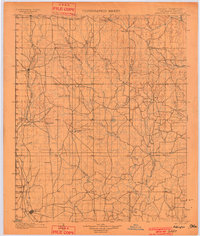 1901 Addington1901 Print · USGSThe Chickasaw Nation at the turn of the century shows a landscape transitioning from cattle trails to rail commerce. Local historians can trace the Chisholm Trail and the Chicago Rock Island and Pacific rail line through Duncan, Comanche, and Addington.6 unique versions available
 - 1901 Map of Ardmore
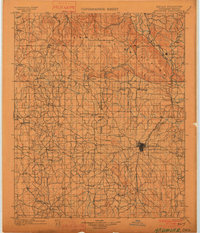 1901 Ardmore1901 Print · USGSThe Chickasaw Nation of Indian Territory is captured here at the turn of the century, showing a landscape of burgeoning rail towns and early industry. Researchers can trace the Gulf Colorado and Santa Fe line through Ardmore or locate early Asphalt Mine sites near Newport.6 unique versions available
 - 1918 Map of Ardmore
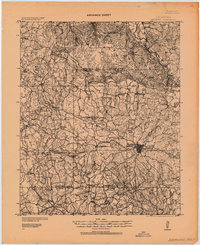 1918 Ardmore1918 Print · USGSSouthern Oklahoma was a hub of energy production and rail traffic during the late teens. Researchers can trace the early infrastructure of the Healdton Oil Fields, find vanished sites like Joiner City, or locate the Post Oak School.
 - 1957 Map of Ardmore, 1968 Print
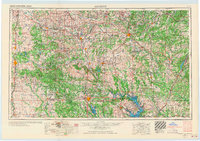 1957 Ardmore1968 Print · USGSSouth-central Oklahoma in the late fifties was a landscape of rising reservoir waters and expanding rail lines. Genealogists and historians can trace the foundations of Ardmore and Duncan or locate early recreation sites at Platt National Park and Lake Murray State Park.3 unique versions available
 - 1963 Map of Ardmore
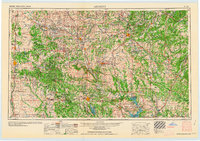 1963 Ardmore1963 Print · USGSSouthern Oklahoma during the early sixties shows a landscape defined by the Arbuckle Mountains and a booming energy economy. Genealogists and historians can trace family-named sites across the Ardmore Oil Field, find old schools like Southeastern State College, or locate historic markers such as Boggy Depot State Park.2 unique versions available
 - 1969 Map of Healdton, 1971 Print
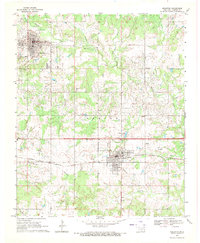 1969 Healdton1971 Print · USGSOil extraction and rail commerce define this Oklahoma landscape during the late sixties. Researchers can trace family history at Mt Olive Cemetery and explore the industrial layout of Hewitt Field between the towns of Healdton and Wilson.
 - 1969 Map of Fox, 1971 Print
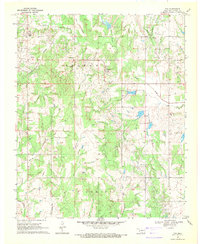 1969 Fox1971 Print · USGSOil extraction and rural life converge in Carter County during the late 1960s, showing the extensive infrastructure of the local petroleum industry. Researchers can pinpoint early oil well locations, follow the path of Hug-me-tight Branch, and locate landmarks like Midway Ch and Oil Springs Cem.
 - 1974 Map of Cottonwood Creek, 1977 Print
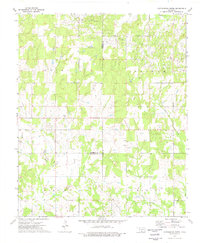 1974 Cottonwood Creek1977 Print · USGSIn the mid-1970s, this pocket of southern Oklahoma was a hub of energy production where the Loco Field met cattle-country creeks. Researchers can trace historical oil infrastructure alongside local landmarks like the Asphaltum Ch and Dixie Cemetery.
 - 1974 Map of Ringling, 1977 Print
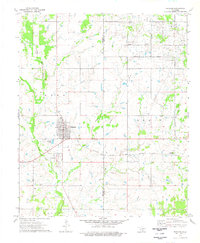 1974 Ringling1977 Print · USGSSouthern Oklahoma oil country comes into focus in the 1970s, showcasing the industrial footprint of the Hewitt Oil Field and the surrounding rail towns. Genealogists can trace family sites at the Cornish Cem and IOOF Cem or locate former rail stops like Cobalt Junction.
 - 1986 Map of Ardmore
 1986 Ardmore1986 Print · USGSSouthern Oklahoma in the mid-eighties was a landscape of rugged geology and deep petroleum roots. Genealogists and historians can trace the development of Ardmore and Healdon alongside the vast Sholem Alechem Oil Field and the rails of the AT & SF RR.2 unique versions available
 - 2009 Map of Ringling, 2009 Print
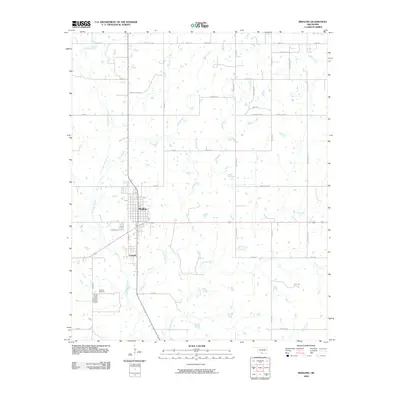 2009 Ringling2009 Print · USGSSouthern Oklahoma at the end of the first decade of the 2000s shows a landscape of rural communities and branching waterways. Researchers can trace local history through Cornish Cemetery and the settlement patterns around Ringling, Cornish, and Whisky Creek.
 - 2009 Map of Healdton, 2009 Print
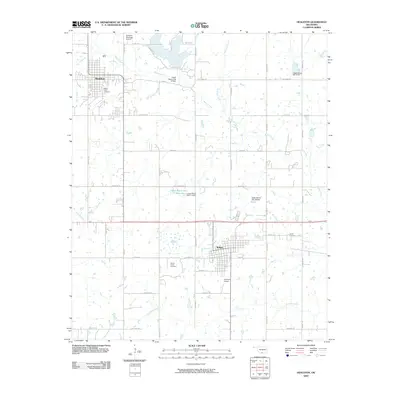 2009 Healdton2009 Print · USGSSouthern Oklahoma at the end of the first decade of the 2000s shows a landscape of established towns and significant water infrastructure. Genealogists can locate several local burial grounds, including Mount Olive Cemetery and Hewitt Cemetery, while tracing the rural road network.
 - 2010 Map of Cottonwood Creek, 2010 Print
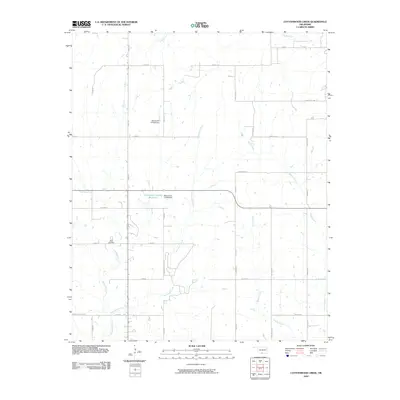 2010 Cottonwood Creek2010 Print · USGSCarter County's rural landscape is captured here in the early twenty-first century, highlighting a terrain shaped by winding creek beds and section-line roads. Genealogists and local historians can locate Dixie Cemetery and trace the paths of Whisky Creek or Oil City Rd.
 - 2010 Map of Fox, 2010 Print
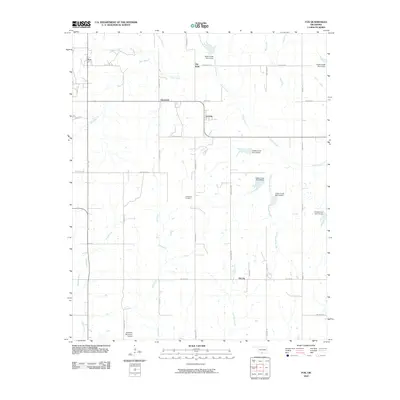 2010 Fox2010 Print · USGSThe oil fields of Southern Oklahoma are captured here in the early twenty-first century as they transitioned through decades of resource history. Genealogists and local historians can trace the roads connecting Oil City, Clemscott, and the Oil Springs Cemetery.
 - 2012 Map of Cottonwood Creek, 2012 Print
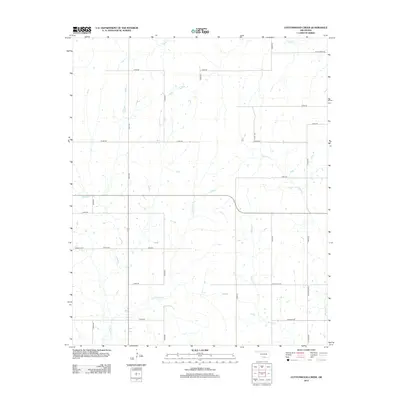 2012 Cottonwood Creek2012 Print · USGSOklahoma's rural interior north of Healdton is captured here in the early twenty-first century, showing the intersection of long-standing family land and modern road networks. Researchers can pinpoint the Dixie Cem or trace the winding paths of Cottonwood Cr and Whisky Cr.
 - 2012 Map of Ringling, 2012 Print
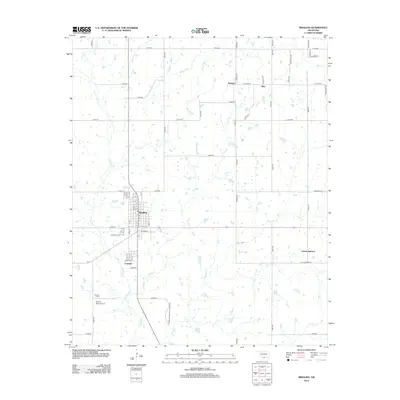 2012 Ringling2012 Print · USGSSouthern Oklahoma’s rural landscape is captured here in the early twenty-first century, centered on the historic proximity of Ringling and Cornish. Researchers can trace old family burial sites at Cornish Cem or follow the paths of Post Oak Cr and N Mud Cr.
 - 2012 Map of Fox, 2012 Print
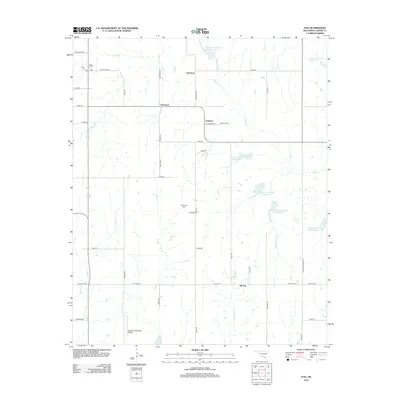 2012 Fox2012 Print · USGSOklahoma's oil-producing heritage is on full display in this early twenty-first-century survey of the Fox and Healdton areas. Genealogists and historians can trace the foundations of local life at Oil Springs Cem, the community of Clemscott, and the Healdton Municipal Airport.
 - 2012 Map of Healdton, 2012 Print
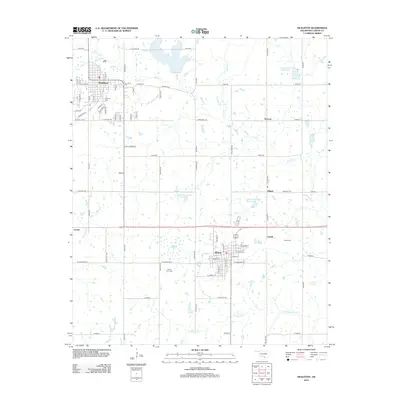 2012 Healdton2012 Print · USGSThe Oklahoma oil fields and small-town centers of Carter County are documented here in the early twenty-first century. Genealogists and local researchers can pinpoint family burial sites like Mt Olive Cem and Bomar Point Cem or trace the rural road network connecting Healdton and Wilson.
 - 2016 Map of Fox, 2016 Print
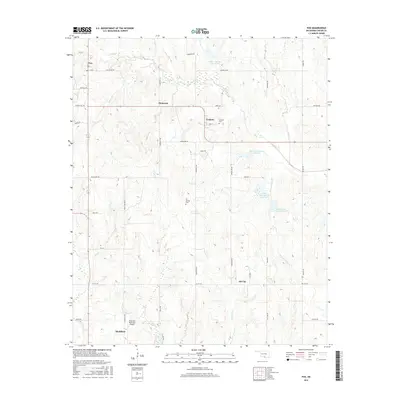 2016 Fox2016 Print · USGSOklahoma's oil country in the mid-2010s reveals a landscape where rural settlements and modern industry meet. Researchers can trace local heritage through landmarks like Oil Springs Cem, the community of Clemscott, and the interestingly named Convict Hill Rd.
 - 2016 Map of Healdton, 2016 Print
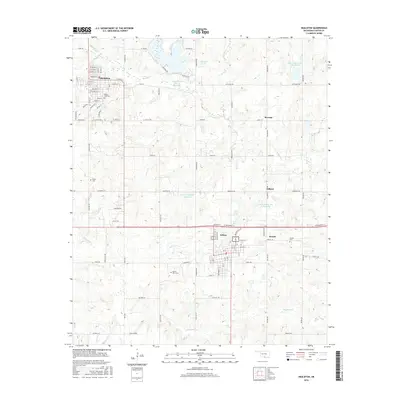 2016 Healdton2016 Print · USGSOklahoma oil country and rural communities are captured here in the mid-2010s, showing a landscape shaped by hydrology and energy development. Genealogists can trace family landmarks at Mount Olive Cem or Bomar Point Cem, while exploring the layout of Healdton, Rexroat, and Dillard.
 - 2016 Map of Cottonwood Creek, 2016 Print
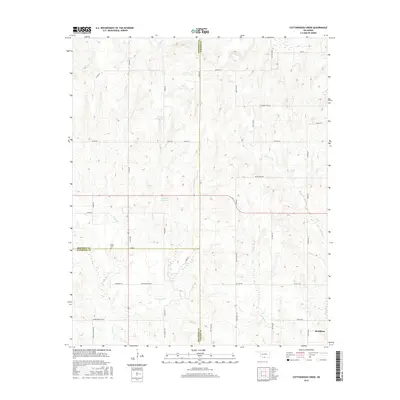 2016 Cottonwood Creek2016 Print · USGSSouthern Oklahoma oil country is mapped here in detail during the mid-2010s, showing the intersection of three counties. Genealogists and historians can trace family-named routes and landmarks like Dixie Cem, Whisky Cr, and Convict Hill Rd.
 - 2016 Map of Ringling, 2016 Print
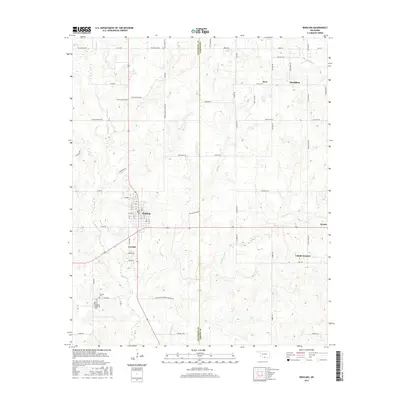 2016 Ringling2016 Print · USGSThe Oklahoma countryside near the Jefferson and Carter county line appears in detail during the mid-2010s. Researchers can locate family landmarks like Cornish Cem and follow the distinct street grids of Ringling, Healdton, and Wirt.
 - 2018 Map of Ringling, 2018 Print
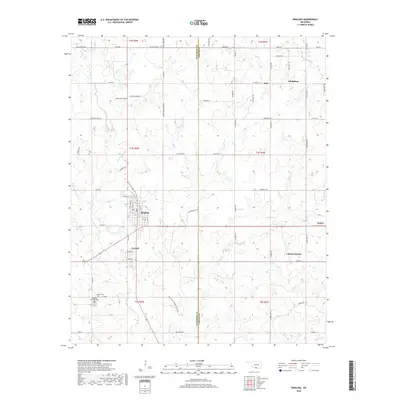 2018 Ringling2018 Print · USGSSouthern Oklahoma at the border of Jefferson and Carter counties reveals a landscape of enduring prairie towns and oil-field infrastructure. Researchers can locate family sites near Ringling, trace the history of Cornish Cemetery, and explore the industrial layout of Healdton.
 - 2018 Map of Healdton, 2018 Print
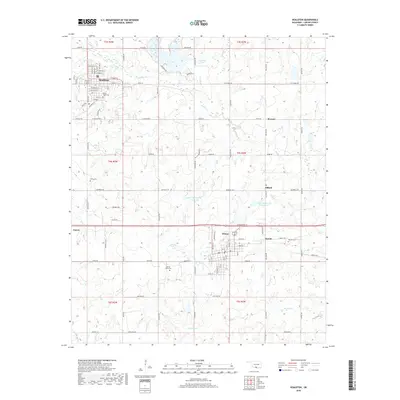 2018 Healdton2018 Print · USGSCarter County's petroleum-rich landscape comes into focus during this modern era of settlement and industry. Researchers can trace family history through several burial grounds like Mount Olive Cem and Hewitt Cem, or locate landmarks in Healdton and Wilson.
 - 2018 Map of Fox, 2018 Print
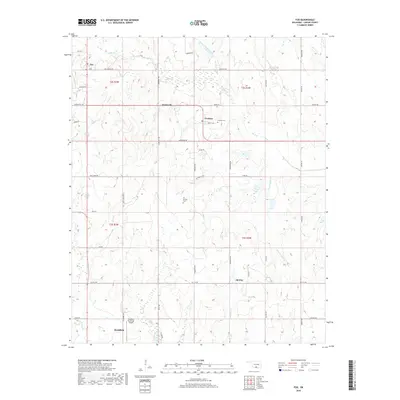 2018 Fox2018 Print · USGSOklahoma petroleum history and rural community life are captured in this recent survey of Carter County. Genealogists and local historians can locate early settlements like Oil City and Clemscott or trace family sites near Graham Cem and the distinctive Hug-me-tight Br.
Showing maps 1-25 of 30
Top cities near Healdton
- Duncan historical maps
- Lone Grove historical maps
- Wilson historical maps
- Ringling historical maps
- Velma historical maps
- Cornish historical maps
See more
Top neighborhoods of Healdton
Frequently asked questions
- What are the different types of historical maps available for Healdton?
- What is the oldest map of Healdton?
- Where can I purchase historical maps of Healdton for my home or office?
- Where can I download high-res historical maps of Healdton?
- Are there historical topographic maps available for Healdton?
- Is there historical aerial imagery available for Healdton?
- Where are historical maps of Healdton sourced from?