Old Maps of Malheur County, Oregon for Academic Research
Study the evolution of Malheur County with 1,318 high-resolution historic maps. Whether you're teaching, researching, or modeling changes in land use, these maps provide essential visual documentation of urban, environmental, and geographic change.
- Analyze long-term change: Track patterns in development, transportation, and natural features.
- Ideal for environmental or urban studies: Support academic projects with primary historical map data.
- Use in the classroom or lab: Educators and researchers rely on these maps to bring historical context to life.
These maps are a powerful tool for teaching, research, and visualizing how Malheur County has changed over the decades.
Malheur County, OR maps
(1,318)- 1882 Map of Paradise
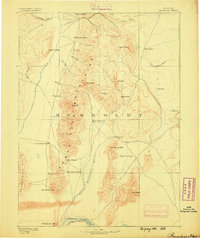 1882 Paradise1882 Print · USGSHumboldt County in the early 1880s remains a frontier landscape of isolated stage stations and high mountain peaks. Genealogists and researchers can trace the early transit network between Paradise City and remote stops like Cane Springs Station and Flynn Station.
 - 1886 Map of Disaster
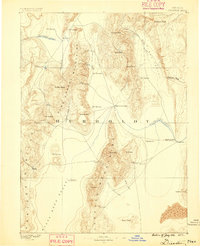 1886 Disaster1886 Print · USGSHumboldt County in the late nineteenth century was a rugged frontier of thermal springs and isolated mountain passes. Researchers can trace early routes through Thacker Pass, locate the settlement at Mason's Crossing, and identify watering points like Pahute Meadows.
 - 1893 Map of Paradise
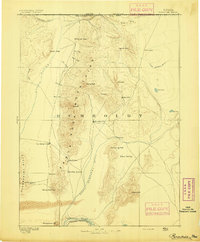 1893 Paradise1893 Print · USGSHumboldt County was a landscape of remote outposts and high-desert ranges in the late nineteenth century. Researchers can trace the early stage and freight routes connecting Paradise City to vital waystations such as Cane Springs Station and Willow Point Station.6 unique versions available
 - 1893 Map of Disaster
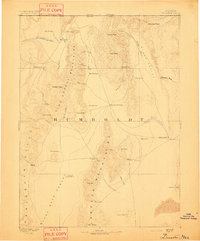 1893 Disaster1893 Print · USGSHumboldt County's high desert reaches were a land of isolated crossings and thermal springs in the late nineteenth century. Researchers can trace the path through Thacker Pass and locate early sites like Mason's Crossing or Pahute Meadows.5 unique versions available
 - 1897 Map of Weiser
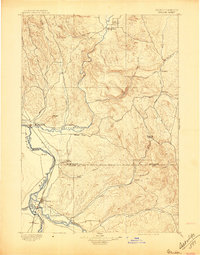 1897 Weiser1897 Print · USGSThe Idaho-Oregon borderlands come alive in the 1890s as the Oregon Short Line connects river towns along the Snake River. Researchers can trace the early footprints of Weiser, Payette, and Middle Valley alongside now-obscure points like Mosquite and Washoe.5 unique versions available
 - 1898 Map of Nampa
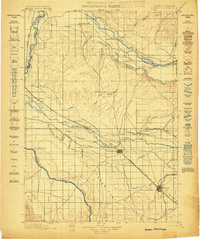 1898 Nampa1898 Print · USGSThe Treasure Valley's transformation is visible in the 1890s as railroads and massive irrigation projects began to reshape the high desert. Researchers can trace the development of early rail lines like the Boise Nampa & Owyhee R. R. and early canals such as the Riverside Canal and Newman Canal.4 unique versions available
 - 1906 Map of Mitchell Butte
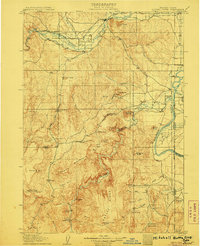 1906 Mitchell Butte1906 Print · USGSEastern Oregon's high desert was being redefined by irrigation and ranching at the turn of the century. Genealogists and historians can trace early water rights through the Farmers Ditch network or locate remote family outposts like Isaacs Ranch and Prices Ranch.3 unique versions available
 - 1908 Map of Ironside Mountain
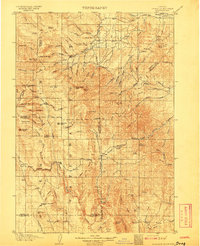 1908 Ironside Mountain1908 Print · USGSEastern Oregon ranching and timber frontiers come alive in this survey of the Blue Mountains region at the turn of the century. Researchers can trace early family holdings like Tureman's Ranch and Hunter's Ranch, or locate the historic Otis Sawmill.2 unique versions available
 - 1950 Map of Jamieson, 1952 Print
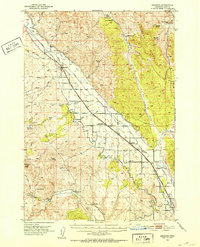 1950 Jamieson1952 Print · USGSEastern Oregon ranching and railroad life come into focus in the early fifties, following the path of the Union Pacific through Malheur County. Genealogists and historians can trace the irrigation networks of the Vale Main Canal and locate the Bully Creek School and Lancaster.3 unique versions available
 - 1951 Map of Moores Hollow, 1952 Print
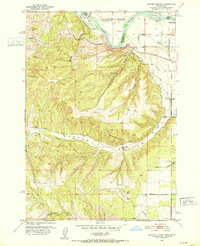 1951 Moores Hollow1952 Print · USGSThe high desert of Malheur County meets the winding Snake River in the early fifties, marking the border between Oregon and Idaho. Researchers can trace early irrigation networks like the Owyhee Canal and find family-named landmarks such as Jacobsen Gulch and McRea Island.4 unique versions available
 - 1951 Map of Malheur Butte, 1952 Print
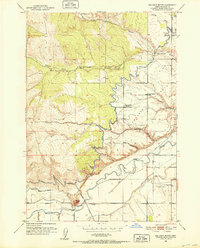 1951 Malheur Butte1952 Print · USGSEastern Oregon agriculture and infrastructure are captured here in the early fifties as irrigation transformed the high desert. Researchers can trace the development of rural social life and utility networks near Malheur Butte and the Ontario Heights Grange.4 unique versions available
 - 1951 Map of Moores Hollow, 1953 Print
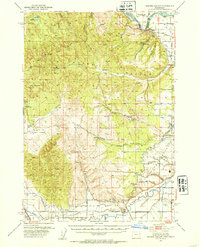 1951 Moores Hollow1953 Print · USGSThe Oregon-Idaho borderlands thrive on river-fed irrigation and rail transport in the early fifties. Genealogists can trace family footprints near Annex and Ontario Heights or locate the historic path of the Oregon Trail as it nears the Snake River.3 unique versions available
 - 1951 Map of Payette, 1953 Print
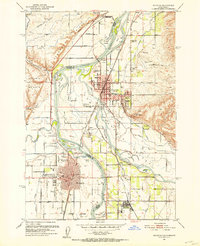 1951 Payette1953 Print · USGSThe Snake River valley in the early fifties is captured here at the busy intersection of the Pacific Northwest's rail and river networks. Researchers can trace the Old Oregon Trail Highway or locate local landmarks like the Orchard Ave Grange Hall and Riverside Cemetery.3 unique versions available
 - 1951 Map of Huntington, 1953 Print
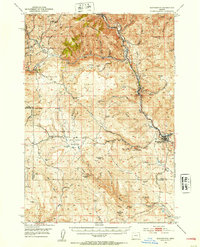 1951 Huntington1953 Print · USGSEastern Oregon in the early fifties shows a landscape shaped by the Union Pacific and the historic Oregon Trail. Researchers can trace the river-and-rail economy through the Placer Mines of Dixie Creek and the industrial works at Lime.3 unique versions available
 - 1951 Map of Weiser South, 1971 Print
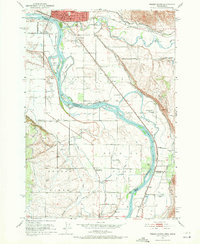 1951 Weiser South1971 Print · USGSThe borderlands of Idaho and Oregon come alive in this mid-century survey of the Snake River valley. Local historians can trace the transition of rural education and irrigation through Eastside Sch, Annex Cem, and the extensive Hyline Ditch network.2 unique versions available
 - 1952 Map of Olds Ferry, 1954 Print
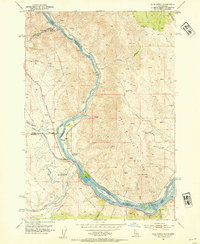 1952 Olds Ferry1954 Print · USGSThe Snake River crossing at the Idaho-Oregon border was a vital transit point for pioneers and early rail travelers during the mid-twentieth century. Trace the path of the Old Oregon Trail Highway past the Original Site Olds Ferry and the Coal Mine near Indian Head Mtn.3 unique versions available
 - 1952 Map of Olds Ferry, 1956 Print
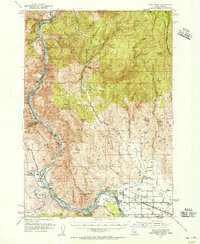 1952 Olds Ferry1956 Print · USGSThe Snake River canyon and the historic Oregon-Idaho borderlands are captured here in the early fifties, showing the region's transition from pioneer routes to modern infrastructure. Researchers can trace the Oregon Trail, locate early crossing points like Olds Ferry (Site), and find defunct rural schoolhouses such as Eaton Sch (Aband).3 unique versions available
 - 1952 Map of Olds Ferry SE, 1976 Print
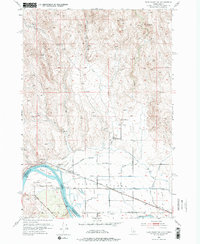 1952 Olds Ferry SE1976 Print · USGSThe Snake River borderlands in the early fifties show a landscape of irrigation canals and early schoolhouses. Genealogists can trace the location of Porters Ferry (Site) and several rural campuses like Central School and Hale School.
 - 1954 Map of Vya, 1967 Print
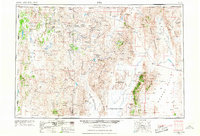 1954 Vya1967 Print · USGSThe tri-state corner of Nevada, Oregon, and California appears here in the mid-fifties, dominated by wildlife refuges and massive naval gunnery ranges. Trace isolated high-desert outposts like Vya and Soldier Meadow Ranch or find historic workings at the Ashdown Mine.3 unique versions available
 - 1955 Map of McDermitt
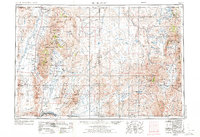 1955 McDermitt1955 Print · USGSNorthern Nevada in the mid-fifties shows a landscape of mining camps and vast cattle ranges. Trace the early footprints of Tuscarora or the remote Cordero Mine and National Mine tucked into the high desert peaks.3 unique versions available
 - 1955 Map of Jordan Valley, 1963 Print
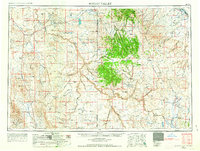 1955 Jordan Valley1963 Print · USGSThe high desert of Malheur County comes alive in the mid-1950s, showing the isolated ranching outposts and deep canyons along the Idaho border. Researchers can trace the remote reaches of the Owyhee River, the cattle town of Jordan Valley, and mining landmarks like War Eagle Mountain.3 unique versions available
 - 1955 Map of Baker, 1964 Print
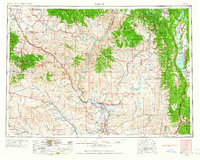 1955 Baker1964 Print · USGSThe Oregon-Idaho borderlands are captured here in the mid-fifties as the Snake River underwent massive changes from dam construction. Trace the Oregon Trail Memorial Monument near Baker, find early mines like Virtue Mine, and follow the Union Pacific Railroad through Huntington.4 unique versions available
 - 1955 Map of Burns, 1964 Print
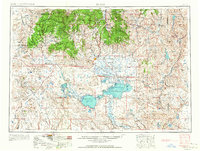 1955 Burns1964 Print · USGSHarney County's high desert ranching and timber heartland is captured here in the mid-fifties, centered on the hub of Burns and Hines. Genealogists and researchers can locate remote landmarks like the Suntex School, New Princeton P. O., and the Lumber Mill.3 unique versions available
 - 1955 Map of Canyon City, 1966 Print
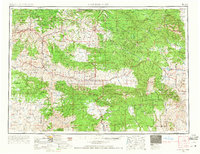 1955 Canyon City1966 Print · USGSCentral Oregon's high desert and timber country are captured here in the mid-fifties, showing the rugged ranching and logging landscape. Trace the path of the Sumpter Valley Ry or locate remote settlements like Izee, Whitney, and Ritter.4 unique versions available
 - 1955 Map of Adel, 1971 Print
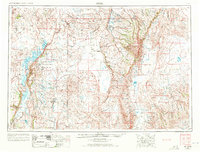 1955 Adel1971 Print · USGSSoutheast Oregon in the mid-fifties remains a landscape of vast alkaline basins and high mountain scarps, anchored by remote outposts. Researchers can trace historic ranching routes through Catlow Valley and locate landmarks like Beatys Butte or the small settlement of Blitzen.2 unique versions available
Showing maps 1-25 of 1,318
Top cities of Malheur County
- Ontario historical maps
- Nyssa historical maps
- Vale historical maps
- Adrian historical maps
- Jordan Valley historical maps
Frequently asked questions
- What are the different types of historical maps available for Malheur County?
- What is the oldest map of Malheur County?
- Where can I purchase historical maps of Malheur County for my home or office?
- Where can I download high-res historical maps of Malheur County?
- Are there historical topographic maps available for Malheur County?
- Is there historical aerial imagery available for Malheur County?
- Where are historical maps of Malheur County sourced from?