1950s Maps of Washington County, Pennsylvania
Explore 33 historic maps of Washington County from the 1950s. These maps offer a rare glimpse into what life looked like during the 1950s — showing old roads, neighborhoods, homes, and landmarks that have changed or disappeared over time.
Whether you're researching your family's past, planning a metal detecting trip, or studying how Washington County's landscape evolved across the 1950s, these high-resolution maps are a powerful tool for exploring the history of this region.
- Focus on a specific era: All maps on this page are from the 1950s, giving you a focused view of this time period.
- See what’s changed: Compare century-old streets, trails, and buildings to today's modern landscape using overlays and satellite layers.
- Research with precision: Use these maps for genealogy, historical research, land use analysis, or educational projects.
- View, download, or print: Maps are fully viewable online in high resolution, and can be downloaded or printed for your own records.
Start exploring Washington County's history through authentic maps from the 1950s. This is your window into the past.
Washington County, PA maps
(33)- 1951 Map of Canton
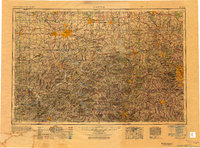 1951 Canton1951 Print · USGSThe industrial heartland of Ohio and Pennsylvania reached its mid-century peak during this era of heavy rail and river transit. Genealogists and historians can trace the development of steel towns like Aliquippa and Weirton alongside the Ohio River and major lines of the Pennsylvania RR.
 - 1952 Map of Cumberland
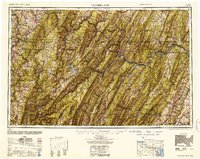 1952 Cumberland1952 Print · USGSThe Potomac Highlands and the Shenandoah Valley are revealed in this early 1950s survey of the Appalachian interior. Researchers can trace the river-and-rail corridors connecting Cumberland, Winchester, and the recreational waters of Deep Creek Lake.
 - 1953 Map of Pittsburgh
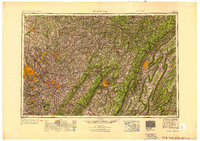 1953 Pittsburgh1953 Print · USGSWestern Pennsylvania's industrial landscape at the start of the fifties shows the steel and rail corridors between Pittsburgh and Altoona. Trace family roots in river towns like Tarentum or follow the Pennsylvania Turnpike across Laurel Hill.
 - 1953 Map of Canton
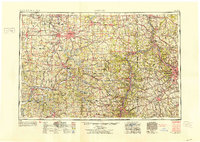 1953 Canton1953 Print · USGSThe industrial heartland of Ohio and Pennsylvania is captured at its mid-century peak in this detailed regional survey. Genealogists and historians can trace the vast rail networks of the Pennsylvania RR and find local landmarks like Nimisila Reservoir and Tappan Reservoir.
 - 1953 Map of Oakdale, 1955 Print
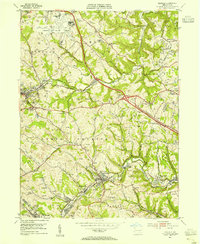 1953 Oakdale1955 Print · USGSAllegheny County's industrial and aviation landscape is captured here in the early fifties as the coal-mining era met modern infrastructure. Trace family history and rail lines through Oakdale, Imperial, and Cliff Mine, or locate the State Industrial Sch.
 - 1953 Map of Bridgeville, 1955 Print
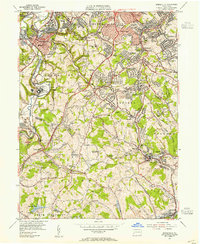 1953 Bridgeville1955 Print · USGSAllegheny and Washington Counties were transitioning from a mining economy to a suburban landscape in the early fifties. Genealogists and historians can trace family roots through the Melrose Cem, identify old industrial sites like Hickman Shafts, or locate the Mayer Airport.
 - 1953 Map of Washington East, 1955 Print
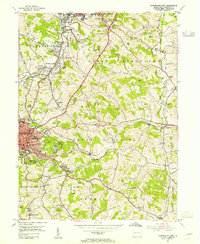 1953 Washington East1955 Print · USGSThe coal and rail landscape of Washington County comes alive in the mid-fifties, showing the region as its industrial and suburban identities merged. Genealogists can locate family names at Hill Church or Immaculate Conception Cem, while historians can trace the operations of the Lindley Mine and the Pennsylvania RR.5 unique versions available
 - 1953 Map of Glassport, 1955 Print
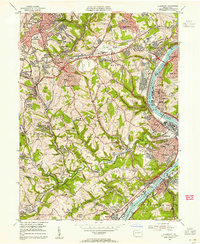 1953 Glassport1955 Print · USGSThe industrial Monongahela Valley and its burgeoning suburbs are detailed here during the mid-fifties. Trace the rail-and-river network through Glassport or find family landmarks like Cochrans Mill, St Peters Ch, and Memorial Cemetery.
 - 1953 Map of Hackett, 1955 Print
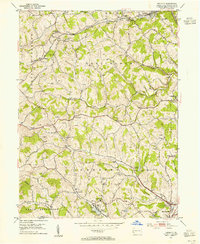 1953 Hackett1955 Print · USGSWashington County coal and gas country is captured here in the mid-fifties as the local economy revolved around mining and the rail. Genealogists and historians can trace the foundations of Bentleyville and find rural landmarks like Munntown Cem and Edwards Chapel.6 unique versions available
 - 1953 Map of Canonsburg, 1955 Print
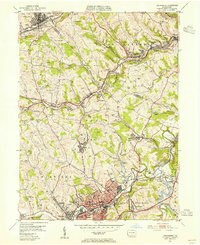 1953 Canonsburg1955 Print · USGSCanonsburg and the surrounding coal townships are shown in detail during the early fifties, a time of heavy rail traffic and active mining. Genealogists can trace family footprints across Robinson Run Cem, St Marys Ch, and the complex rail junctions at Muse Junction.
 - 1954 Map of Pittsburgh
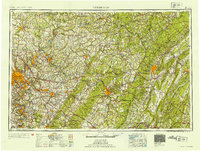 1954 Pittsburgh1954 Print · USGSWestern Pennsylvania in the early fifties remains a powerhouse of heavy industry and vital transit corridors. Genealogists and historians can trace the rail-and-river network connecting Pittsburgh, Johnstown, and Altoona via the Pennsylvania RR and the Lincoln Highway.2 unique versions available
 - 1954 Map of California, 1955 Print
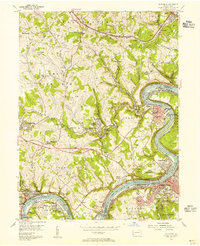 1954 California1955 Print · USGSThe Monongahela river valley and the historic coal country of Washington County are shown here in the mid-fifties. Researchers can trace the industrial footprint of Vesta No 6 Mine, locate the campus of State Teachers College, or find family landmarks like Maple Creek Cem.3 unique versions available
 - 1954 Map of Washington West, 1955 Print
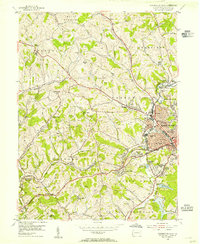 1954 Washington West1955 Print · USGSWashington and its surrounding townships are shown in the mid-1950s, highlighting the area's transition from a rail-dependent industrial center to a growing suburban landscape. Researchers can trace the Arden Mines, old schools like Log Pile Sch, and the historic National Pike.3 unique versions available
 - 1954 Map of Midway, 1955 Print
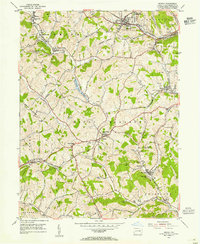 1954 Midway1955 Print · USGSWashington County during the mid-fifties reveals an landscape shaped by coal mining and established rail lines. Genealogists and local historians can trace family locations near Hickory School, the Cherry Valley Cemetery, or follow the Montour railroad through the Acheson Tunnel.4 unique versions available
 - 1954 Map of Ellsworth, 1955 Print
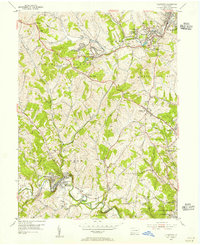 1954 Ellsworth1955 Print · USGSWashington County at the height of its industrial era reveals a landscape of coal patches, rail spurs, and historic crossroads. Genealogists and historians can trace family roots through the numerous rural schools and cemeteries, from Old Zollarsville to the St Clements Cem.5 unique versions available
 - 1954 Map of Fayette City, 1955 Print
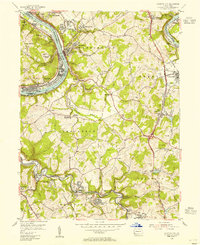 1954 Fayette City1955 Print · USGSThe industrial river valleys of Fayette and Washington counties come alive in the mid-fifties. Trace family roots and coal history through Fayette City, Rowes Run, and old landmarks like Little Redstone Ch and the Colonial Dock.3 unique versions available
 - 1954 Map of Burgettstown, 1955 Print
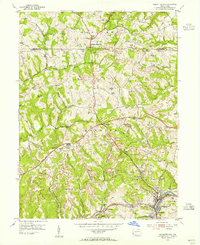 1954 Burgettstown1955 Print · USGSMid-century Washington County shows a landscape defined by the coal industry and rural life before modern expansion. Genealogists can trace family names at Grandview Cem or locate the Hancock Twp Sch and numerous Strip Mines across the county line.6 unique versions available
 - 1954 Map of Amity, 1955 Print
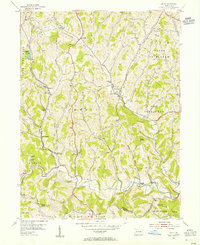 1954 Amity1955 Print · USGSWashington and Greene Counties appear in the mid-fifties as a landscape of rural schoolhouses and coal mines. Genealogists and local historians can locate family-named landmarks like Baker Station and Condit Crossing or trace early industry at Harts Mill and the Lone Pine Mine.5 unique versions available
 - 1954 Map of Clinton, 1955 Print
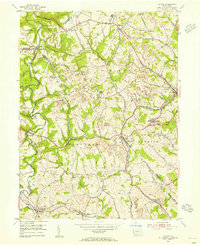 1954 Clinton1955 Print · USGSThe mining hills west of Pittsburgh come to life in the mid-1950s, showing a landscape defined by the Montour RR and early coal extraction. Genealogists and historians can trace the foundations of Santiago (Tyre PO), Murdocksville, and old country landmarks like Hebron Ch.7 unique versions available
 - 1954 Map of Donora, 1955 Print
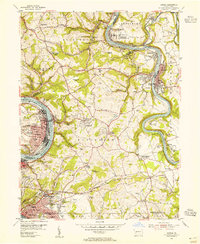 1954 Donora1955 Print · USGSThe industrial heart of the Monongahela and Youghiogheny valleys is captured here during the mid-fifties. Researchers can trace coal operations at Ocean Mine and Coal Hollow Mine or locate family roots at Concord Pioneer Sch.4 unique versions available
 - 1954 Map of Avella, 1955 Print
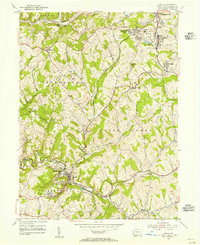 1954 Avella1955 Print · USGSWestern Washington County during the mid-fifties shows a landscape shaped by coal mining and established rail lines. Genealogists can locate family landmarks like Pattersons Mill, St Johns Ch, and schools like Cedar Grove Sch.3 unique versions available
 - 1954 Map of Monongahela, 1955 Print
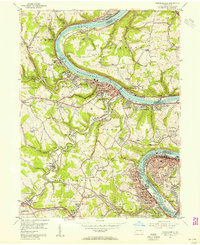 1954 Monongahela1955 Print · USGSIndustrial life along the river valley is captured here in the mid-fifties, showing the deep integration of coal mining and rail transport. Researchers can locate family landmarks from the Black Diamond Mine to the Mentor School and Ohav Sholom Cem.4 unique versions available
 - 1956 Map of Cumberland, 1966 Print
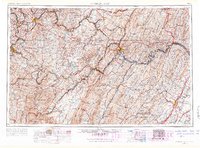 1956 Cumberland1966 Print · USGSThe tri-state Highlands in the mid-1950s show a landscape shaped by coal, timber, and the massive presence of the Baltimore & Ohio RR. Researchers can trace the industrial corridor from Cumberland through the Allegheny Mountains to mountain retreats like Deep Creek Lake.6 unique versions available
 - 1956 Map of Clarksburg, 1966 Print
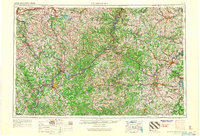 1956 Clarksburg1966 Print · USGSThe Ohio River valley and the industrial heart of West Virginia are seen here in the mid-1950s as rail and river commerce thrived. Researchers can trace historic transport lines like the Baltimore and Ohio RR and locate ancestral homes in Clarksburg, Moundsville, or Parkersburg.2 unique versions available
 - 1957 Map of Cumberland
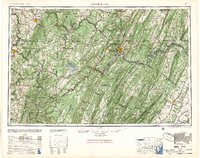 1957 Cumberland1957 Print · USGSThe Potomac River valley and the ridges of the Allegheny Front define this mid-century landscape at the intersection of Maryland, West Virginia, and Pennsylvania. Trace the steam-era rail lines of the Baltimore and Ohio RR or locate rural landmarks like St Stephens Church and Stony River Dam.
Showing maps 1-25 of 33
Top cities of Washington County
- Washington historical maps
- Cecil Township historical maps
- Canonsburg historical maps
- South Strabane Township historical maps
- California historical maps
- Charleroi historical maps
See more
Frequently asked questions
- What are the different types of historical maps available for Washington County?
- What is the oldest map of Washington County?
- Where can I purchase historical maps of Washington County for my home or office?
- Where can I download high-res historical maps of Washington County?
- Are there historical topographic maps available for Washington County?
- Is there historical aerial imagery available for Washington County?
- Where are historical maps of Washington County sourced from?