1900s (20th Century) Maps of Uvalde County, Texas
Explore 53 historic maps of Uvalde County from the 1900s (20th Century). These maps offer a rare glimpse into what life looked like during the 1900s — showing old roads, neighborhoods, homes, and landmarks that have changed or disappeared over time.
Whether you're researching your family's past, planning a metal detecting trip, or studying how Uvalde County's landscape evolved across the 1900s, these high-resolution maps are a powerful tool for exploring the history of this region.
- Focus on a specific era: All maps on this page are from the 1900s, giving you a focused view of this time period.
- See what’s changed: Compare century-old streets, trails, and buildings to today's modern landscape using overlays and satellite layers.
- Research with precision: Use these maps for genealogy, historical research, land use analysis, or educational projects.
- View, download, or print: Maps are fully viewable online in high resolution, and can be downloaded or printed for your own records.
Start exploring Uvalde County's history through authentic maps from the 1900s. This is your window into the past.
Uvalde County, TX maps
(53)- 1928 Map of Frio Town, 1956 Print
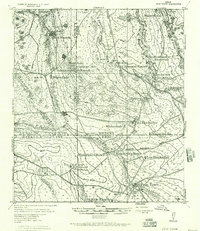 1928 Frio Town1956 Print · USGSThe ranchlands of South Texas are documented here in the late 1920s, showing a landscape shaped by water rights and family holdings. Genealogists and local historians can trace the bounds of the Schuddemagen Ranch and Woodward Ranch or locate the old Post Office at Frio Town.
 - 1938 Map of Turkey Mountain
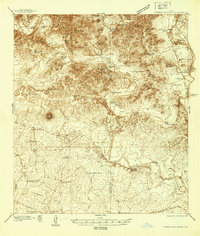 1938 Turkey Mountain1938 Print · USGSKinney and Uvalde counties are shown here in the late 1930s, a period when isolated ranching estates and river crossings defined the local economy. Researchers can trace historic family lands like Harrison Ranch Headquarters and the Moss Ranch, or locate the rural Liveoak Sch.4 unique versions available
 - 1943 Map of Turkey Mountain
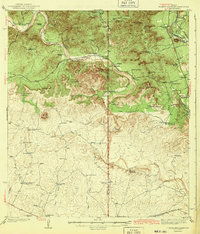 1943 Turkey Mountain1943 Print · USGSKinney and Uvalde counties in the late 1930s reveal a landscape of remote ranching outposts and vital waterholes. Genealogists and historians can trace family-named lands like the Harrison Ranch Headquarters and Dave Rose Ranch or locate the rural Live Oak Sch.2 unique versions available
 - 1944 Map of Barksdale
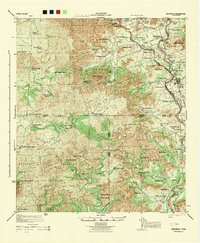 1944 Barksdale1944 Print · USGSThe Edwards County ranching country of the mid-1940s is detailed here during the expansion of rural utility lines and cattle operations. Genealogists can locate family-named landmarks like Double Wells Ranch, Old Chapman Place, and the riverfront grounds of Camp Wood.
 - 1949 Map of Cline
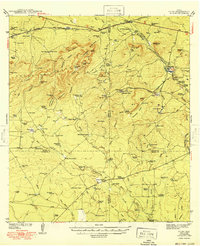 1949 Cline1949 Print · USGSSouthwest Texas ranching and asphalt mining are captured here in the late 1930s and 40s. Genealogists and historians can locate family landmarks like Finley Ranch and trace the specialized Asphalt Belt Line railroad serving Blewett.2 unique versions available
 - 1954 Map of San Antonio, 1964 Print
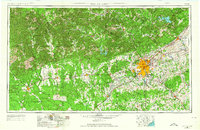 1954 San Antonio1964 Print · USGSSan Antonio and the Texas Hill Country are captured here in the mid-fifties, showing a landscape defined by massive military air bases and the rising Canyon Reservoir. Trace family ties through historic rail towns like D'Hanis and Castroville or explore the Cold War footprint of Lackland AFB and Randolph AFB.3 unique versions available
 - 1956 Map of Sabinal
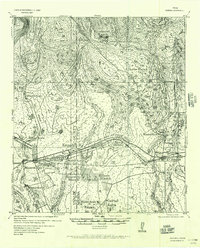 1956 Sabinal1956 Print · USGSRanching and rail transit define this South Texas landscape in the mid-1950s. Genealogists and historians can trace family holdings like the A Rothe Ranch, locate the industry of the Brick Yard, and follow the old Fort Clark-San Antonio Road past Sabinal.
 - 1956 Map of Tarpley
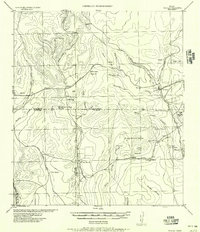 1956 Tarpley1956 Print · USGSThe Texas Hill Country around Tarpley comes into focus in this mid-century survey, showing the transition from family ranches to early industrial infrastructure. Trace old property lines and landmarks like Old Montell Camp, the German Settlement, and the Humble Pipeline.
 - 1956 Map of Utopia
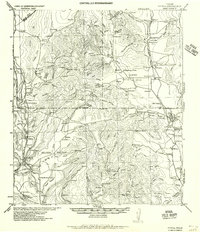 1956 Utopia1956 Print · USGSThe Sabinal and Frio River valleys are mapped here during the mid-twentieth century, showcasing a transition from pioneer homesteads to established ranching. Genealogists and historians can trace family locations like Paterson Ranch or find vanished landmarks like Thompsons Mill and Taylor School.
 - 1957 Map of San Antonio
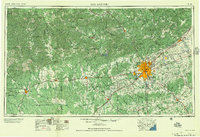 1957 San Antonio1957 Print · USGSSan Antonio and the Texas Hill Country are shown here during the mid-fifties, capturing the region's expanding post-war military and transportation footprint. Genealogists and local historians can trace the early residential boundaries of Alamo Heights or locate rural landmarks like St Hedwig and Medina Lake.
 - 1957 Map of York Hollow
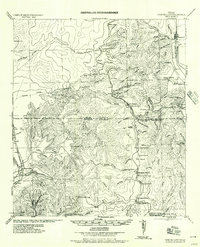 1957 York Hollow1957 Print · USGSThe ranchlands of the Frio River canyons are shown during a period of transition in the mid-1950s. Genealogists and local historians can trace family landmarks and rural education sites like Reagan Wells, Exile School, and the Wheeler Ranch.
 - 1958 Map of Del Rio, 1970 Print
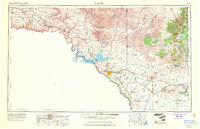 1958 Del Rio1970 Print · USGSThe Texas-Mexico borderlands come alive in the late fifties, showing the confluence of the Rio Grande and the emerging Amistad Reservoir. Trace the lineage of the Southern Pacific rail line through stops at Pumpville, Shumla, and the mining vicinity of Blewett.2 unique versions available
 - 1960 Map of Concan, 1962 Print
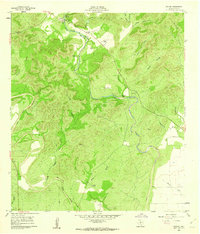 1960 Concan1962 Print · USGSUvalde County ranch lands are documented here in the early sixties as they transition into a recreation and livestock corridor along the Frio River. Researchers can trace old family holdings at Stoner Ranch and Fitzgerald Ranch or locate the Concan Cem.2 unique versions available
 - 1960 Map of Hacienda, 1962 Print
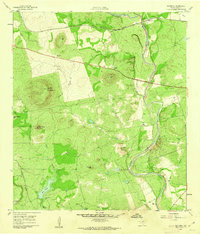 1960 Hacienda1962 Print · USGSUvalde County ranchlands and the winding river valley are captured here in the early sixties. Genealogists and local historians can locate several family holdings including Rosenow Ranch and Mirasol Ranch near the Nueces River.2 unique versions available
 - 1960 Map of Chalk Bluff, 1962 Print
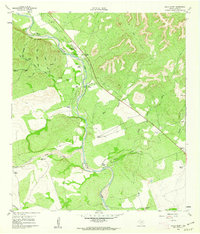 1960 Chalk Bluff1962 Print · USGSUvalde County ranchlands are documented here in the early sixties as the cattle industry and river geography shaped the local economy. Genealogists and historians can trace family properties like Gray Ranch and Lewis Ranch or locate the historic Haby Crossing on the Nueces River.2 unique versions available
 - 1960 Map of Magers Crossing, 1962 Print
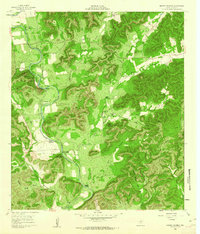 1960 Magers Crossing1962 Print · USGSThe Frio River canyon in the early sixties is a landscape of private ranches and burgeoning recreation. Researchers can trace the boundaries of Garner State Park or locate family-named sites like Kelly Ranch and Magers Crossing.
 - 1960 Map of Pulliam Ranch, 1962 Print
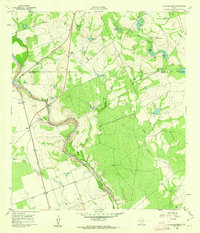 1960 Pulliam Ranch1962 Print · USGSRanching operations in South Texas define this landscape at the dawn of the sixties, where family estates dominate the riverbanks. Genealogists and historians can trace the specific boundaries of the Pulliam Ranch, Palmer Ranch, and the rail siding at A B Junction.
 - 1960 Map of Sand Mountain, 1962 Print
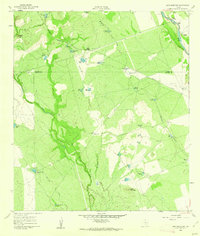 1960 Sand Mountain1962 Print · USGSZavala and Uvalde Counties in the early sixties reveal a landscape of remote ranching outposts and vital water infrastructure along the Nueces River. Genealogists and historians can trace family holdings like Anthon Ranch or Lyles Ranch and locate the historic Smyth Station along the Missouri Pacific tracks.
 - 1964 Map of Del Rio
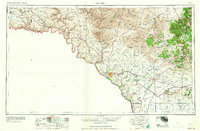 1964 Del Rio1964 Print · USGSAlong the Mexican border during the mid-sixties, this area centered on the confluence of the Rio Grande and Devils River. Researchers can trace the Southern Pacific line through isolated stops like Pumpville or locate military and industrial sites such as Laughlin Air Force Base and the mines at Blewett.
 - 1964 Map of Seco Pass, 1968 Print
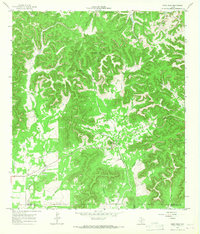 1964 Seco Pass1968 Print · USGSThe Bandera County highlands of the mid-sixties are captured here at the intersection with Uvalde and Medina Counties. Researchers can trace rural landmarks like Haby Cem, identify remote sites like Sutherland, and locate Sentry Mountain.
 - 1969 Map of Vanderpool, 1972 Print
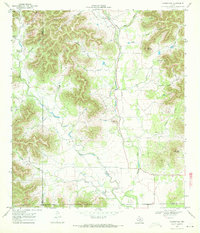 1969 Vanderpool1972 Print · USGSThe Sabinal River valley in the late sixties reveals a landscape of isolated ranching and deep limestone canyons. Trace local family history and rural industry at the Jones Cem, the Vanderpool settlement, and several named peaks like Taylor Mountain.2 unique versions available
 - 1969 Map of Comanche Waterhole, 1972 Print
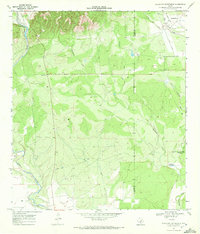 1969 Comanche Waterhole1972 Print · USGSThe Uvalde and Medina County line area was a landscape of ranching and specialized industry in the late sixties. Researchers can trace land use through the K Bar Ranch and Valdina Farms, or locate the Automotive Test Facility and Comanche Waterhole.
 - 1969 Map of Trio, 1972 Print
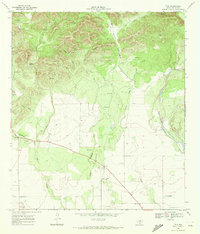 1969 Trio1972 Print · USGSThis Uvalde County landscape captures the Hill Country edge in the late sixties, where ranching life met the winding Sabinal River. Researchers can locate the small settlement of Trio, trace the drainage of Little Blanco Creek, and find landmarks like the Landing Strip.
 - 1969 Map of Utopia, 1972 Print
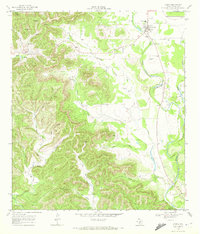 1969 Utopia1972 Print · USGSThe Sabinal River valley in the late sixties shows a landscape of small settlements and Hill Country ranching. Genealogy researchers can locate the Waresville Cem and High Sch, or trace family landmarks like Blanco Ranch and Bald Mountain.
 - 1969 Map of Flatrock Crossing, 1972 Print
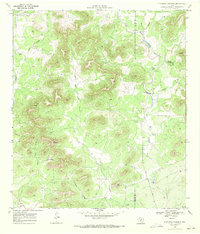 1969 Flatrock Crossing1972 Print · USGSThe Edwards Plateau breaks into the Hill Country of Uvalde and Medina counties during the late sixties, where ranching life follows the limestone creek beds. Researchers can locate remote family landmarks like Miller Cem, the Flatrock Crossing ford, and high points like Holy Mountain.2 unique versions available
Showing maps 1-25 of 53
Top cities of Uvalde County
- Uvalde historical maps
- Uvalde Estates historical maps
- Sabinal historical maps
- Knippa historical maps
- Utopia historical maps
Frequently asked questions
- What are the different types of historical maps available for Uvalde County?
- What is the oldest map of Uvalde County?
- Where can I purchase historical maps of Uvalde County for my home or office?
- Where can I download high-res historical maps of Uvalde County?
- Are there historical topographic maps available for Uvalde County?
- Is there historical aerial imagery available for Uvalde County?
- Where are historical maps of Uvalde County sourced from?