1930s Maps of Zapata County, Texas
Explore 6 historic maps of Zapata County from the 1930s. These maps offer a rare glimpse into what life looked like during the 1930s — showing old roads, neighborhoods, homes, and landmarks that have changed or disappeared over time.
Whether you're researching your family's past, planning a metal detecting trip, or studying how Zapata County's landscape evolved across the 1930s, these high-resolution maps are a powerful tool for exploring the history of this region.
- Focus on a specific era: All maps on this page are from the 1930s, giving you a focused view of this time period.
- See what’s changed: Compare century-old streets, trails, and buildings to today's modern landscape using overlays and satellite layers.
- Research with precision: Use these maps for genealogy, historical research, land use analysis, or educational projects.
- View, download, or print: Maps are fully viewable online in high resolution, and can be downloaded or printed for your own records.
Start exploring Zapata County's history through authentic maps from the 1930s. This is your window into the past.
Zapata County, TX maps
(6)- 1933 Map of Becerra Creek, 1956 Print
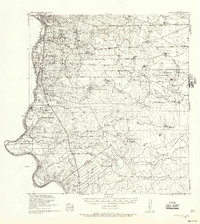 1933 Becerra Creek1956 Print · USGSSouth Texas ranching country along the border comes into focus in the early twentieth century. Genealogists and local historians can trace family landholdings like the Dario Sanchez Pasture or search for roots near the Johnson Settlement and Mann Ranch.
 - 1938 Map of Falcon, 1956 Print
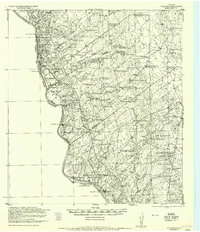 1938 Falcon1956 Print · USGSThe Rio Grande valley of South Texas appears here in the decades before the creation of Falcon Lake, revealing a landscape of historic river crossings and family ranches. Genealogists can trace ancestral sites like Falcon (Ramireño), Salineño, and Lopeño, or locate river landmarks such as Las Piedras Island.
 - 1938 Map of El Sauz, 1958 Print
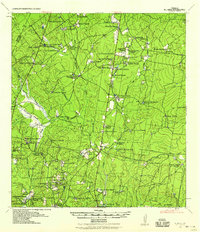 1938 El Sauz1958 Print · USGSSouth Texas ranching territory in the late thirties is defined by a dense network of family-held estates and cattle outposts. Local historians and genealogists can trace ancestral holdings through landmarks like La Presurosa Store, Las Escobas Ranch, and Agua Dulce Ranch.
 - 1938 Map of Cuevitas, 1959 Print
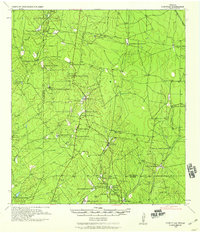 1938 Cuevitas1959 Print · USGSSouth Texas ranching and the nascent oil industry define this borderlands region in the late nineteen-thirties. Researchers can trace ancestral family lands through dozens of named sites like San Antonio Viejo Ranch, Cuevitas, and the Sun Oil Co Camp.
 - 1939 Map of Bruni, 1958 Print
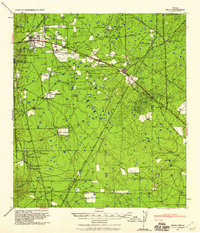 1939 Bruni1958 Print · USGSSouth Texas brush country was a hub of energy and ranching in the late thirties as the oil boom transformed the landscape. Genealogists and historians can trace family landholdings like Santa Cruz Ranch and the early industrial footprint of Mirando City or the Valdez Oil Field.2 unique versions available
 - 1939 Map of Randado, 1959 Print
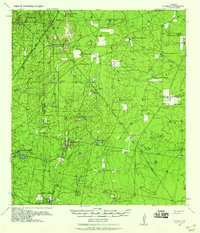 1939 Randado1959 Print · USGSSouth Texas ranching and the rise of the oil industry intersect in the late 1930s across Jim Hogg County. Genealogists and local historians can trace legacy family holdings like Lopez Ranch and De la Garza Ranch alongside infrastructure for the Randado Oil Field.
End of results
Showing maps 1-6 of 6
Top cities of Zapata County
Frequently asked questions
- What are the different types of historical maps available for Zapata County?
- What is the oldest map of Zapata County?
- Where can I purchase historical maps of Zapata County for my home or office?
- Where can I download high-res historical maps of Zapata County?
- Are there historical topographic maps available for Zapata County?
- Is there historical aerial imagery available for Zapata County?
- Where are historical maps of Zapata County sourced from?