1960s Maps of Uintah County, Utah
Explore 80 historic maps of Uintah County from the 1960s. These maps offer a rare glimpse into what life looked like during the 1960s — showing old roads, neighborhoods, homes, and landmarks that have changed or disappeared over time.
Whether you're researching your family's past, planning a metal detecting trip, or studying how Uintah County's landscape evolved across the 1960s, these high-resolution maps are a powerful tool for exploring the history of this region.
- Focus on a specific era: All maps on this page are from the 1960s, giving you a focused view of this time period.
- See what’s changed: Compare century-old streets, trails, and buildings to today's modern landscape using overlays and satellite layers.
- Research with precision: Use these maps for genealogy, historical research, land use analysis, or educational projects.
- View, download, or print: Maps are fully viewable online in high resolution, and can be downloaded or printed for your own records.
Start exploring Uintah County's history through authentic maps from the 1960s. This is your window into the past.
Uintah County, UT maps
(80)- 1960 Map of Price
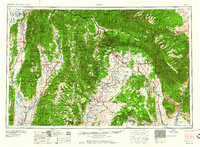 1960 Price1960 Print · USGSCentral Utah in the late fifties was a landscape of coal-hauling railroads and high plateau settlements. Genealogists and local historians can trace the rail-to-river economy from Price to the mountain mining camps of Hiawatha, Dragerton, and Sunnyside.2 unique versions available
 - 1960 Map of Vernal
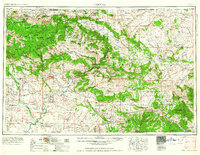 1960 Vernal1960 Print · USGSNortheastern Utah was a rugged frontier of mineral extraction and federal conservation in the mid-twentieth century. Genealogists and historians can trace the growth of Vernal, locate Gilsonite mining operations near Bonanza, and explore the 1950s boundaries of Dinosaur National Monument.
 - 1960 Map of Grand Junction
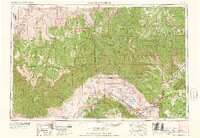 1960 Grand Junction1960 Print · USGSThe Grand Junction area at the dawn of the 1960s shows a landscape of river-valley agriculture and high-plateau extraction. Researchers can trace the path of the dismantled railroad and find vanished sites like Watson and Sego.2 unique versions available
 - 1962 Map of Grand Junction
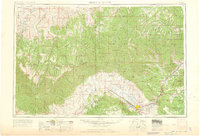 1962 Grand Junction1962 Print · USGSThe Western Slope of the early sixties comes into focus here, showing the irrigation-driven growth of the valley and the surrounding high desert. Trace the path of the Denver and Rio Grande Western RR or locate old outposts like Atchee and Dragon.
 - 1962 Map of Price
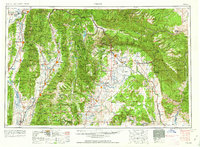 1962 Price1962 Print · USGSCentral Utah during the early sixties shows a landscape balancing high-mountain forestry with valley agriculture and coal mining. Genealogists and historians can trace the Denver and Rio Grande Western rail lines through industrial hubs like Price or locate formerly active sites like Coal City (abandoned).
 - 1963 Map of Whiterocks Lake, 1964 Print
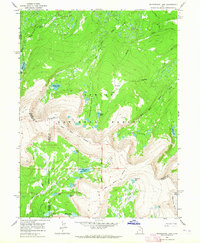 1963 Whiterocks Lake1964 Print · USGSThe high Uinta basins of Daggett and Uintah counties are shown here in the early sixties, highlighting remote water systems and historical borders. Researchers can trace the Old Indian Treaty Boundary and locate early sites like Spirit Lake Campground or Whiterocks Lake.3 unique versions available
 - 1963 Map of Leidy Peak, 1964 Print
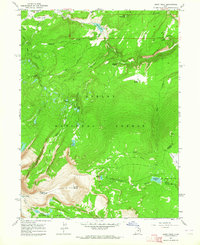 1963 Leidy Peak1964 Print · USGSThe high Uinta Mountains of northern Utah are mapped here in the early 1960s, showing the intersection of Daggett and Uintah counties. Researchers can trace high-altitude water sources and early paths like the Uinta Highline Trail, Long Park Res, and Icy Hill Dugway.2 unique versions available
 - 1963 Map of East Park Reservoir, 1964 Print
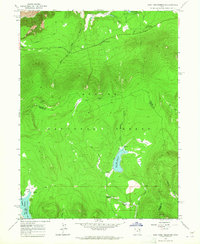 1963 East Park Reservoir1964 Print · USGSThe Uinta Mountains high country comes into focus in the early sixties as a hub for water storage and alpine recreation. Trace the remote network of the High Line (Jeep) Trail and locate seasonal landmarks like Dyer Park or the Greens Lakes Campground.3 unique versions available
 - 1963 Map of Elk Park, 1964 Print
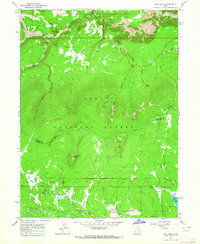 1963 Elk Park1964 Print · USGSThe high Uintas in the early sixties reveal a landscape of remote mountain parks and early forest management. Local historians can trace the Old Military Reservation Boundary and find secluded spots like Pat Carroll Park and the Trout Creek Guard Station.3 unique versions available
 - 1963 Map of Tenmile Canyon, 1965 Print
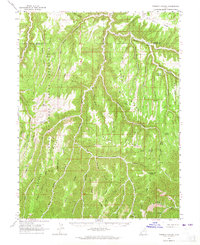 1963 Tenmile Canyon1965 Print · USGSThe high desert canyons of Grand and Uintah counties are captured here in the early sixties as industrial exploration began to mark the landscape. Researchers can trace remote landing strips, family-named water sources like Kelly Spring, and landmarks such as Tenmile Knoll.2 unique versions available
 - 1963 Map of Moonwater Point, 1965 Print
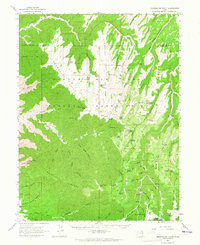 1963 Moonwater Point1965 Print · USGSThe Uintah and Ouray Indian Reservation in the early sixties is shown here as a rugged landscape of high points and deep canyons. Researchers can trace remote desert routes like the Sunrise Dugway or locate isolated landmarks such as the Hill Creek Ranger Stat and Marys Water.
 - 1964 Map of Grand Junction
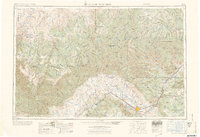 1964 Grand Junction1964 Print · USGSThe Colorado-Utah borderlands are shown here in the mid-1960s, a period when the river-valley settlements and high-desert rail outposts defined the region. Researchers can trace the legacy of remote camps like Atchee and Dragon or follow the agricultural expansion around Grand Junction and Fruita.
 - 1964 Map of Vernal NE, 1965 Print
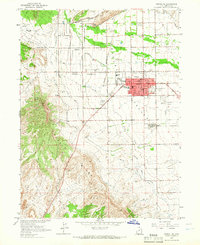 1964 Vernal NE1965 Print · USGSThe Ashley Valley thrived in the mid-sixties as a hub of irrigation and industry, centered on the growing community of Vernal. Researchers can locate family sites near Rock Point Cem, trace the complex Steinaker Canal system, or find the old Drive-in Theater.2 unique versions available
 - 1964 Map of Fort Duchesne, 1965 Print
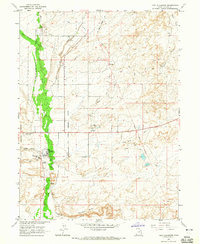 1964 Fort Duchesne1965 Print · USGSThe Uintah Basin in the mid-1960s reveals a landscape shaped by the Uinta River and an extensive network of irrigation canals. Researchers can trace the layout of Fort Duchesne, locate the Indian Agency Hdqrs, and find early regional energy footprints like the Oil Well.
 - 1964 Map of Lapoint, 1965 Print
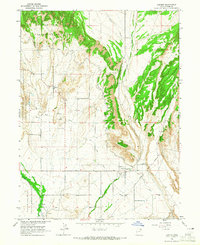 1964 Lapoint1965 Print · USGSUintah County land and water rights take center stage in the mid-1960s within the Uintah and Ouray Indian Reservation. Researchers can trace irrigation networks like the Deep Creek Canal and find family sites near Tridell or the Lapoint Cemetery.2 unique versions available
 - 1964 Map of Whiterocks, 1965 Print
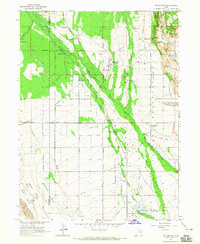 1964 Whiterocks1965 Print · USGSThe Uinta Basin in the mid-1960s reveals a unique landscape of tribal lands and intensive irrigation. Researchers can trace family history at Hayden Cem or locate the Indian Sun Dance Grounds and Fort Robidoux Historical Monument.
 - 1964 Map of Brennan Basin, 1966 Print
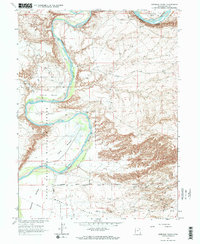 1964 Brennan Basin1966 Print · USGSThe Green River bends through Uintah County in the mid-1960s, revealing a landscape defined by wildlife conservation and mineral wealth. Trace the boundaries of the Ouray National Wildlife Refuge and industrial activity at Horseshoe Bend Oil Field.2 unique versions available
 - 1964 Map of Windy Ridge, 1966 Print
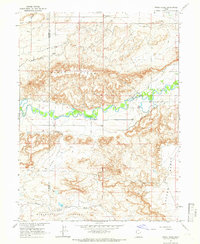 1964 Windy Ridge1966 Print · USGSThe Duchesne River valley and its surrounding high-desert benches are shown here in the mid-sixties, highlighting a complex network of local irrigation. Genealogists and researchers can trace water rights and rural dwellings near Independence, Leland, and the Ouray School.
 - 1964 Map of Vernal SW, 1966 Print
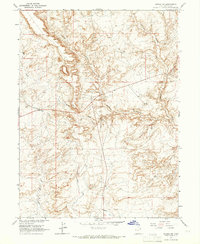 1964 Vernal SW1966 Print · USGSUintah County's arid basin landscape is captured here in the mid-1960s during a period of water management and resource exploration. Researchers can trace the path of the Ouray Valley Canal and locate early industrial markers like the Oil Well and Borrow Pits.
 - 1964 Map of Randlett, 1966 Print
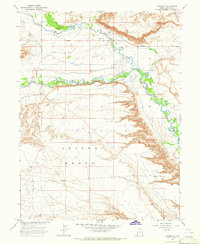 1964 Randlett1966 Print · USGSThe Uintah Basin in the mid-sixties reveals a landscape of irrigation canals and river confluences near the settlement of Randlett. Local researchers can trace the historic Treaty Boundary (Old) and the site of the Ouray School along the Duchesne River.
 - 1964 Map of Ouray, 1966 Print
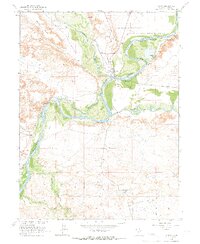 1964 Ouray1966 Print · USGSThe Uintah Basin river systems meet in the mid-1960s at the confluence of three major waterways. Researchers can trace the sprawling Uintah and Ouray Indian Reservation Boundary and locate landmarks like the Uteland Mine and Old Charley Wash.2 unique versions available
 - 1964 Map of Vernal NW, 1966 Print
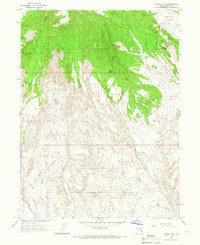 1964 Vernal NW1966 Print · USGSUintah County in the mid-1960s remains a landscape of industrial extraction and historic frontiers. Trace the Military Reservation Boundary 1873 and find early resource sites like Coal Mine Basin and the CCC Tank.2 unique versions available
 - 1964 Map of Pelican Lake, 1966 Print
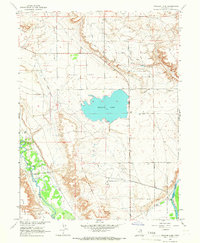 1964 Pelican Lake1966 Print · USGSThe Uintah Basin in the mid-1960s was a landscape defined by desert irrigation and tribal boundaries. Researchers can trace the Old Indian Treaty Boundary and explore the surroundings of Pelican Lake and the settlement of Leota.2 unique versions available
 - 1964 Map of Uteland Butte, 1966 Print
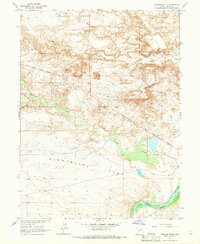 1964 Uteland Butte1966 Print · USGSUintah County's desert benches and historical borders are captured here in the mid-1960s. Genealogists and historians can trace the Old Indian Treaty Boundary and locate early energy infrastructure like several Oil Wells and the Pariette Draw.
 - 1964 Map of Ouray SE, 1966 Print
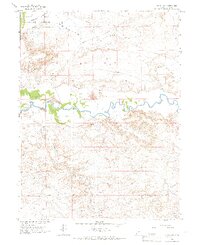 1964 Ouray SE1966 Print · USGSUintah County's high desert and river bottoms are captured here in the mid-1960s during a period of active energy exploration. Trace the Old Indian Treaty Boundary and locate early infrastructure like the Pumping Station or the landmark Mollys Nipple.
Showing maps 1-25 of 80
Top cities of Uintah County
Frequently asked questions
- What are the different types of historical maps available for Uintah County?
- What is the oldest map of Uintah County?
- Where can I purchase historical maps of Uintah County for my home or office?
- Where can I download high-res historical maps of Uintah County?
- Are there historical topographic maps available for Uintah County?
- Is there historical aerial imagery available for Uintah County?
- Where are historical maps of Uintah County sourced from?