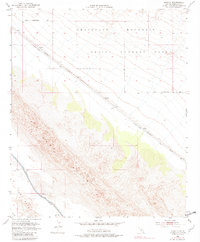
1953 Map of Acolita
USGS Topo · Published 1982About this map
The desert outpost of Acolita serves as a lonely point of reference in this arid landscape where the Sand Hills meet the southern edge of the Chocolate Mountains. At the time of this survey, the region was defined by massive military and infrastructure footprints, including a large Aerial Gunnery Range and the Naval Reservation Bdy. Transportation through this harsh environment is strictly linear, following the corridor of the Southern Pacific railroad and the parallel Niland-Glamis Road. Water management features like the East Mesa Canal and the Coachella Levee indicate the intensive engineering required to move water across the basin, while various Jeep Trails provide the only access into the more remote dunes and foothills.
Find a feature on this map
11 named features on this map. Tap any name to fly to it.
Don’t see what you’re looking for? This feature index may not catch every label — zoom into the map to look around manually.
Map Details
Editions of this 1953 Acolita Map
5 editions found
Other maps of this area
1907 · Holtville
USGS Topo · 1:125,000
1940 · Iris
USGS Topo · 1:62,500
1940 · Alamorio
USGS Topo · 1:62,500
1942 · El Centro
USGS Topo · 1:250,000
1945 · Alamorio
USGS Topo · 1:62,500
1945 · Iris
USGS Topo · 1:62,500
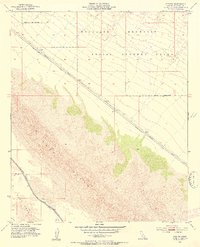
1953 · Acolita
USGS Topo · 1:24,000
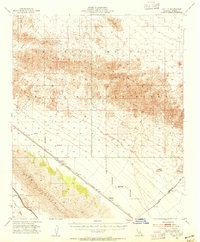
1953 · Acolita
USGS Topo · 1:62,500
1954 · El Centro
USGS Topo · 1:250,000
1954 · Salton Sea
USGS Topo · 1:250,000