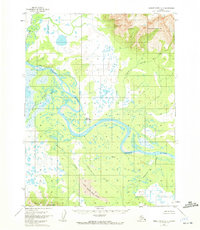
1955 Map of Ambler River A-5
USGS Topo · Published 1972About this map
The Kobuk River meanders through this wilderness landscape as it appeared in the mid-1950s, revealing a complex network of sloughs and tributary streams. Among the most significant archaeological and historical landmarks is Onion Portage, a critical site for understanding early human migration and caribou hunting patterns. To the north, the Jade Mountains rise sharply, while the southern reaches of the map are defined by the Waring Mountains and the distinct geomorphology of the Little Kobuk Sand Dunes. Numerous seasonal or hunting structures are indicated by Cabin markers along the waterways, such as Jade Creek and Akillik River. This survey captures the remote character of the Northwest Arctic region, showing the land as it was mapped by the Department of the Interior Geological Survey using 1955 aerial photography.
Find a feature on this map
14 named features on this map. Tap any name to fly to it.
Don’t see what you’re looking for? This feature index may not catch every label — zoom into the map to look around manually.
Map Details
Editions of this 1955 Ambler River A-5 Map
3 editions found
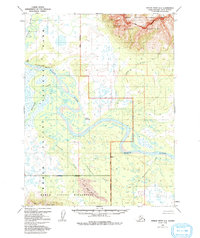
Other maps of this area
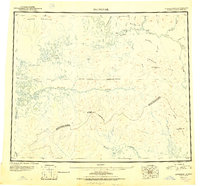
1951 · Shungnak
USGS Topo · 1:250,000
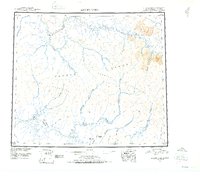
1951 · Ambler River
USGS Topo · 1:250,000
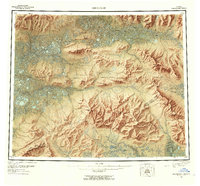
1955 · Shungnak
USGS Topo · 1:250,000
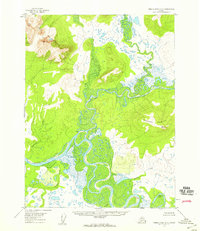
1955 · Ambler River A-4
USGS Topo · 1:63,360
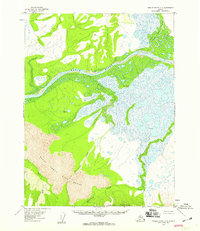
1955 · Ambler River A-6
USGS Topo · 1:63,360
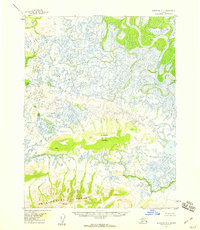
1955 · Shungnak D-4
USGS Topo · 1:63,360
1955 · Shungnak D-6
USGS Topo · 1:63,360
1955 · Shungnak D-5
USGS Topo · 1:63,360
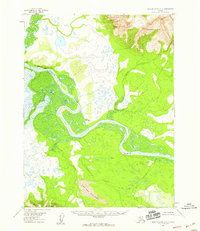
1955 · Ambler River A-5
USGS Topo · 1:63,360
1956 · Ambler River
USGS Topo · 1:250,000