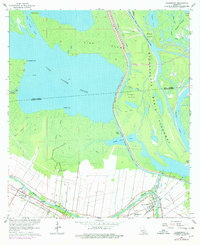
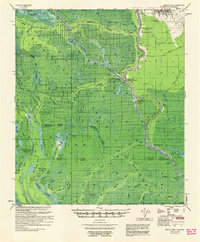
1963 Map of Charenton
USGS Topo · Published 1978About this map
Bayou Teche defines the southern portion of this landscape, serving as a corridor for settlement and industry along its winding banks. In the 1960s, the communities of Charenton, Sorrel, and Matilda clustered near the bayou, supported by a transportation network that included both the Missouri Pacific and Southern Pacific railroads. The area reflects a complex water management system, dominated by the Atchafalaya Basin Floodway and the expansive Lake Fausse Pointe.
Find a feature on this map
39 named features on this map. Tap any name to fly to it.
Don’t see what you’re looking for? This feature index may not catch every label — zoom into the map to look around manually.
Map Details
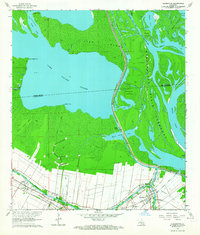
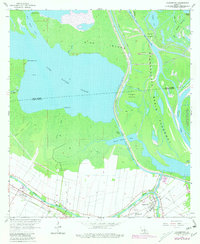
Editions of this 1963 Charenton Map
3 editions found
Other maps of this area
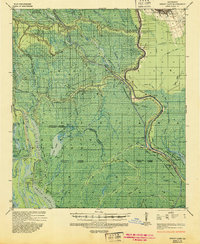
1935 · Chicot Lake
USGS Topo · 1:62,500
1937 · Jeanerette
USGS Topo · 1:62,500
1941 · Loreauville
USGS Topo · 1:62,500
1945 · New Orleans
USGS Topo · 1:250,000
1948 · Foster
USGS Topo · 1:62,500
1954 · Chicot Lake
USGS Topo · 1:62,500
1954 · Loreauville
USGS Topo · 1:62,500
1954 · Jeanerette
USGS Topo · 1:62,500
1954 · Baton Rouge
USGS Topo · 1:250,000
1955 · Chicot Lake
USGS Topo · 1:62,500