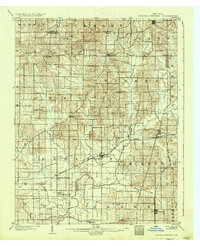
1902 Map of Degonia Springs
USGS Topo · Published 1936About this map
Degonia Springs and Ash Iron Springs serve as central landmarks in this turn-of-the-century landscape, illustrating the importance of mineral springs to local identity in southern Indiana. The region is defined by a dense network of small agricultural settlements and crossroads like Tennyson, Folsomville, and Gentryville, all linked by the Southern railroad. The geography is characterized by the winding path of Little Pigeon Creek and its tributaries, including Pokeberry Creek and Sugar Tree Creek, which dictated the early township boundaries of Lane, Pigeon, and Skelton. This 1902 survey, reprinted in 1936, captures a rural economy still largely dependent on rail transport, as seen in the Evansville Division and Rockport Branch lines. Genealogists can trace the location of long-standing family communities such as Scalesville, Dickeyville, and Hemenway before modern development shifted the regional footprint.
Find a feature on this map
43 named features on this map. Tap any name to fly to it.
Don’t see what you’re looking for? This feature index may not catch every label — zoom into the map to look around manually.
Map Details
Editions of this 1902 Degonia Springs Map
2 editions found
Other maps of this area
1900 · St Meinrad
USGS Topo · 1:62,500
1900 · De Gonia Springs
USGS Topo · 1:62,500
1901 · Owensboro
USGS Topo · 1:62,500
1902 · Ditney
USGS Topo · 1:125,000
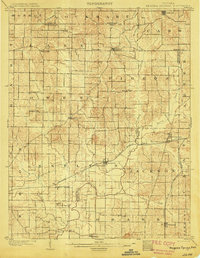
1902 · Degonia Springs
USGS Topo · 1:62,500
1902 · Boonville
USGS Topo · 1:62,500
1903 · St. Meinrad
USGS Topo · 1:62,500
1903 · Velpen
USGS Topo · 1:62,500
1903 · Petersburg
USGS Topo · 1:62,500
1903 · Tell City
USGS Topo · 1:62,500