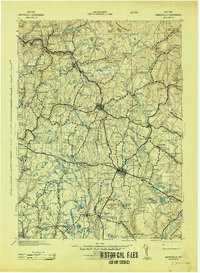
1943 Map of Monticello
USGS Topo · Published 1964About this map
Livingston Manor and the surrounding Catskills foothills are defined by a complex network of schools and early industrial sites during the early 1940s. The map captures the prominence of the New York Ontario & Western RR and the Ontario & Western RR, which facilitated local commerce such as the Creosote Plant and Dye Works near Roscoe. This era shows a landscape transitioning from the 19th-century economy of the Hudson Canal (Abandoned) toward a mid-century infrastructure of state routes.
Find a feature on this map
262 named features on this map. Tap any name to fly to it.
Don’t see what you’re looking for? This feature index may not catch every label — zoom into the map to look around manually.
Map Details
Editions of this 1943 Monticello Map
This is the sole edition of this map. No revisions or reprints were ever made.
Other maps of this area
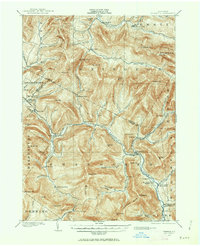
1900 · Phoenicia
USGS Topo · 1:62,500
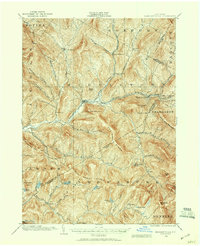
1901 · Margaretville
USGS Topo · 1:62,500
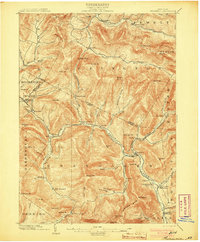
1903 · Phoenicia
USGS Topo · 1:62,500
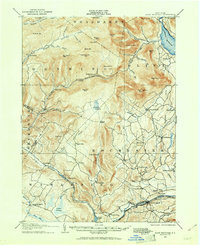
1903 · Slide Mountain
USGS Topo · 1:62,500
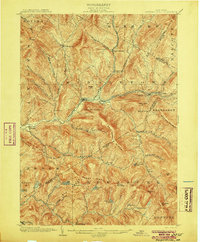
1904 · Margaretville
USGS Topo · 1:62,500
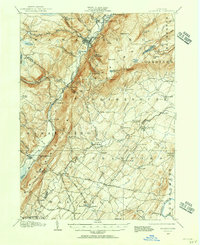
1904 · Ellenville
USGS Topo · 1:62,500
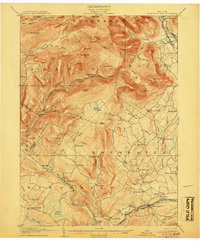
1905 · Slide Mountain
USGS Topo · 1:62,500
1906 · Ellenville
USGS Topo · 1:62,500
1906 · Port Jervis
USGS Topo · 1:62,500
1906 · Goshen
USGS Topo · 1:62,500