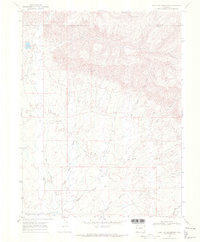
1968 Map of Ruby Lee Reservoir
USGS Topo · Published 1972About this map
The high desert landscape of Mesa and Garfield counties in the late 1960s is defined by its deep drainages and early energy extraction. The map's northern reaches are carved by Coal Gulch and Salt Wash, while small-scale coal operations like Farmers Mine, Hicks Mine, and Anchor Mine dot the high ground above the canyon floors. These resource-heavy lands show the infrastructure of the era, with a long pipeline and various gas wells marking the terrain. In the northwest, the small Ruby Lee Res provides a rare point of surface water in an otherwise arid drainage system. To the south, the presence of the Government Highline Canal signals the transition toward the irrigated agriculture of the Grand Valley, where water management transformed the desert into productive land. This survey provides a look at the intersection of geology and early industrial development before modern expansion altered the footprint of these local mining sites.
Find a feature on this map
16 named features on this map. Tap any name to fly to it.
Don’t see what you’re looking for? This feature index may not catch every label — zoom into the map to look around manually.
Map Details
Editions of this 1968 Ruby Lee Reservoir Map
This is the sole edition of this map. No revisions or reprints were ever made.
Other maps of this area
1956 · Grand Junction
USGS Topo · 1:250,000
1959 · Grand Junction
USGS Topo · 1:250,000
1960 · Grand Junction
USGS Topo · 1:250,000
1962 · Grand Junction
USGS Topo · 1:250,000
1962 · Fruita
USGS Topo · 1:24,000
1962 · Mack
USGS Topo · 1:24,000
1962 · Corcoran Point
USGS Topo · 1:24,000
1964 · Grand Junction
USGS Topo · 1:250,000
1965 · Grand Junction
USGS Topo · 1:250,000
1968 · Howard Canyon
USGS Topo · 1:24,000