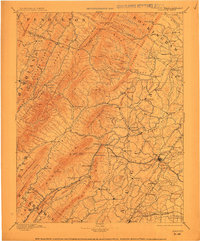
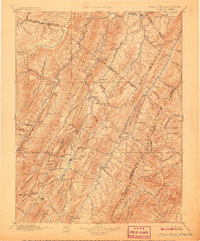
1894 Map of Staunton
USGS Topo · Published 1913About this map
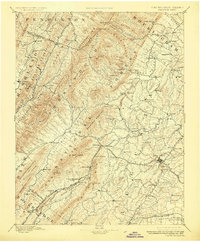
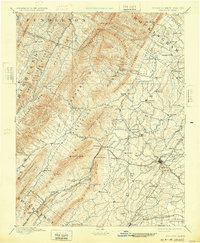
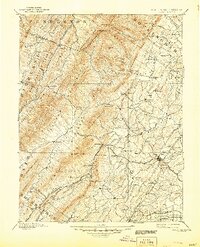
Staunton serves as the central hub of this late-nineteenth-century landscape, where a dense network of early roads and railways converges. The B. & O. R. R., C. & O. R. R., and the N. & W. R. R. connect established settlements like Churchville, Middlebrook, and Mt. Solon. The terrain is defined by the high peaks of the Shenandoah Mtns, including Elliott Knob, which separates the fertile valley floor from the rugged ridges along the West Virginia state line. Numerous mineral springs, such as Augusta Wh. Sulphur Springs and Stribling Spgs., point to the era's resort culture, while industrial markers like Giant Mills and the Virginia Clay Works illustrate a local economy tied to natural resources. The drainage patterns of the Middle River and Calf Pasture River further dictate the placement of these historic mountain communities.
Find a feature on this map
146 named features on this map. Tap any name to fly to it.
Don’t see what you’re looking for? This feature index may not catch every label — zoom into the map to look around manually.
Map Details
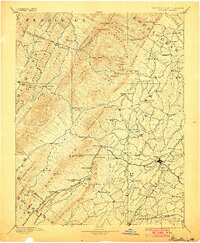
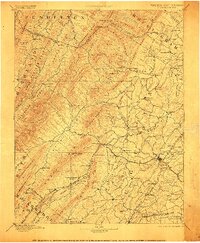
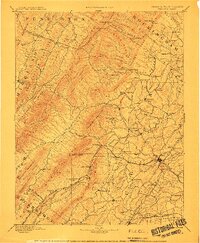
Editions of this 1894 Staunton Map
8 editions found
Other maps of this area
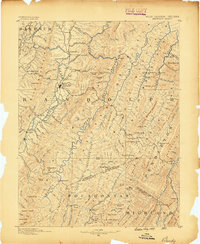
1889 · Beverly
USGS Topo · 1:125,000
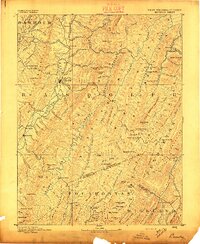
1892 · Beverly
USGS Topo · 1:125,000
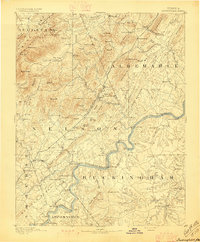
1892 · Buckingham
USGS Topo · 1:125,000
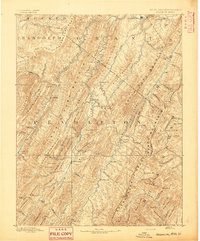
1892 · Franklin
USGS Topo · 1:125,000
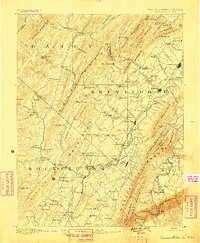
1892 · Woodstock
USGS Topo · 1:125,000
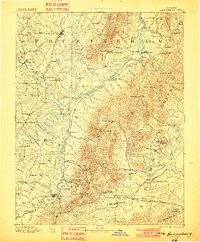
1892 · Harrisonburg
USGS Topo · 1:125,000
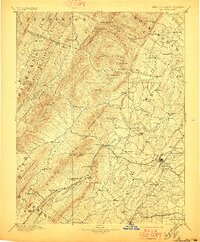
1894 · Staunton
USGS Topo · 1:125,000
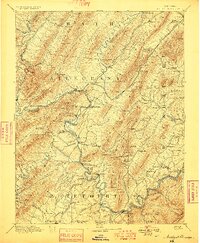
1894 · Natural Bridge
USGS Topo · 1:125,000
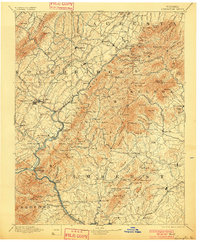
1894 · Lexington
USGS Topo · 1:125,000
1896 · Franklin
USGS Topo · 1:125,000