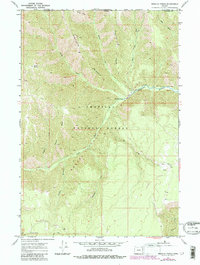
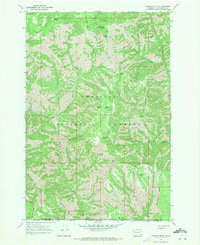
1967 Map of Wenaha Forks
USGS Topo · Published 1983About this map
The Wenaha Forks confluence serves as the central focal point of this 1967 survey, where the North Fork Wenaha River and South Fork Wenaha River meet within the Umatilla National Forest. This remote corner of the Blue Mountains, straddling the Washington and Oregon state line and the Columbia and Wallowa county boundary, is defined by sharp elevation changes and high ridgelines. Features like Sawtooth Ridge, Dexter Ridge, and Beaver Ridge dominate the landscape, separated by deep drainages such as Trapper Creek and Beaver Creek. The map documents a primitive transportation network consisting primarily of a Pack Trail winding through the Wenaha Wilderness. Notable landmarks for navigation in this backcountry include Round Butte and high-altitude grazing areas like Elk Flat, alongside vital water sources such as Peerless Spring and Spring.
Find a feature on this map
24 named features on this map. Tap any name to fly to it.
Don’t see what you’re looking for? This feature index may not catch every label — zoom into the map to look around manually.
Map Details
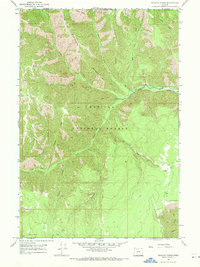
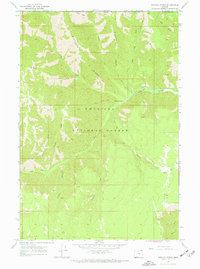
Editions of this 1967 Wenaha Forks Map
3 editions found
Other maps of this area
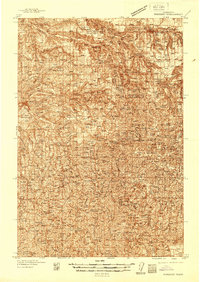
1937 · Pomeroy
USGS Topo · 1:96,000
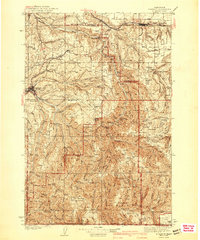
1942 · Pomeroy
USGS Topo · 1:125,000
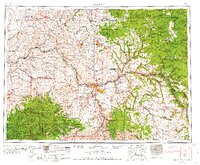
1955 · Pullman
USGS Topo · 1:250,000
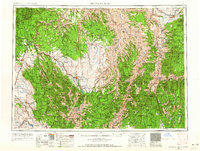
1955 · Grangeville
USGS Topo · 1:250,000
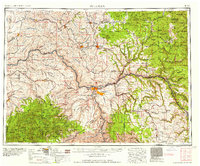
1958 · Pullman
USGS Topo · 1:250,000
1959 · Grangeville
USGS Topo · 1:250,000
1967 · Fry Meadow
USGS Topo · 1:24,000
1967 · Elbow Creek
USGS Topo · 1:24,000
1967 · Bone Spring
USGS Topo · 1:24,000
1967 · Oregon Butte
USGS Topo · 1:24,000