Old Maps of Benson, Arizona for Metal Detecting
Plan your next treasure hunt with 40 historic maps of Benson. Find old homesites, ghost towns, trails, and gathering spots that may be lost to time — perfect for identifying promising metal detecting locations.
- Locate forgotten sites: Uncover places like long-lost settlements, abandoned rail lines, or gathering spots.
- Plan better hunts: Use map overlays combined with LiDAR or satellite views to narrow in on historically rich areas.
- Made for detectorists: Thousands of hobbyists use these maps to discover relics, coins, and hidden history.
Use these historic maps to boost your research and find new opportunities beneath the surface of Benson.
Benson, AZ maps
(40)- 1915 Map of Benson
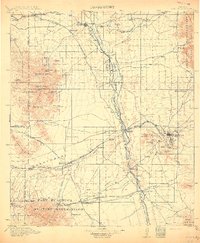 1915 Benson1915 Print · USGSSouthern Arizona was a landscape of rail junctions and mining claims just before the Great War. Genealogists and historians can trace the reach of Tombstone, find the Panama Mine, and locate vanished rail stops like Fairbank and Boquillas.4 unique versions available
 - 1926 Map of Whetstone
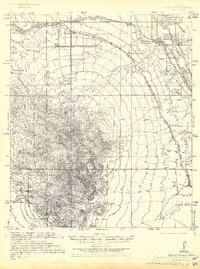 1926 Whetstone1926 Print · USGSThe San Pedro River valley and the railroad hub of Benson are captured here in the mid-1920s. Genealogists and historians can trace the early footprints of Wakefield Ranch, locate the Taylor School, and follow the junction of the Southern Pacific and El Paso and Southwestern lines.
 - 1943 Map of Benson
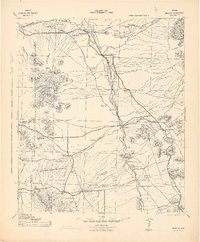 1943 Benson1943 Print · USGSCochise County during the wartime 1940s reveals a landscape defined by the San Pedro River and the legendary town of Tombstone. Genealogists and historians can trace the foundations of Fort Huachuca and locate rural landmarks like St David, Fairbank, and Huachuca Turner PO.
 - 1945 Map of Happy Valley
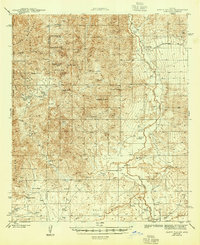 1945 Happy Valley1945 Print · USGSThe San Pedro River valley and the eastern slopes of the Rincon Mountains are documented here during the mid-1940s. Genealogists and historians can locate numerous family homesteads like Russell Ranch and Gunter Ranch, or trace the Willcox-Cascabel Road past the Apodaca Sch.2 unique versions available
 - 1956 Map of Nogales, 1963 Print
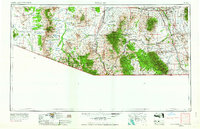 1956 Nogales1963 Print · USGSSouthern Arizona in the mid-fifties is captured here from the Papago tribal lands to the San Pedro valley. Genealogists and historians can trace border settlements like Sasabe, the legacy of Tombstone, and old mining sites including the Mary G Mine.4 unique versions available
 - 1956 Map of Tucson, 1967 Print
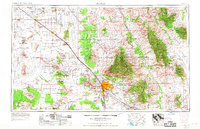 1956 Tucson1967 Print · USGSPost-war Southern Arizona comes into focus as the copper and aviation industries expand around Tucson. Trace family roots in South Tucson or locate early mining sites like the San Manuel Mine and Silver Bell Mine near the Santa Cruz River.3 unique versions available
 - 1958 Map of Nogales
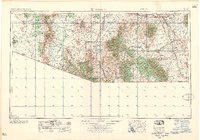 1958 Nogales1958 Print · USGSSouthern Arizona in the late fifties was a landscape of international borders and high-desert outposts, dominated by the Huachuca Mountains and the Papago Indian Reservation. Local historians can trace old mining camps like Ruby and Greaterville or locate historic military grounds at the Fort Huachuca Military Reservation.
 - 1958 Map of Tucson
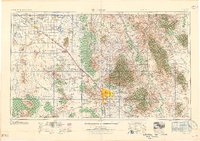 1958 Tucson1958 Print · USGSSouthern Arizona in the late fifties reveals a landscape of desert agriculture and rising military aviation. Trace the rail lines of the Southern Pacific or locate the historic San Xavier Del Bac Mission and the Casa Grande Natl Mon.
 - 1958 Map of Happy Valley, 1959 Print
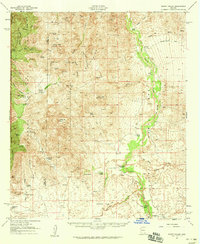 1958 Happy Valley1959 Print · USGSSoutheast Arizona ranching culture and river life are captured here in the late fifties, from the San Pedro River valley to the high Rincon Mountains. Genealogists and historians can trace legacy holdings like the Allen Ranch and Martinez Ranch or the early layout of Pomerene.2 unique versions available
 - 1958 Map of Benson, 1959 Print
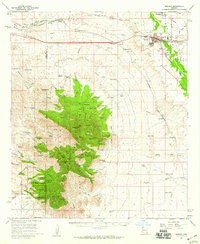 1958 Benson1959 Print · USGSBenson and the San Pedro River valley are captured in the late fifties during a period of steady rail and highway growth. Researchers can trace the Southern Pacific RR, find old operations like Ricketts Mine, or locate family ranching landmarks such as Jay Six Ranch.3 unique versions available
 - 1959 Map of Tucson
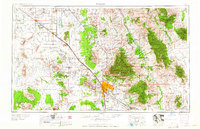 1959 Tucson1959 Print · USGSSouthern Arizona in the late fifties shows a landscape of military growth and desert industry. Genealogists and historians can trace the footprint of Davis-Monthan Air Force Base and old mining sites like the San Manuel Mine near Mammoth.2 unique versions available
 - 1959 Map of Nogales
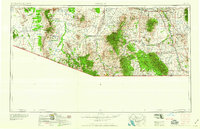 1959 Nogales1959 Print · USGSThe Southern Arizona borderlands appear in the late fifties as a complex landscape of military ranges, tribal lands, and high-desert mining towns. Local historians can trace the Southern Pacific rail lines connecting Tombstone and Benson or locate family ranches such as Canoa Ranch.
 - 1962 Map of Tucson
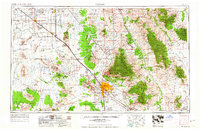 1962 Tucson1962 Print · USGSSouthern Arizona in the early sixties showcases a landscape defined by burgeoning desert cities and massive military installations. Researchers can trace tribal settlements like Schuchk, legacy mining sites at Silver Bell Mine, and the early footprint of Davis-Monthan Air Force Base.
 - 1964 Map of Tucson
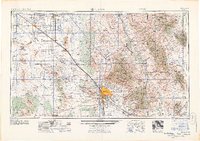 1964 Tucson1964 Print · USGSSouthern Arizona in the mid-1960s shows a landscape of burgeoning desert cities and industrial-scale copper mining. Researchers can trace the development of Tucson and its outlying mining districts, including the Silver Bell Mine and San Manuel Mine.
 - 1973 Map of Galleta Flat East, 1976 Print
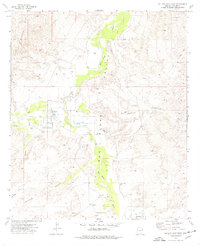 1973 Galleta Flat East1976 Print · USGSCochise County during the 1970s reveals a ranching landscape centered on the San Pedro River. Genealogists and historians can trace local landmarks like Singing Wind Ranch, the flats of Cornfield Flat, and the northern edge of Pomerene.
 - 1973 Map of Benson, 1976 Print
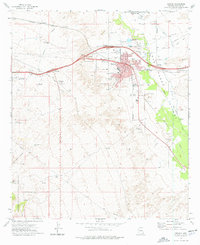 1973 Benson1976 Print · USGSBenson and the San Pedro Valley are shown in the early seventies as a thriving transportation hub where the railroad and new highway interchanges meet. Researchers can trace the layout of the Benson Cemetery, locate the High School, or find outlying landmarks like Post Ranch and the Benson Airport.2 unique versions available
 - 1973 Map of Mescal, 1976 Print
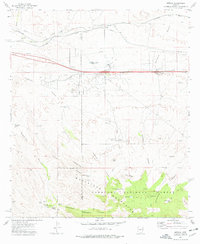 1973 Mescal1976 Print · USGSSoutheastern Arizona ranching and rail infrastructure are detailed here in the early seventies. You can trace family lands at the Double X Ranch, locate historic water sources like Wakefield Spring, or study the Southern Pacific Railroad corridor near Mescal.2 unique versions available
 - 1973 Map of McGrew Spring, 1976 Print
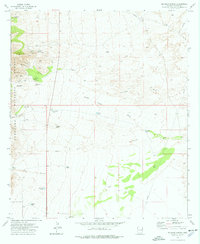 1973 McGrew Spring1976 Print · USGSCochise County in the early 1970s reveals a landscape of high-desert canyons and remote mining claims. Genealogists and historians can locate working sites like the Ricketts Mine, the watering holes of Mc Grew Spring, and the isolated French Joe Camp.2 unique versions available
 - 1994 Map of Fort Huachuca
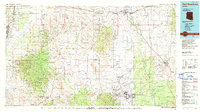 1994 Fort Huachuca1994 Print · USGSSouthern Arizona in the mid-nineties shows a landscape of expansive military reservations, historic land grants, and storied mining districts. Researchers can trace the S P RR through the San Pedro River valley or locate dozens of remote mountain workings like the Montezuma Mine and Eureka Mine.3 unique versions available
 - 1994 Map of Tucson
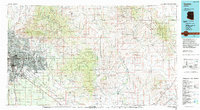 1994 Tucson1994 Print · USGSTucson and the Santa Cruz Valley appear here in the mid-1990s, caught between rapid urban growth and protected wilderness. Researchers can trace the development of Casas Adobes, the operations at Davis Monthan Air Force Base, and the rail lines of the Southern Pacific RR.2 unique versions available
 - 1996 Map of Galleta Flat East, 2002 Print
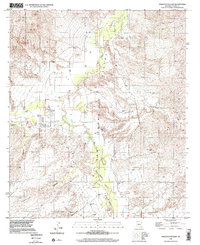 1996 Galleta Flat East2002 Print · USGSCochise County ranching and desert waterways are captured in the 1990s as modern imagery updated the valley landscape. Researchers can trace land use at Singing Wind Ranch or follow drainage patterns along Ash Creek and Tres Alamos Wash.
 - 1996 Map of Mc Grew Spring, 2002 Print
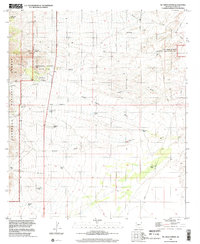 1996 Mc Grew Spring2002 Print · USGSCochise County’s high desert landscape is captured here in the late twentieth century as suburban growth and conservation efforts began to overlap. Metal detectorists and local historians can trace old mining prospects like H & D Mine and remote camps such as French Joe Camp.
 - 1996 Map of Benson, 2002 Print
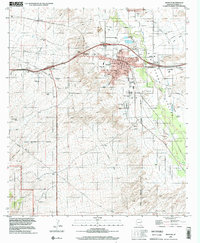 1996 Benson2002 Print · USGSThe San Pedro Valley during the late twentieth century shows the growth of Benson from a rail town into a regional center. Genealogists and historians can trace the Benson Cem, local schools, and outlying settlements like Chamiso or Pomerene.
 - 1996 Map of Mescal, 2002 Print
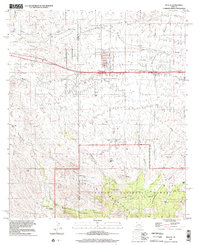 1996 Mescal2002 Print · USGSThe Whetstone Mountains and Pima-Cochise county line meet in this late-twentieth-century study of the Arizona high desert. Researchers can trace the legacy of cattle ranching and water rights through landmarks like Double X Ranch, Wakefield Spring, and the Old Railroad Grade.
 - 2011 Map of Galleta Flat East, 2011 Print
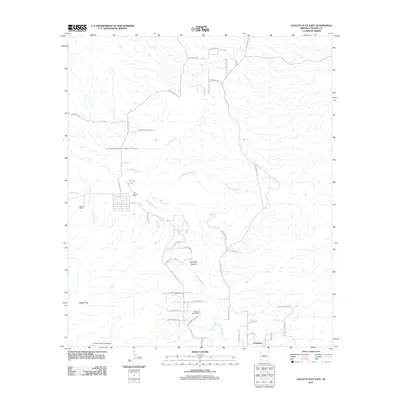 2011 Galleta Flat East2011 Print · USGSCochise County ranchlands and the San Pedro valley are detailed here in the early twenty-first century. Researchers can trace property lines and desert geography through Singing Wind Ranch, Pomerene, and the course of Willow Lake.
Showing maps 1-25 of 40
Top cities near Benson
- Sierra Vista historical maps
- Whetstone historical maps
- Pomerene historical maps
- Sonoita historical maps
Frequently asked questions
- What are the different types of historical maps available for Benson?
- What is the oldest map of Benson?
- Where can I purchase historical maps of Benson for my home or office?
- Where can I download high-res historical maps of Benson?
- Are there historical topographic maps available for Benson?
- Is there historical aerial imagery available for Benson?
- Where are historical maps of Benson sourced from?