1940s Maps of Santa Cruz County, Arizona
Explore 25 historic maps of Santa Cruz County from the 1940s. These maps offer a rare glimpse into what life looked like during the 1940s — showing old roads, neighborhoods, homes, and landmarks that have changed or disappeared over time.
Whether you're researching your family's past, planning a metal detecting trip, or studying how Santa Cruz County's landscape evolved across the 1940s, these high-resolution maps are a powerful tool for exploring the history of this region.
- Focus on a specific era: All maps on this page are from the 1940s, giving you a focused view of this time period.
- See what’s changed: Compare century-old streets, trails, and buildings to today's modern landscape using overlays and satellite layers.
- Research with precision: Use these maps for genealogy, historical research, land use analysis, or educational projects.
- View, download, or print: Maps are fully viewable online in high resolution, and can be downloaded or printed for your own records.
Start exploring Santa Cruz County's history through authentic maps from the 1940s. This is your window into the past.
Santa Cruz County, AZ maps
(25)- 1940 Map of Elgin
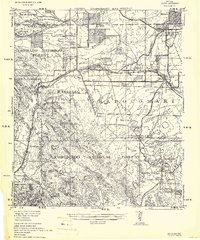 1940 Elgin1940 Print · USGSSoutheastern Arizona ranching country is shown here just before the mid-century, where the Southern Pacific railroad connects remote desert outposts. Researchers can locate early family homesteads like Gardner's Ranch and Rodgers Ranch alongside the historic site of Old Ft. Crittenden.
 - 1941 Map of Arivaca, 1956 Print
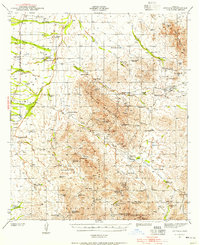 1941 Arivaca1956 Print · USGSIn the early 1940s, this southern Arizona cattle and mining district centered around Arivaca and its surrounding family ranches. Trace the legacy of desert prospecting at the Las Guijas Mine or locate historic homesteads like Canoa Ranch and Montana Ranch.2 unique versions available
 - 1942 Map of Ruby
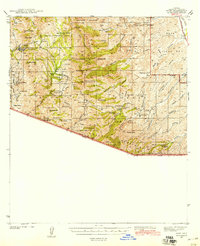 1942 Ruby1942 Print · USGSThe Arizona-Mexico borderlands during the early 1940s reveal a landscape of remote mining claims and family-run cattle operations. Trace the history of the Dos Amigos Mine, the Pena Blanca CCC CAMP, and the settlement of Ruby amidst the high desert peaks.3 unique versions available
 - 1942 Map of Oro Blanco, 1961 Print
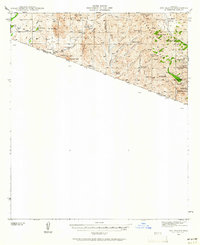 1942 Oro Blanco1961 Print · USGSThe Arizona-Mexico borderlands come to life in this early 1940s survey of Santa Cruz County. Genealogists and historians can trace the legacy of the local mining boom through sites like Oro Blanco and the Old Glory Mine, alongside working spreads such as Garcia Ranch.3 unique versions available
 - 1943 Map of Benson
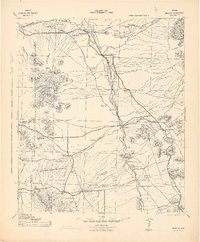 1943 Benson1943 Print · USGSCochise County during the wartime 1940s reveals a landscape defined by the San Pedro River and the legendary town of Tombstone. Genealogists and historians can trace the foundations of Fort Huachuca and locate rural landmarks like St David, Fairbank, and Huachuca Turner PO.
 - 1943 Map of Arivaca
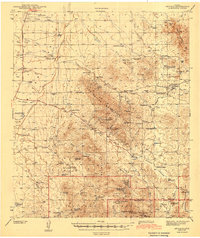 1943 Arivaca1943 Print · USGSIn the early 1940s, this pocket of Pima County was a hub of hard-rock mining and cattle ranching. Researchers can trace family history through sites like Arivaca Ranch, find a lonely Cemetery, or locate dozens of mines including the Las Guijas Mine and Ajax Mine.3 unique versions available
 - 1943 Map of Old Glory
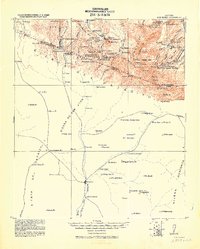 1943 Old Glory1943 Print · USGSThe Arizona-Mexico borderlands come into focus in this mid-century reconnaissance, capturing the mining and ranching life of the high desert. Researchers can trace the locations of Old Glory Mine, Ruby P.O. (Montana), and historic outposts like Tres Bellotas.
 - 1943 Map of Tubac
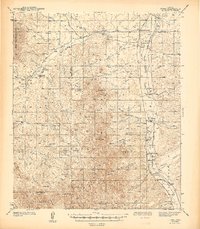 1943 Tubac1943 Print · USGSThe Santa Cruz River valley comes alive in the late 1930s, documenting the vital transport corridor through Tubac and Amado. Genealogists and historians can trace family-run operations like Moyza Ranch or locate the Sopori Sch and Tumacacori National Monument.3 unique versions available
 - 1944 Map of Oro Blanco
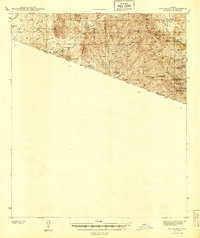 1944 Oro Blanco1944 Print · USGSThe Arizona-Mexico borderlands are captured here in the early 1940s, highlighting a landscape transition from active mining to remote ranching. Genealogists and historians can locate old claims like the Yellow Jacket Mine and family sites like Garcia Ranch.2 unique versions available
 - 1947 Map of Elgin, 1953 Print
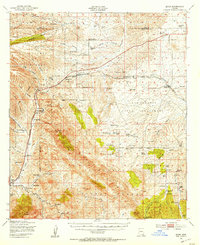 1947 Elgin1953 Print · USGSSanta Cruz and Pima Counties are seen here in the late 1940s as a landscape of sprawling cattle ranches and historic frontier outposts. Genealogists and historians can locate family landmarks like Hacienda Los Encinos alongside the Old Fort Buchanan Ruins and Dunham Mine.2 unique versions available
 - 1948 Map of Canelo Pass, 1953 Print
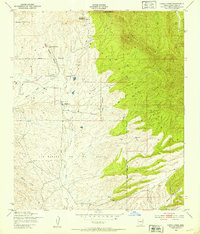 1948 Canelo Pass1953 Print · USGSSanta Cruz County ranching life is documented here just after the war, showing the area's transition from open range to the foothills. Genealogists can locate family landmarks like Meigs Ranch, the Little Ranch Boys School, and a local Cem.
 - 1948 Map of Huachuca Peak, 1953 Print
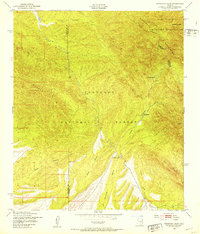 1948 Huachuca Peak1953 Print · USGSThe high Arizona mountains and the military frontier meet in the late 1940s just north of the border. Researchers can trace remote ranching outposts like Hathaway Ranch, the operations at Eureka Mine, and the early footprint of the Fort Huachuca Military Reservation.
 - 1948 Map of Elgin, 1953 Print
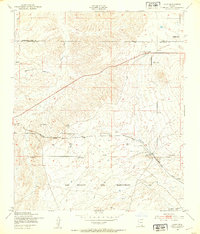 1948 Elgin1953 Print · USGSCattle ranching and the railroad defined this corner of Santa Cruz County in the late 1940s. Genealogists and historians can trace family landholdings like Heavner Ranch and Collie Ranch along the Southern Pacific tracks near Elgin.
 - 1948 Map of Sonoita, 1953 Print
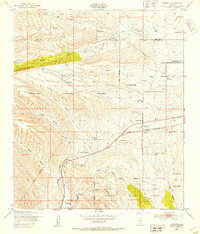 1948 Sonoita1953 Print · USGSSouthern Arizona ranching and rail life are captured here in the late 1940s, centered on the Sonoita crossroads. Researchers can trace historic family holdings such as Hacienda Los Encinos Ranch and Wilson Ranch, or locate the ruins of Old Fort Crittenden.
 - 1948 Map of Sunnyside SW, 1953 Print
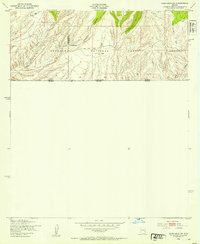 1948 Sunnyside SW1953 Print · USGSSouthern Cochise County at the close of the 1940s reveals a sparse landscape of cattle ranching and international boundary markers. Genealogists and local historians can trace family holdings at McNab Ranch or locate early survey points like Mon 106 5211 along the Mexico border.
 - 1948 Map of Mustang Mountains, 1953 Print
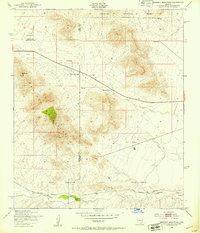 1948 Mustang Mountains1953 Print · USGSThe high desert range of Cochise County is captured here in the years following World War II, when large cattle ranches dominated the valley floor. Genealogists and historians can trace old homesteads like Sands Ranch and the rail line of the Southern Pacific as it follows the Babocomari River.
 - 1948 Map of Lochiel SE, 1953 Print
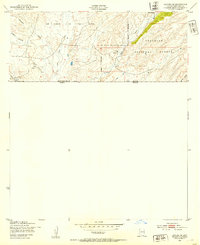 1948 Lochiel SE1953 Print · USGSSettled along the international boundary in the late 1940s, this area of Santa Cruz County highlights the lonely border outpost of Lochiel. Researchers can locate the U. S. Custom House, the Santa Cruz River, and the Jones Ranch cattle operations.
 - 1948 Map of Fort Huachuca SW, 1953 Print
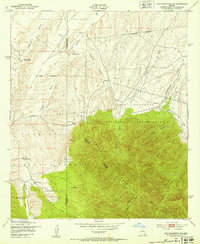 1948 Fort Huachuca SW1953 Print · USGSCochise County ranching and military life intersect here just after the war, where the high desert meets the national forest. Researchers can trace historic property lines and family operations like Pyeatt Ranch, Diamond C Ranch, and the Anderson Mine.
 - 1948 Map of Harshaw, 1953 Print
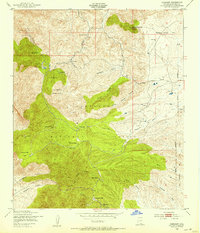 1948 Harshaw1953 Print · USGSArizona's copper and silver mining legacy is etched across the Patagonia Mountains in the late 1940s. Genealogists and historians can trace old claims like the Hardshell Mine and Paymaster Mine or locate the site of Washington Camp and the Duquesne Sch.
 - 1948 Map of O'Donnell Canyon, 1953 Print
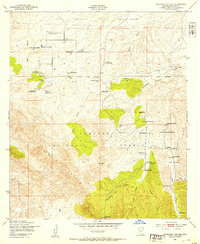 1948 O'Donnell Canyon1953 Print · USGSSanta Cruz County ranching culture and forest management are at the forefront of this late-forties survey. Researchers can trace family-named homesteads like Graham Ranch and Hale Ranch or locate the Canelo Sch and Black Oak Cem.
 - 1948 Map of Mt. Hughes, 1953 Print
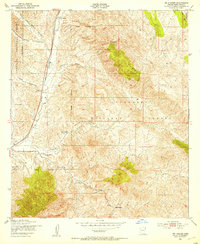 1948 Mt. Hughes1953 Print · USGSArizona ranching and railroading define this Santa Cruz County landscape in the late 1940s. Genealogists and historians can trace family operations at Harmon Ranch and Turner Ranch or locate the old Southern Pacific siding at Crittenden.
 - 1948 Map of Duquesne, 1953 Print
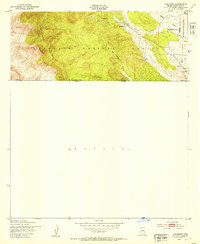 1948 Duquesne1953 Print · USGSIn the Patagonia Mountains just after the war, this area of the Arizona-Mexico borderlands remained a land of isolated ranches and mining camps. Researchers can locate the Duquesne settlement, its cemetery, and old family properties like the Heady-Ashburn Ranch.
 - 1948 Map of Sunnyside, 1956 Print
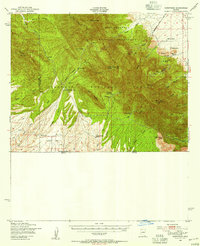 1948 Sunnyside1956 Print · USGSArizona's high border country is captured here in the late Forties, showing the intersection of military lands and remote mountain ranching. Genealogists and historians can locate family holdings like Hathaway Ranch and McNab Ranch or trace old mining sites such as the Wakefield Mine.
 - 1948 Map of Fort Huachuca, 1956 Print
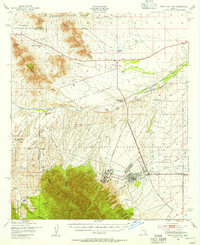 1948 Fort Huachuca1956 Print · USGSSoutheast Arizona in the late 1940s is defined here by the intersection of military operations and high-desert ranching. Genealogists and historians can trace family properties like Sands Ranch alongside the installations at Fort Huachuca and the Buena Sch.
 - 1948 Map of Lochiel, 1958 Print
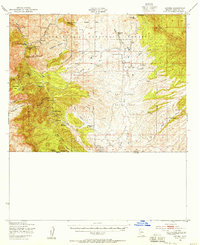 1948 Lochiel1958 Print · USGSThe Arizona-Mexico borderlands in the late 1940s reveal a landscape of remote mining camps and sprawling cattle ranches. Researchers can trace the legacy of early mining at Washington Camp and Duquesne, or locate the Custom House at the international crossing in Lochiel.
End of results
Showing maps 1-25 of 25
Top cities of Santa Cruz County
- Nogales historical maps
- Town of Patagonia historical maps
- Sonoita historical maps
- Amado historical maps
Frequently asked questions
- What are the different types of historical maps available for Santa Cruz County?
- What is the oldest map of Santa Cruz County?
- Where can I purchase historical maps of Santa Cruz County for my home or office?
- Where can I download high-res historical maps of Santa Cruz County?
- Are there historical topographic maps available for Santa Cruz County?
- Is there historical aerial imagery available for Santa Cruz County?
- Where are historical maps of Santa Cruz County sourced from?