Old Maps of Antioch, California for Academic Research
Study the evolution of Antioch with 40 high-resolution historic maps. Whether you're teaching, researching, or modeling changes in land use, these maps provide essential visual documentation of urban, environmental, and geographic change.
- Analyze long-term change: Track patterns in development, transportation, and natural features.
- Ideal for environmental or urban studies: Support academic projects with primary historical map data.
- Use in the classroom or lab: Educators and researchers rely on these maps to bring historical context to life.
These maps are a powerful tool for teaching, research, and visualizing how Antioch has changed over the decades.
Antioch, CA maps
(40)- 1896 Map of Mt. Diablo, 1964 Print
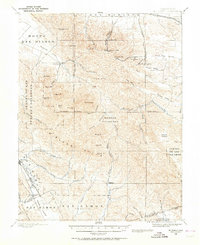 1896 Mt. Diablo1964 Print · USGSThe northern slopes of the Diablo Range come alive in the 1890s, where mining settlements like Nortonville and Somersville thrived alongside the Empire R. R. and Star Mine. Trace early rail lines, family landmarks, and the rural roots of Danville and San Ramon.
 - 1898 Map of Mt. Diablo
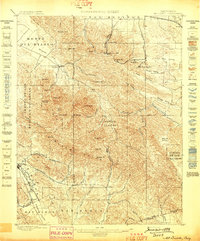 1898 Mt. Diablo1898 Print · USGSContra Costa County at the end of the nineteenth century was a rugged landscape of coal mining camps and cattle valleys. Genealogists and local historians can trace the early footprints of Nortonville, Stewartville, and the remote Star Mine nestled among the peaks of Monte del Diablo.7 unique versions available
 - 1907 Map of Antioch, 1955 Print
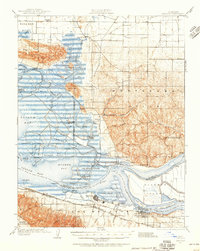 1907 Antioch1955 Print · USGSThe Suisun Bay and Sacramento Delta regions are captured here in the early twentieth century during a period of agricultural and industrial expansion. Local historians can trace family-named river ports like Lingos Landing and rural landmarks such as Scandia School or the settlement of Birds Landing.
 - 1908 Map of Antioch
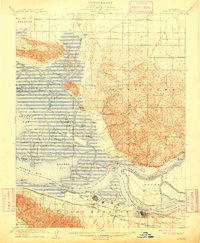 1908 Antioch1908 Print · USGSThe convergence of the great California rivers in the early twentieth century shows a landscape of busy water landings and growing rail towns. Trace the industrial roots of Antioch or locate vanished landings like Palmetto Landing and Duttons Landing along the sloughs.5 unique versions available
 - 1914 Map of Brentwood
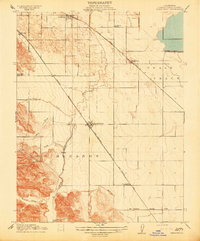 1914 Brentwood1914 Print · USGSBrentwood and the surrounding orchards thrived in the early twentieth century as a dual-railroad crossroads. Researchers can trace early rural life through the Iron House School, the Southern Pacific RR tracks, and the Oil Pumping Station.
 - 1916 Map of Lone Tree Valley
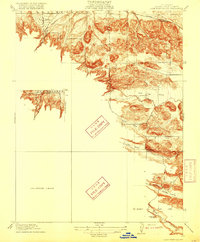 1916 Lone Tree Valley1916 Print · USGSContra Costa County at the onset of the motor age reveals a landscape of ranching valleys and early energy infrastructure. Researchers can trace the routes of Sand Creek and Marsh Creek, locate the isolated Deer Valley School, and see the early Oil Tanks in Markley Canyon.2 unique versions available
 - 1916 Map of Byron
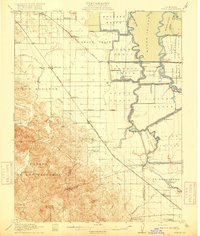 1916 Byron1916 Print · USGSIn the early twentieth century, the Contra Costa and San Joaquin borderlands were a landscape of reclaimed delta tracts and rising hill country. Researchers can trace early railroad alignments and rural life at Byron Hot Sprs, the Bethany Ferry, and the Vasco School.3 unique versions available
 - 1918 Map of Collinsville
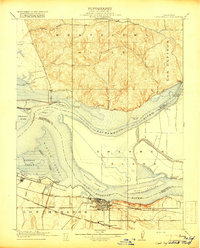 1918 Collinsville1918 Print · USGSThe California Delta at the turn of the century shows a bustling junction of river and rail commerce. Researchers can trace early infrastructure around Antioch, locate riverfront sites like Montezuma Landing, and follow the Southern Pacific through the Los Medanos area.2 unique versions available
 - 1940 Map of Byron, 1943 Print
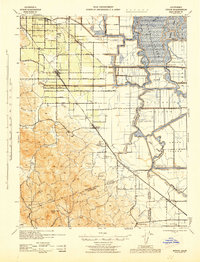 1940 Byron1943 Print · USGSThe California Delta meets the coastal hills during the early 1940s, showing a transition from the orchards of Brentwood to the intricate waterways of the islands. Researchers can trace historic schools like Iron House Sch, rail stops at Knighten Sta, and the famous Byron Hot Springs.
 - 1943 Map of Mt. Diablo
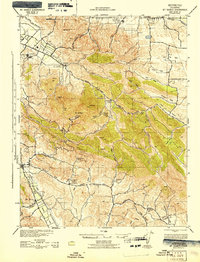 1943 Mt. Diablo1943 Print · USGSThe Mt. Diablo foothills and San Ramon Valley are captured here during the early 1940s, showcasing a landscape of cattle ranches and remote schoolhouses. Genealogists and local historians can locate early landmarks like Blackhawk Ranch, Cowell, and the Morgan Territory Sch.
 - 1947 Map of Sacramento, 1948 Print
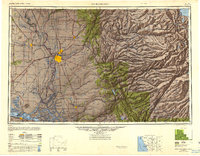 1947 Sacramento1948 Print · USGSThe Sacramento Valley meets the high Sierra during a period of post-war expansion. Trace the historic river delta islands like Grand Island or locate early airfield footprints at McClellan Air Force Base and Mather Air Force Base.2 unique versions available
 - 1947 Map of San Jose, 1948 Print
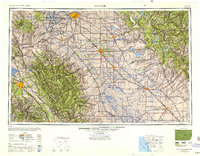 1947 San Jose1948 Print · USGSNorthern California's heartland is captured here just after the war, showing the rapid growth of the Santa Clara and Central Valleys. Researchers can trace the legacy of rail and water at Castle Air Force Base, Stockton, and the Hetch Hetchy Aqueduct.
 - 1948 Map of Sacramento, 1951 Print
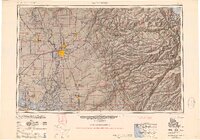 1948 Sacramento1951 Print · USGSPost-war Northern California comes alive in this regional survey, capturing the era of expansion between the Central Valley and the High Sierra. Researchers can trace the rail networks of the Central California Traction and Sacramento Northern RR or locate landmarks like the State Capitol and University of California Davis.
 - 1951 Map of Antioch
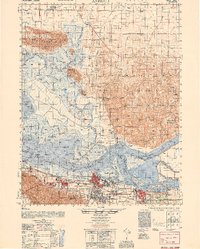 1951 Antioch1951 Print · USGSThe Sacramento Delta comes alive in the early fifties as industrial growth meets a complex world of sloughs and islands. Trace family ties to Birds Landing, the Grizzly Island Ferry, or the sprawling grounds of Camp Stoneman.
 - 1953 Map of Antioch South, 1954 Print
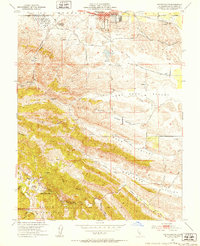 1953 Antioch South1954 Print · USGSContra Costa County at the start of the 1950s reveals a landscape where old mining towns were becoming memories as the suburbs of Antioch began to reach south. Genealogists and historians can trace the footprint of Somersville, locate Coal Mine Tunnels, and find the Morgan Territory Sch.9 unique versions available
 - 1953 Map of Antioch North, 1955 Print
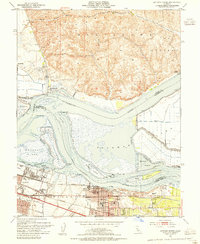 1953 Antioch North1955 Print · USGSThe delta where the Sacramento and San Joaquin rivers meet shows a landscape of heavy industry and island agriculture in the 1950s. Genealogists and researchers can trace the rail corridors of the Southern Pacific or locate family sites like the Adelia Kimball School and Holy Cross Cem.4 unique versions available
 - 1953 Map of Pittsburg, 1960 Print
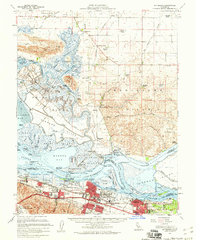 1953 Pittsburg1960 Print · USGSThe Suisun Bay waterfront and the Delta's tidal marshes are captured here in the mid-fifties, showing the industrial growth of Contra Costa County. Genealogists and researchers can trace family-named locations like Hierlihy Ranch, local landmarks like Shilo Church, and the riverfront community of Collinsville.2 unique versions available
 - 1954 Map of Brentwood, 1955 Print
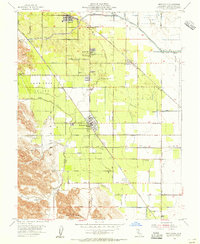 1954 Brentwood1955 Print · USGSIn the mid-fifties, this corner of Contra Costa County was a landscape of expanding orchards and vital rail corridors. Genealogists and local historians can trace the foundations of Brentwood and Oakley, locating the Point of Timber Cemetery and the John Marsh Historical Marker.5 unique versions available
 - 1956 Map of San Jose
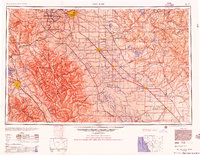 1956 San Jose1956 Print · USGSCentral California in the mid-fifties reveals the transition from sprawling orchards to growing urban hubs like San Jose and Stockton. Genealogists and historians can trace the rail-era landscape of the Mother Lode through Chinese Camp and Tuttletown, or follow the water through the Joaquin River and Calaveras Reservoir.
 - 1956 Map of Sacramento
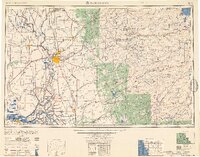 1956 Sacramento1956 Print · USGSMid-century California unfolds from the delta to the high Sierra, capturing a landscape of growing valley cities and burgeoning military airbases. Genealogists and historians can trace the rail lines and river towns from Woodland to Lodi, or explore the foothill settlements of Placerville and Jackson.2 unique versions available
 - 1957 Map of Sacramento, 1966 Print
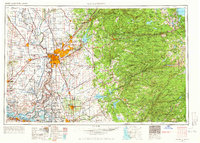 1957 Sacramento1966 Print · USGSIn the mid-twentieth century, the California heartland was a hub of river transport, rail lines, and military airbases. Genealogists and historians can trace the development of Gold Country towns like Angels Camp and Sonora or follow the path of the Southern Pacific RR through the growing suburbs of Sacramento.4 unique versions available
 - 1962 Map of San Jose
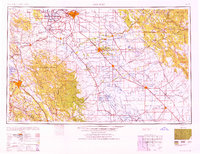 1962 San Jose1962 Print · USGSCentral California in the early sixties showcases the expansion of the San Joaquin and Santa Clara valleys. Researchers can trace the rail-to-road transition along the Southern Pacific RR or locate landmarks like Castle USAF Base and Loma Prieta.4 unique versions available
 - 1966 Map of San Jose
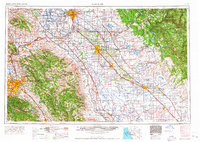 1966 San Jose1966 Print · USGSCentral California in the mid-1960s reveals a landscape of massive irrigation projects and expanding Cold War military footprints. Researchers can trace the rail-and-river network of the San Joaquin Valley or locate specialized sites like Castle Air Force Base and the Sharp General Depot (Military).
 - 1978 Map of Brentwood
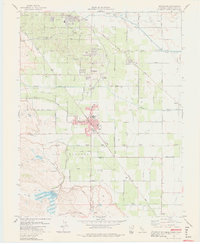 1978 Brentwood1978 Print · USGSBrentwood and the surrounding Delta-adjacent farm country are shown in the late seventies as the region balanced its agricultural roots with growing infrastructure. Researchers can trace family-named schools like Edna Hill Sch and Garin Sch alongside the path of the Mokelumne Aqueduct.3 unique versions available
 - 1978 Map of Antioch North
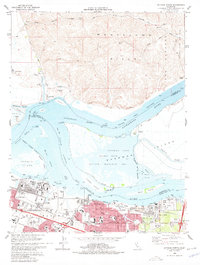 1978 Antioch North1978 Print · USGSIn the late seventies, the Delta industrial corridor was a thriving hub of shipping, rail, and manufacturing. Trace the development of Antioch and Pittsburg alongside the historic Steel Mill and the secluded marshes of Sherman Island.4 unique versions available
Showing maps 1-25 of 40
Top cities near Antioch
- Concord historical maps
- Fairfield historical maps
- San Ramon historical maps
- Pittsburg historical maps
- Walnut Creek historical maps
- Brentwood historical maps
See more
Top neighborhoods of Antioch
Frequently asked questions
- What are the different types of historical maps available for Antioch?
- What is the oldest map of Antioch?
- Where can I purchase historical maps of Antioch for my home or office?
- Where can I download high-res historical maps of Antioch?
- Are there historical topographic maps available for Antioch?
- Is there historical aerial imagery available for Antioch?
- Where are historical maps of Antioch sourced from?