Old Maps of Coalinga, California for Genealogy
Trace your family roots with 49 historic maps of Coalinga. These high-res maps reveal old neighborhoods, homesites, landmarks, and streets — helping you uncover where your ancestors lived and how the area evolved over time.
- Explore historic neighborhoods: Identify where your relatives may have lived in the 1800s or 1900s.
- Compare maps over time: Trace the changes in streets, buildings, and landmarks for multi-generational research.
- Perfect for genealogy & ancestry research: Used by family historians and researchers to map out lineage and migration.
These maps are an incredible resource for exploring your personal connection to Coalinga's past.
Coalinga, CA maps
(49)- 1912 Map of Coalinga
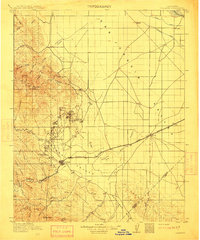 1912 Coalinga1912 Print · USGSThe western San Joaquin Valley comes into focus in the early twentieth century as oil and rail transform the landscape. Genealogists and historians can trace the industrial roots of Oilfields and Coalinga or locate the San Joaquin Valley Coal Mine.4 unique versions available
 - 1930 Map of Canoas Creek
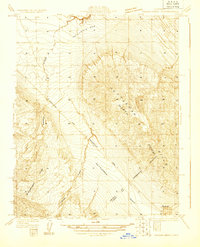 1930 Canoas Creek1930 Print · USGSThe Fresno and Kings county line area is captured here during the 1930s oil boom. Researchers can trace early industrial landmarks like the Discovery Well near Avenal and follow the route of the Coalinga and Bakersfield Road.
 - 1933 Map of Guijarral Hills
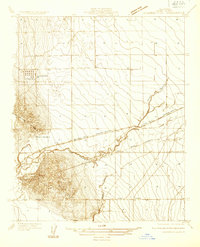 1933 Guijarral Hills1933 Print · USGSFresno County's western oil and ranching lands are captured here in the early thirties. Local historians can trace the industrial footprint of the Oil Tank Farm and the rail-side settlement at Turk along the Southern Pacific line.
 - 1934 Map of Canoas Creek
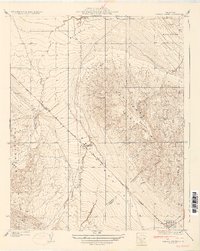 1934 Canoas Creek1934 Print · USGSThe foothills of Fresno County appear in the early 1930s just as the oil and ranching economies were shaping the region. Researchers can trace the early street layout of Avenal and the natural paths of Canoas Creek and Zapato Creek before modern irrigation changed the land.2 unique versions available
 - 1936 Map of Kreyenhagen Hills
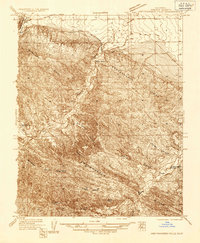 1936 Kreyenhagen Hills1936 Print · USGSThe ranching country of southern Fresno County is documented here in the mid-1930s as the regional road network began to expand. Genealogists and historians can locate specific family landholdings like Zuburr Ranch and Hanes Ranch along the seasonal waters of Jacalitos Creek.
 - 1936 Map of Guijarral Hills, 1947 Print
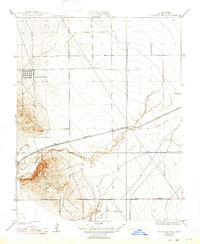 1936 Guijarral Hills1947 Print · USGSFresno County's western edge was a hub of energy and ranching in the 1930s. Researchers can trace early oil infrastructure at the Oil Tank Farm and Caliola Pumping Sta, or locate the historic Pleasant Valley Ranch near the Southern Pacific line.
 - 1937 Map of Guijarral Hills
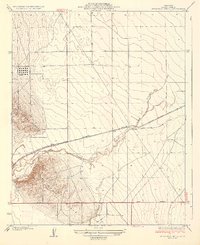 1937 Guijarral Hills1937 Print · USGSFresno County ranching and the early oil industry collide in this 1930s survey of the Central Valley. Trace the Southern Pacific rail line and identify family-held lands like Pleasant Valley Ranch and the industrial Oil Tank Farm.2 unique versions available
 - 1941 Map of Kreyenhagen Hills
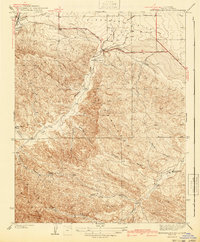 1941 Kreyenhagen Hills1941 Print · USGSWestern Fresno County ranching and transit are captured in the late 1930s, showing the intersection of valley roads and upland canyons. Genealogists and local historians can locate early family holdings like Zuburi Ranch, Kreyenhagen Ranch, and the settlement at Alcalde.2 unique versions available
 - 1942 Map of Polvadero Gap
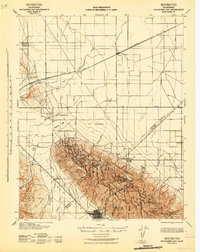 1942 Polvadero Gap1942 Print · USGSCentral California ranching and early rail corridors appear in high detail during the early war years. Genealogists and local historians can locate early family holdings like Kreyenhagen Ranch, the town of Huron, and the Southern Pacific line.2 unique versions available
 - 1944 Map of Coalinga
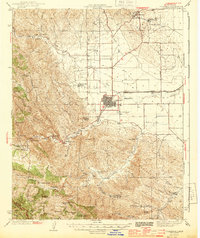 1944 Coalinga1944 Print · USGSCoalinga and its surrounding oilfields are captured here during the 1940s, showcasing the intersection of heavy industry and California ranching life. Researchers can trace the layout of the Coalinga Oil Refinery and locate legacy sites like Alcalde Ranch or the Claremont Sch.3 unique versions available
 - 1948 Map of Santa Cruz
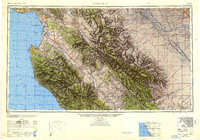 1948 Santa Cruz1948 Print · USGSThe Central Coast and San Joaquin Valley meet in this mid-century look at the region's agricultural and military geography. Genealogists and historians can trace the paths of El Camino Real, locate family farms near Hollister, or study the footprint of the Fort Ord Military Reservation.2 unique versions available
 - 1950 Map of Canoas Creek
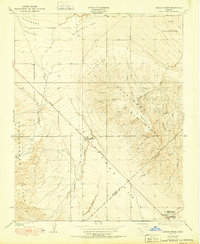 1950 Canoas Creek1950 Print · USGSMid-century oil production and the development of the Kettleman Hills dominate this landscape along the Fresno-Kings county line. Researchers can trace the early layout of Avenal and the industrial footprint of the Associated Oil Pumping Sta.
 - 1954 Map of Avenal, 1957 Print
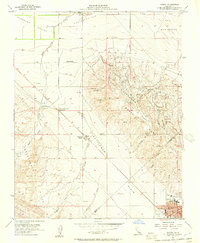 1954 Avenal1957 Print · USGSThe oil-rich ridges of the Kettleman Hills meet the floor of the San Joaquin Valley during a peak era of petroleum production. Researchers can trace early energy infrastructure at the Oil Refinery and Kettleman Station or locate ranch holdings like the Weeth Ranch.6 unique versions available
 - 1955 Map of Santa Cruz
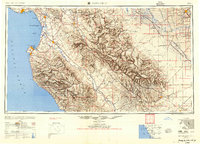 1955 Santa Cruz1955 Print · USGSCoastal Monterey Bay and the fertile Salinas Valley are captured here during the post-war expansion of the mid-fifties. Researchers can trace the era's rail-and-road network via the Southern Pacific lines and find landmarks like Fort Ord or the Lonoak School.
 - 1956 Map of Coalinga, 1957 Print
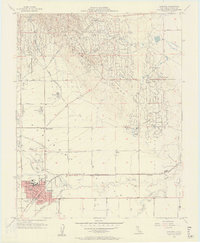 1956 Coalinga1957 Print · USGSMid-century Coalinga thrives at the center of a massive petroleum network during the peak of its oil-producing era. Local historians can trace the foundations of the community through the Jr College, the Oil King Sch, and the Southern Pacific rail lines.7 unique versions available
 - 1956 Map of Guijarral Hills, 1957 Print
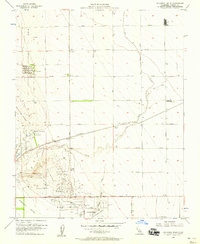 1956 Guijarral Hills1957 Print · USGSThe Central Valley oil boom was in full swing during the late fifties, transforming this landscape near Guijarral Hills. Genealogists and historians can trace industrial footprints at Turk, the Caliola Pumping Station, and the Labor Camp.3 unique versions available
 - 1956 Map of Kreyenhagen Hills, 1958 Print
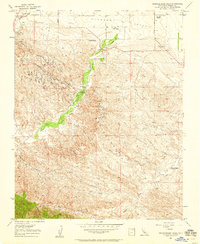 1956 Kreyenhagen Hills1958 Print · USGSThe Fresno County ranchlands and petroleum fields are captured here in the mid-1950s, showcasing the intersection of resource extraction and rural life. Researchers can trace the holdings of established family sites like Zuburi Ranch and Esrey Ranch or locate the infrastructure of the Coalinga Oil Field.3 unique versions available
 - 1956 Map of Coalinga, 1958 Print
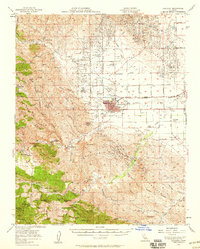 1956 Coalinga1958 Print · USGSIn the mid-1950s, the Coalinga region was a powerhouse of petroleum and ranching where industry met the Central Valley's edge. Genealogists and historians can trace family properties like Conn Ranch and Esrey Ranch alongside the vast infrastructure of the Coalinga Oil Field.2 unique versions available
 - 1957 Map of Santa Cruz
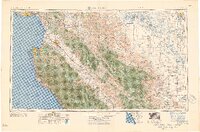 1957 Santa Cruz1957 Print · USGSCentral California comes into sharp focus during the late fifties, from the fog-swept Monterey Bay to the sun-drenched San Joaquin Valley. Genealogists and historians can trace the mid-century footprints of Fort Ord Military Reservation, the Southern Pacific line, and the historic streets of San Juan Bautista.
 - 1958 Map of Santa Cruz
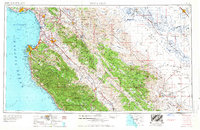 1958 Santa Cruz1958 Print · USGSCoastal California and the central valleys are shown during the mid-fifties, capturing a landscape of massive military reserves and vital rail arteries. Genealogists and historians can trace the Southern Pacific line through Salinas or explore the early footprints of the Fort Ord Military Reservation and San Juan Bautista.2 unique versions available
 - 1965 Map of Santa Cruz, 1968 Print
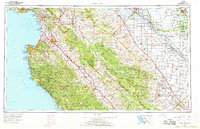 1965 Santa Cruz1968 Print · USGSThe Central Coast and San Joaquin Valley meet here during the mid-sixties, capturing the growth of agricultural and coastal hubs. Trace the historic Southern Pacific RR lines and locate sites like the Presidio of Monterey or Pinnacles National Monument.
 - 1969 Map of Alcalde Hills, 1973 Print
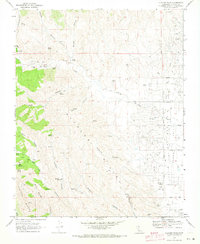 1969 Alcalde Hills1973 Print · USGSThe western edge of the Coalinga oil fields meets the rising Alcalde Hills in this late 1960s survey. Researchers can trace the industrial footprint of Oil Wells and sumps alongside natural landmarks like Sprague Cabin and Indian Springs.3 unique versions available
 - 1969 Map of Curry Mountain, 1973 Print
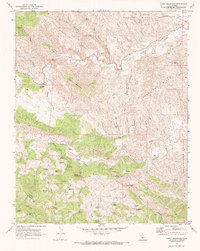 1969 Curry Mountain1973 Print · USGSThe rugged boundary between Fresno and Monterey counties comes into focus in the late 1960s, showing a land of oil exploration and high-country ranching. Researchers can trace historic routes like the Warthan Grade to find remote landmarks such as Dias Cabin, Jacalitos Ranch, and Merrill Pools.2 unique versions available
 - 1974 Map of Monterey, 1977 Print
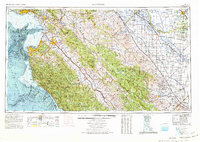 1974 Monterey1977 Print · USGSThe Central Coast and San Joaquin Valley meet in this mid-seventies survey of the Monterey region. Genealogists and historians can locate Spanish-era sites like the San Antonio de Padua Mission, early industrial markers such as the New Idria Mine, and coastal landmarks like the Point Sur Lighthouse.
 - 1987 Map of Coalinga
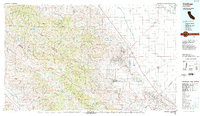 1987 Coalinga1987 Print · USGSCentral California's rugged interior and industrial valleys come into focus in the late eighties. Researchers can trace the massive Coalinga Oil Field, follow the Southern Pacific rail lines, and locate remote outposts like Idria and Lonoak.
Showing maps 1-25 of 49
Top cities near Coalinga
Frequently asked questions
- What are the different types of historical maps available for Coalinga?
- What is the oldest map of Coalinga?
- Where can I purchase historical maps of Coalinga for my home or office?
- Where can I download high-res historical maps of Coalinga?
- Are there historical topographic maps available for Coalinga?
- Is there historical aerial imagery available for Coalinga?
- Where are historical maps of Coalinga sourced from?